The fascinating sinkholes in Mount Gambier to visit

hero media
Fancy a swim in a dazzling cobalt waterway, or a stroll around a lush, emerald wonderland? The famous Mount Gambier sinkholes can set the mood for every kind of adventure.

Reykjavik, Naples, Cartago; when you’re yearning to explore a dramatic volcanic landscape, there’s only one destination where the sinkholes – a depression caused by the collapse of the surface layer – are a celebration (particularly in the warmer months): Mount Gambier on South Australia’s spectacular Limestone Coast.

Proving that good things are worth the wait, geologists believe that Mount Gambier’s (justifiably) famous sinkholes are the result of rain on the region’s three fault lines breaking up the huge expanse of limestone, more than 25 million years old, spanning South Australia’s south-east. Water flowing through the limestone has formed 50 sinkholes, with at least 15 of them filled with water.

So, when is the best time to take advantage of Mount Gambier’s sinkholes? While Mount Gambier itself is a treat to visit year-round, aqua babies are best to plan a trip in the warmer months, between November and March, when the water is less biting and the colour morphs from a hue which can fall anywhere from steel grey or garden variety blue to vibrant cobalt. The good news? Whether you hire a car and drive to each spot (easily done since most of the major holes are located within a 20-minute drive of one another) or book a tour, there’s the perfect sinkhole experience for every kind of traveller, including these tourism-heavy hitters.

Kilsby Sinkhole

sunlight shines upon a diver underneath the Kilsby Sinkhole
Kilsby Sinkhole is a naturally occurring karst basin. (Image: Adam Stern)

Will it be snorkelling, scuba diving, free diving or a sinkhole tour of the training site for the South Australian Police? At Kilsby Sinkhole, located on a sheep farm among the rolling grasslands of Moorak just 14 kilometres south of Mount Gambier, you can choose all of the above.

Out here, where it’s not unusual for people to show up in mermaid outfits for the ultimate photoshoot, water clarity has drawn people to the site for decades, the giant chasm descending 65 metres and allowing up to 50 metres (most days) visibility for scuba drivers and freedivers, and pristine water clarity for those who prefer to frolic towards the surface. 50-minute guided tours cover the sinkhole’s fascinating history and geology – a real hit with the kids.

a diver facing the light as it passes through the water under Kilsby Sinkhole
It’s a stunning sight when the sun rises over Kilsby Sinkhole. (Image: Adam Stern)

Snorkelling tours run for two hours, complete with a safety briefing and under the supervision of a snorkel supervisor, while those interested in diving and freediving can book a licensed operator to help their dream come true.

Kilsby Sinkhole is a privately owned site, thus, all visits must be pre-booked online. The good news? They now offer a range of two-bedroom luxury villas at a surprisingly affordable price point, so you can take advantage of the sinkhole (and its surrounds) day after day.

Need tips, more detail or itinerary ideas tailored to you? Ask AT.

AI Prompt

Umpherston Sinkhole

a large crater at Umpherston Sinkhole
Subaquatic flora grows abundantly in Umpherston Sinkhole. (Image: Offroad Images)

In the middle of Mount Gambier’s city streets, a lush, subterranean oasis blooms some 20 metres deep in a natural well providing cool respite for those who want to escape those blazing days, but don’t much fancy getting wet.

Named after its designer James Umpherston who designed this urban botanic garden in the late 1800s, Umpherston Sinkhole/Balumbul (one of the most photographed locations on the Limestone Coast) was once a cave formed through the dissolution of the limestone, becoming a sinkhole only after the top of its chamber collapsed and its topsoil provided the perfect environment on which flora to grow.

lush greenery at Umpherston Sinkhole
Stroll through the enchanting vines. (Image: South Australian Tourism Commission/Adam Bruzzone)

Now it’s best described as a gateway to a secret world filled with hanging vines and terraces, the depth and scale of which is best enjoyed from the viewing platforms before taking a walk down to the bottom to view the hydrangeas (but only after grabbing an ice cream or coffee from the onsite kiosk). Yep, at Umpherston Sinkhole, it’s all about walking and observing.

Beautiful any time of day, locals swear by a visit at dusk when the friendly locals, the Umpherston possums, come out to greet their visitors. Why not stick around and make use of the free barbecue area?

Weekly travel news, experiences
insider tips, offers, and more.

Little Blue Lake 

an aerial view of the Little Blue Lake sinkhole in Mount Gambier
Little Blue Lake is situated within a dormant volcanic crater. (Image: Thomas Cowey)

Disregard its name; Little Blue Lake is actually a sinkhole with a difference: the ability to change colour like a mood ring so that the steel grey it rocks throughout the winter months transforms into a vibrant cobalt blue come the summertime (November to March). It’s all thanks to a phenomenon caused by the formation of calcite crystals warmed by the rays of the sun.

Located in the Kanawinka volcanic area, wedged between the two (mercifully) dormant volcanoes of Mount Gambier and Mount Schank, follow the campervans making a line to Little Blue Lake, which is conveniently situated in a paddock by the highway.

a diving platform above the milky turquoise waters of Little Blue Lake, Mount Gambier
Mount Gambier’s Blue Lake transforms into milky turquoise between November and March. (Image: Lucy Adamopoulos)

With a 47-metre depth, plus a diameter of 40 metres, the lake is what you might call bracing – a fact locals love and visitors quickly get used to as they enter the sinkhole via the stairs or ramp. Your best bet? Warm up beforehand or afterwards by lying out in the sun, or by enjoying a picnic (you’ll have to bring your own provisions). Just beware that there are no public amenities, so best to use the bathroom before you depart from your accommodation.

Got plenty of time in and around Mount Gambier up your sleeve and are keen to experience further sinkholes? Be sure to also put Ewens Ponds, Hell’s Hole and Caroline Sinkhole on your list.

Wanting to explore the rest of Mount Gambier? Follow our guide for awe-inspiring things to do in Mount Gambier.

Want to see more stories from Australian Traveller in your Google search results?

  1. Click here to set Australian Traveller as a preferred source.
  2. Tick the box next to "Australian Traveller". That's it.
Dilvin Yasa
Dilvin Yasa is a freelance journalist, author and TV presenter whose travels have taken her from the iceberg graveyards of Antarctica to the roaring rapids of Uganda. Always on the lookout for that next unforgettable meal, wildlife moment or 80s-themed nightclub, she is inexplicably drawn to polar destinations despite detesting the cold.
View profile and articles

Discover the remote Queensland lodgings bringing luxury to the outback

hero media
Adventure and refined Luxury combine at the stunning Rangelands Outback Camp.

Iconic Australian red dirt, ancient rocky landscapes and bursts of greenery and wildflowers all make the small town of Winton, and its surrounds, a sight to behold. Escape the ordinary and unwind in the Queensland outback, where ancient landscapes and off-grid luxury await at Rangelands Outback Camp.

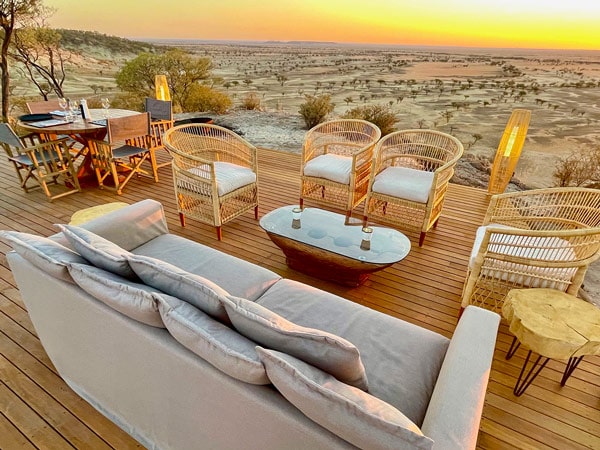
cosy seats in Rangelands Outback Camp
Unwind in the ancient outback.

About Rangelands Outback Camp

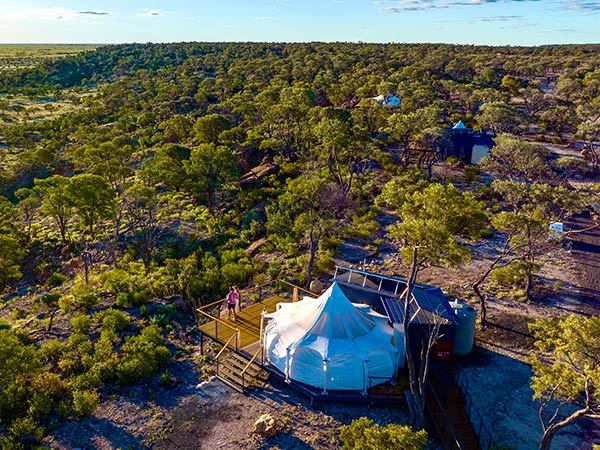
Unforgettable 360-degree views of this 95-million-year-old land await at Rangelands; bathed in style and positioned on top of a jump-up (or mesa), your tented camp seamlessly blends into its outback setting.

Set on the 53,935-square-kilometre Rangelands Station – a working cattle property – the abundant wildlife are your only neighbours; kangaroos, echidnas, eagles and other birdlife all call Rangelands home.

Bathed in style, your tented camp seamlessly blends into its outback setting. Indulge with carefully curated menus, personalised service and supersized luxury tents that guarantee a private experience. This exclusive camp only has a maximum of 12 guests at a time.

Here, the aim is pampering. From tasty menus to supersized tents with all the creature comforts, to a range of guided tours around the property and beyond.

Guests are transferred from Winton or Longreach by a dedicated Rangelands driver.

aerial shot of Rangelands Outback Camp tent
Soak in 360-degree views.

Rangelands Outback Camp tours

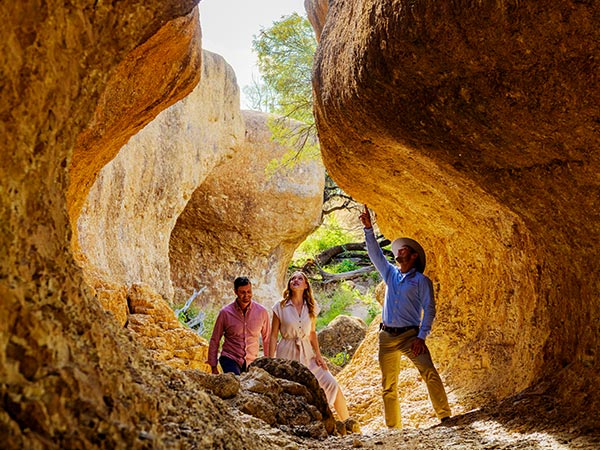
Join small-group tours and enjoy exclusive access to the ancient Rangelands Rifts with your Rangelands hosts. These incredible rock formations were formed by millions of years of erosion, leaving dramatic channels through the rock. Or explore the surrounds with Rangeland’s touring partner, Red Dirt Tours.

Get sunset birds-eye views over dramatic mesa country in a helicopter, from Queensland’s own Three Sisters to Corey’s Range, stopping at the best lookouts along the way.

Get up close and personal with this rugged land on four wheels, with expert drivers and guides leading guests through famous Bladensburg National Park, visiting Gondwana Stars Observatory and more.

The Winton area is famous for its boulder opals (the second-rarest opal in the world, after black opals), and a stop at the mining community of Opalton sheds a fascinating light on the unique fossicking method used to find them.

A trip to dinosaur country is a must, as this is the place that ramped up Australia’s dino contribution after a fossilised footprint was found in 1962; after more exploration, the discovery of 3300 footprints made it clear this was the world’s only evidence of a dinosaur stampede. Those same footprints are still on display today at Lark Quarry Conservation Park, a 90-minute drive from Winton. Also check out Australia’s largest collection of Australian Dinosaur fossils Australian Age of Dinosaurs, just 30 minutes from Winton. Here, join a tour through a working laboratory, dinosaur canyon and more.

A twice-daily transfer into downtown Winton is offered to guests, where they can explore the Royal Outdoor Theatre, opal shops, Waltzing Matilda Centre and more.

tour being led through Rangeland rifts
Have an exclusive adventure through the Rangeland Rifts. (Image: TEQ)

Sleeping in luxury

After a day of exploring, return to your tranquil tent for a blissful open shower and uninterrupted views from your private deck.

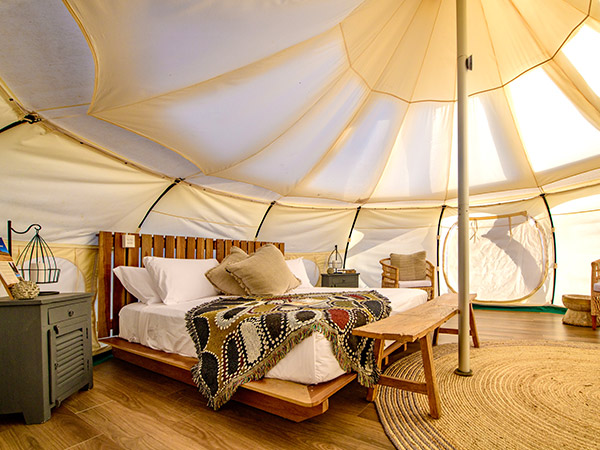
Designed to integrate guests into the surrounding nature, each tent feels like its own private haven. While being off-grid in the outback (in fact, each tent is powered by its own solar panels, with the added support of a backup generator), guests can also luxuriate in comfortable amenities like air conditioning, a supremely comfortable king-size bed and stylish designer touches.

Guests can stroll to the open-air Sunset Deck for breathtaking panoramic views, or to the main lounge and dining tent, where books, on-demand coffee and drinks make it the perfect place to relax after a day in the outback.

inside Rangelands Outback Camp bedroom
Enjoy plenty of space inside, and stunning views outside.

Rangelands Outback Camp dining

As the sun starts to dip below the horizon, gather for drinks and canapés on the expansive Sunset Deck, watching the sun drench the landscape in pinks and oranges as it sinks below the horizon.

Later, head to The Mahal lounge area and dining tent where mealtime magic happens. Savour a gourmet meal made fresh by Rangeland’s onsite chef. The meals use local produce to elevate classic outback dishes, and don’t worry, dietary requirements are happily accommodated.

Enjoy an open bar filled with an expansive hand-selected list of wines and premium beers, with wine pairings offered by Rangelands hosts come dinner time.

Discover more and book your luxurious stay at rangelandscamp.com.

Fascinating Mount Gambier Sinkholes To Visit | Australian Traveller