Driving from Adelaide to Mount Gambier: the glovebox guide

hero media
From historic haunted towns to coastal attractions, get the most out of your road trip from Adelaide to Mount Gambier with this glovebox guide. 

South Australia is a haven for good wine, fine produce, and boasts a stunning landscape from serene beaches to tranquil wilderness and greenery.

One of South Australia’s biggest attractions is its second-biggest city, Mount Gambier. While Adelaide gives off European vibes with its breathtaking churches and architecture, Mount Gambier is a must-visit for those looking to get out of the city and step into a land full of natural wonders and attractions.

Located halfway between Adelaide and Melbourne, Mount Gambier is famous for its cobalt Blue Lake, volcanic landscape, and is an up-and-coming wine and foodie region.

The drive itself from Adelaide to Mount Gambier is 435 kilometres or just under five hours. Whether you’re stopping along the way for some scenic breaks or want to break up your driving by extending the trip for a few days, we’ve compiled the ultimate glovebox guide to help you along your travels.

The skyline in Adelaide
Leave the city lights behind and head to the Limestone Coast. (Image: Michael Waterhouse Photography)

Hahndorf

Just a 30-minute drive from Adelaide lays the historic town of Hahndorf, a charming village that proudly asserts its German culture. It’ll feel as though you’re stepping into a European town, with quaint shops filled with local produce, historic pubs, and a quiet but friendly atmosphere.

guests outside Beerenberg Family Farm
Head to Beerenberg Family Farm for fresh jams.

Make sure to check out the Beerenberg Family Farm, where you can go strawberry picking and pick up fresh jams, chutneys, and gourmet relishes in the family-run store. For lunch and the authentic German experience, Hahndorf Inn will have you covered – it’s hard to go past their famous Schwienshaxe, otherwise known as their 1-1.2kg crispy pork knuckle, served with traditional potato salad and sauerkraut.

The exterior of Hanhdorf Inn
Arrive with an appetite and order the Schwienshaxe at the Hahndorf Inn. (Image: Michael Waterhouse Photography)

Monarto Safari Park

A 30-minute detour from Hahndorf will lead you to the Monarto Safari Park, a perfect stop if you’re planning to take a couple of days to do the Adelaide to Mount Gambier jaunt, as you’ll definitely want to spend a few hours exploring this animal sanctuary. The park is home to a number of different wildlife and endangered species and gives visitors a chance to explore the habitats in which these animals reside. The park’s mission is to replicate a life for the species within it that is as close to being out in the wild as possible. There are many different animal experiences to undertake at the park, including hand-feeding the majestic giraffes.

Montaro Safari Park giraffes
Get an up-close encounter with giraffes at Monarto Safari Park. (Image: Zoos SA/ Geoff Brooks)

Need tips, more detail or itinerary ideas tailored to you? Ask AT.

AI Prompt

Old Tailem Town

Stop for a stretch of the legs and a refuel at Old Tailem Town, one of Australia’s largest pioneer villages, with settlers dating back to 1860. The town is also rumoured to be incredibly haunted so if you’re brave enough to stay the night, you can book a ghost tour.

From Old Tailem Town, you can go one of two ways to continue your journey to Mount Gambier – the coastal route or the inland route.

We’ve picked some attractions from each route to help you make up your mind.

Inland Route: Naracoorte

Step back hundreds of thousands of years in time with a visit to the Naracoorte Caves National Park. The fossils found in the area is exactly why it’s listed as a World Heritage site, with the caves containing skeletons of Australian megafauna dating back 500,000 years. For those feeling adventurous, an Adventure Caving tour will be an experience of a lifetime, as you discover the rich history of the caves, take in some fascinating fossils, and crawl and squeeze your way through parts with an expert guide.

For those just wanting to take in the sights without getting too dirty, the Naracoorte Heritage Trail will allow you to delve deeper into the town’s history, and in the warmer months, a dip in Naracoorte’s Swimming Lake will cool you right down so pack a picnic and enjoy the sun!

Naracoorte Mount Gambier
Naracoorte Caves National Park preserves Australia’s most complete fossil record. (Image: Tourism Australia)

Inland Route: Coonawarra

Wine lovers, this one is for you! Coonawarra is a small area but is renowned when it comes to winemaking and produces world-class wines. Known for its unique red soil, the area is famed for its cabernet sauvignon and is home to more than 30 wineries.

Coonawarra Cabernet Celebrations
Coonawarra Cabernet Celebrations is one of South Australia’s best regional wine-based events. (Image: South Australian Tourism Commission)

If you want to make the most of the experience, it’s worth staying the night at the charming Royal Oak Penola so you can indulge in all the fine wines on offer. Wynns, Patrick of Coonawarra and Zema Estate are three of the highlights for sampling the region’s sips.

If you’re looking to treat yourself, dinner at the fine-dining restaurant Pipers of Penola will be a mouth-watering experience, and make sure to stop by local favourite Windara Bakery the next morning before you hit the road again.

Weekly travel news, experiences
insider tips, offers, and more.

Coastal Route: Kingston

Australia loves Big Things – from the Big Merino to the Big Prawn – and stopping at Kingston you’ll get to grab a happy snap with the Big Lobster. Conveniently located near a takeaway shop, you can stop for lunch, get a pic with Larry the Lobster, and take a stroll to check out the Cape Jaffa lighthouse before hitting the road again.

The Big Lobster in Kingston SA
Aussies love a Big Thing and The Big Lobster is no exception. (Image: South Australia Tourism Commission)

Coastal Route: Robe

A popular South Aussie beach destination, Robe is one of the oldest towns in SA and is fast becoming a popular foodie destination too, known for its delectable seafood (and particularly famous for its crayfish).

Family in Robe at Obelisk Lighthouse
Stretch your legs on a walk to Obelisk Lighthouse in Robe. (Image: Jayme Chapman)

Pay a visit to Robe Town Brewery for a craft beer or if you’re in need of a caffeine hit, Mahalia Coffee will have you covered. It’s worth staying a night, particularly in warmer months, as travellers will adore the 14-kilometre stretch of the pristine, sandy-white Long Beach before cooling off in the turquoise water.

Long Beach in Robe South Australia
Enjoy the aquamarine water and white sand. (Image: Mark Fitzpatrick)

Mount Gambier

Once you arrive in Mount Gambier, you’ll want to settle in for a few days. From cute cafes to historic country pubs and emerging wineries, plus the limestone caves, sinkholes, and famous Blue Lake, there’s something for every traveller.

Mount Gambier's Blue Lake
Mount Gambier’s spectacular Blue Lake. (Image: Jaxon Foale)
Make sure to also check out the awe-inspiring activities you can do when visiting Mount Gambier.

Want to see more stories from Australian Traveller in your Google search results?

  1. Click here to set Australian Traveller as a preferred source.
  2. Tick the box next to "Australian Traveller". That's it.
hero media

6 reasons the best way to experience the Kimberley is by cruise

    Kate Bettes Kate Bettes
    This remote corner of Australia is one of the world’s last frontiers. This is how to see it properly.

    Vast, rugged and deeply spiritual, the Kimberley coast in Australia’s North West feels a world away from everyday Australia – and there are countless ways to explore it. But if you want to reach ancient rock art, hidden gorges and lonely waterfalls, it has to be by boat. Whether you’re aboard a nimble expedition vessel or a luxury yacht with all the trimmings, exploring by the water brings exclusive experiences, shows unique views and makes travel easier than any other mode. And that’s just the beginning of Australia’s North West cruises.

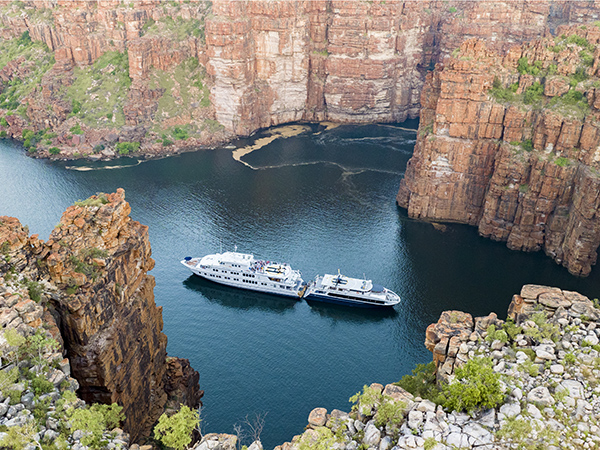
    The True North Adventure Cruise in between sandstone cliffs.
    Adventure starts where the road ends.

    1. Discover Broome, and beyond

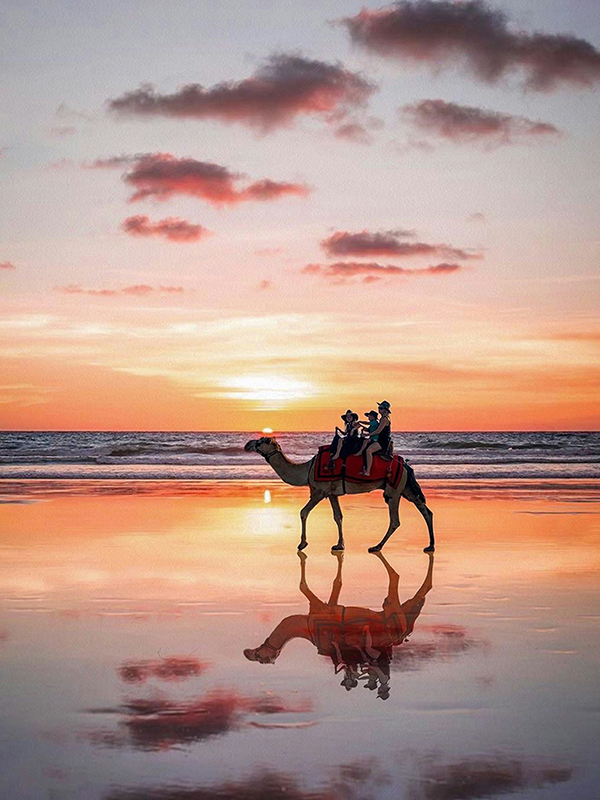
    Explore your launchpad before you set sail: Broome. Here camels and their riders stride along the 22 kilometres of powdery Cable Beach at sunset. That’s just the start.

    At Gantheaume Point, red pindan cliffs plunge into the turquoise sea, whose low tide uncovers fossilised dinosaur footprints. Broome’s pearling history runs deep. Japanese, Chinese, Malay and Aboriginal divers once worked these waters, and their legacy lives on in boutiques where South Sea pearls still shine.

    If the moon’s right, you may catch the Staircase to the Moon over Roebuck Bay. Or simply kick back with a cold beverage and a film under the stars at Sun Pictures, screening since 1916.

    Ride a camel along Cable Beach as the sun sinks into the Indian Ocean, casting golden light across the sand and sea.
    Ride a camel along Cable Beach. (Image: Nick Dunn)

    2. Unmatched access to The Kimberley

    Once you’re onboard, expect a backstage pass to some of the most isolated places on Earth. No roads. No ports. No phone reception.

    At Horizontal Falls/ Garaanngaddim, 10-metre tides surge through twin gorges like a natural waterpark ride that’ll make your palms sweat. Then there’s Montgomery Reef/ Yowjab: a giant living platform of coral and seagrass, where the sea pulls back to reveal waterfalls, sea turtles and ospreys.

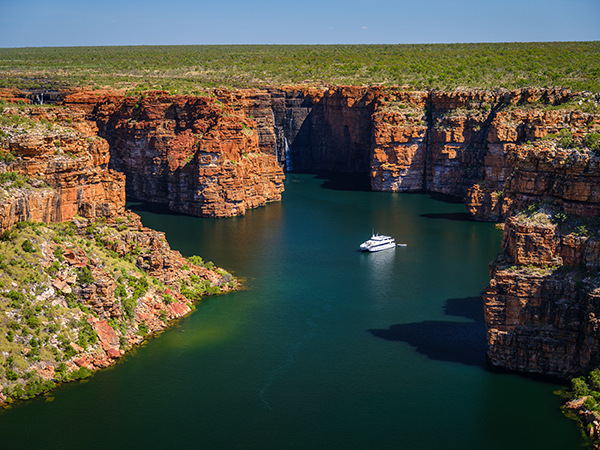
    Up north, King George Falls/ Oomari rage 80 metres down red cliffs. Zodiac boats often nudge in closer so you can feel the spray on your sun-warmed cheeks. You might even fly in to reach Mitchell Falls/ Punamii-unpuu, a four-tiered cascade where you can swim in freshwater pools above the drop.

    Come spring, some itineraries veer west to Rowley Shoals: an atoll chain of white sand and reef walls. Then it’s up the winding Prince Regent River to King Cascade/ Maamboolbadda, tumbling over rock terraces, and into a Zodiac to view the Gwion Gwion rock art, whose slender, ochre-painted figures are older than the pyramids.

    A cruise drifts beneath King George Falls, where sheer sandstone cliffs frame the thunderous plunge into turquoise waters.
    Get closer to the Kimberley than ever before.

    3. Taste the Kimberley with onboard hospitality

    You might spend your days clambering over slippery rocks or charging past waterfalls. But when you’re back on the water, it’s a different story. Meals are chef-prepared and regionally inspired: grilled barramundi, pearl meat sashimi, mango tarts, and bush tomato chutney. One night it’s barefoot beach barbecues with your shipmates; the next, alfresco dining on the ship.

    Small expedition ships each have their own personality, but many carry just 12 to 36 guests, making being out on the water a whole other experience. You might sink into a spa on the foredeck or sip coffee in a lounge while watching crocodiles cruise by. It’s choose-your-own-relaxation, Kimberley style.

    4. Expert-led excursions through the Kimberley

    These voyages are led by people who know the Kimberley like the back of their sunburnt hand. Attenborough-esque naturalists might gently tap your shoulder to point out rare birds or tell the story beneath a slab of rock. Historians can explain exactly how that rusted World War II relic came to rest here.

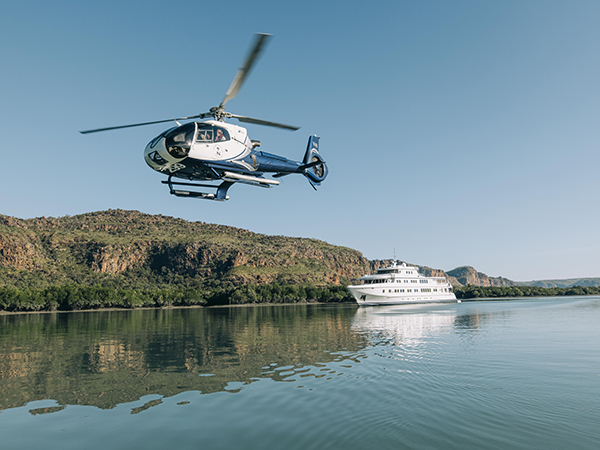
    If your ship has a helipad, you might chopper straight to a waterfall-fed swimming hole. If not, you’ll still be hopping ashore for that wet landing at a secret creek.

    Then come the evenings: songlines shared by Traditional Owners under the stars, or astronomy sessions that link what’s overhead with what’s underfoot and what’s within.

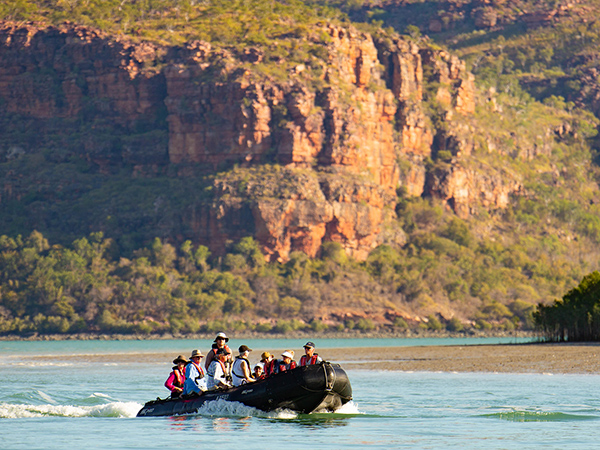
    A small group glides through Kimberley’s rugged coastline by boat, passing ancient cliffs.
    Explore with naturalists and historians by your side.

    5. Relax in luxurious lodgings

    Just because you’re off-grid doesn’t mean you have to rough it. These Kimberley vessels are small in size, but mighty in luxury. True North’s ships come with their own helicopters and a no-sea-days policy, so you’re always in the thick of it. Try the luxurious offerings from Ocean Dream Charters for exploration in style. Kimberley Quest offers a fast boat for easy, off-ship adventures. On the larger end of the scale, Coral Expeditions has open-deck bars and curated wine cellars. And then there’s Ponant’s luxury yachts – sleek and incredibly stylish French sailing yachts.

    A helicopter soars above the sea, with a sleek cruise ship gliding in the distance.
    See the Kimberley from sky to shore.

    6. The adventure continues with pre- and post-cruise experiences

    You’ve already come this far – so, why not go further? Broome makes it easy to ease in before you board, or wind down when your voyage ends, and there is no reason to stop there.

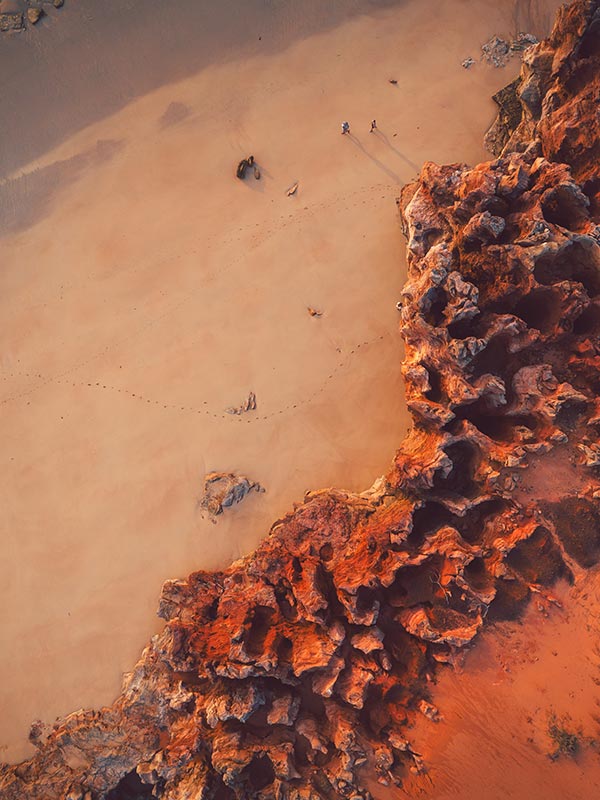
    Head an hour and a half south to Eco Beach to stay off-grid and off the clock. Join a Yawuru guide for a mangrove walk or ocean forage. Dive even deeper into Broome’s pearling past at Willie Creek or Cygnet Bay, where divers and craftspeople still pull the seawater-slicked gems from the deep.

    If you’re still craving adventure, it’s time to go further. Soar over the Buccaneer Archipelago, or detour inland with a 4WD trip along the Gibb River Road. Book a scenic flight over the Bungle Bungles. Or – because you never know when you’ll be back – do all three.

    aerial of people walking on eco beach in the kimberley western australia
    Stay off grid at Eco Beach. (Image: Tourism WA)

    Find out more about your trip to Australia’s North West at australiasnorthwest.com.