An impending total solar eclipse is passing directly over Sydney. It’ll be the last one for 800 years.
There’s something in the cosmos. Australia is in the midst of a rare streak of solar eclipse activity, with five total eclipses sweeping the country between 2023 and 2038.
For context, only 15 total solar eclipses have touched Australia in the past 200 years, making this a truly extraordinary flurry of activity. And the next one? It’s shaping up to be spectacular, cutting across the belly of the continent and ending with a dramatic finale right over Sydney.
So, Sydneysiders especially, mark your calendars: this will be the last total solar eclipse over the city for another 800 years. No pressure.
When is the solar eclipse?
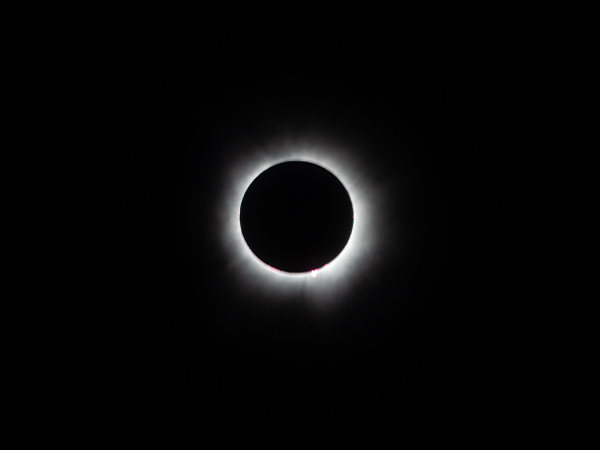
The next total solar eclipse visible from Australia is slated for 22 July 2028. The path of totality will begin in the Kimberley region of WA, sweep across the Northern Territory, outback Queensland, and regional NSW, before passing above Sydney and Wollongong. The last time a total solar eclipse was visible above Sydney? It was 1857 and Australia was in the midst of the Gold Rush. The next time after the upcoming total eclipse? Not until June 3, 2858, more than 800 years!
Where can you see it?
Past eclipses in Australia sometimes barely touch the country. But this upcoming eclipse will dramatically cut across the diagonal of the mainland, offering views of this celestial event to millions.
The path of the total eclipse will start its journey near Kununurra in WA, continue past Tennant Creek and Birdsville, and then pass over Dubbo and Orange before its grand finale above Sydney. Here are the cities where it will be visible:
-
West Island, Cocos Islands
-
Flying Fish Cove, Christmas Island
-
Wyndham, WA
-
Kununurra, WA
-
Tennant Creek, NT
-
Bedourie, Qld
-
Bourke, NSW
-
Nyngan, NSW
-
Dubbo, NSW
-
Orange, NSW
-
Wollongong, NSW
-
Sydney, NSW
-
Central Coast, NSW
What about Uluṟu?
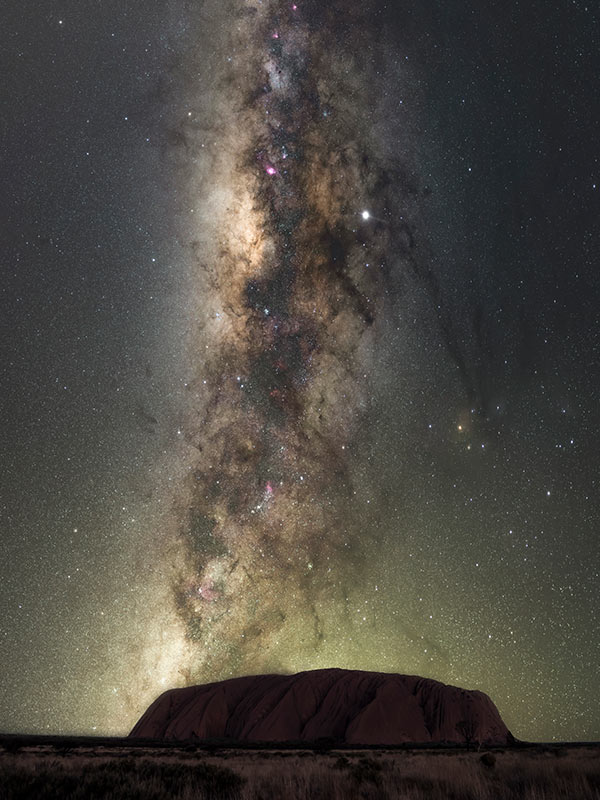
If you’ve been dreaming of a trip to Australia’s spiritual heart, this could be one of the most magical times to make it happen. While Uluṟu isn’t directly under the path of totality, it will still see an estimated 88 per cent totality. And the spectacle against the backdrop of the Red Centre will be unforgettable.
Even outside of eclipse season, Uluṟu is one of the country’s best stargazing destinations. You can learn about Indigenous astronomy during star talks, tours, and even dune-top dinners under the Milky Way.
Want to see more stories from Australian Traveller in your Google search results?
- Click here to set Australian Traveller as a preferred source.
- Tick the box next to "Australian Traveller". That's it.