Here’s everything you need to know about Gibb River Rd

hero media
There are many wondrous things to see along the 660-kilometre Gibb River Road in Western Australia’s Kimberley but, no matter which way you do it – whether you sleep under the stars or at five-star homesteads – it promises to be an unforgettable experience.

Neither saltwater crocodiles nor the blazing sun can put travellers off what many consider is Australia’s ultimate drive holiday. It leads to turquoise gorges, vast cattle stations and crosses ranges that were once coral reefs on the seabed.

Named after geologist Andrew Gibb Maitland, the Gibb traverses the traditional lands of many Kimberley Aboriginal people, including the Njikena, Bunuba, Ongkomi, Ngarinyin, Gedija, Worrorra and Wunumbal language groups.

The Gibb was constructed as a beef road in the 1960s but the history of the track stretches back some 60 years. Pastoralists had cut rough paths in the area to move cattle between the ports of Derby and Wyndham and outlying stations.

Today, most of this road between Kununurra in the east and Derby in the west is still unsealed, which means you will come across long stretches of road with heavy corrugations. It’s all part of the fun.

Gibb River Road main attractions

Windjana Gorge

To visit Windjana Gorge is to visit the bottom of a tropical sea – or what was one, some 380 million years ago. A walk into the valley reveals fossilised remnants of an ancient sea-dwelling creature – the nautiloid – etched into the gorge wall alongside you, and an olive-green valley of prehistoric proportions.

a scenic view of Windjana Gorge, Windjana Gorge National Park
Windjana Gorge is carved out of the Napier Range. (Image: Tourism Western Australia)

But the highlight is in the middle of it all; a bottle green stillness where dozens of freshwater crocodiles lie stationary. It feels like a land lost in time – and perhaps it is.

a freshwater crocodile at Windjana Gorge, Windjana Gorge National Park
Watch out for freshwater crocodiles along the gorge trail. (Image: Tourism Western Australia)

Bell Gorge

This gorge is considered the most beautiful of the Gibb, and with good reason: there are not one, but two Olympic-sized silken black pools here, cupped by an ochre amphitheatre and multi-tiered waterfall, which can be followed downstream to another waterhole, and another, and another.

a scenic landscape at Bell Gorge, Gibb River Road
The stunning Bell Gorge is situated just off Gibb River Road. (Image: Tourism Western Australia)

Though that means you’ll usually be surrounded by other visitors – a good 15 people were there when we visited; practically crowded by Kimberley standards – it’s nothing a swim downstream can’t fix. And let me tell you, little in life compares to sitting back and staring at the sky, as some of the world’s purest waters slide over your shoulders from the waterhole above.

water flowing downstream from above the Bell Gorge
Some of the world’s purest waters slide down the Bell Gorge. (Image: Tourism Western Australia)

Adcock Gorge

Most Kimberley guidebooks don’t have a lot to say about Adcock Gorge so it’s a bit of a secret gem. The short, five-kilometre trip off-road leads you to a fairly ordinary scene – a small, cloudy billabong, filled with a few plants – but follow the creek away from the grassy ‘car park’, over an easy scramble up rocks, and you’ll find a network of well-worn paths leading to a best-kept national secret.

The waterhole here – a beautiful, deep, shockingly turquoise pool – is a lush little den, framed by the majestic red-black swirl of rocky cliff face and lit by sunshine as soft and light as cotton wool. When you’re lying on your back, swimming in that water, take a moment to think about how fantastic outback life can be.

Manning Gorge

The path to Manning Gorge, an hour-long journey through the bush, is defined only by a smattering of painted rocks and strategically placed bits of plastic. There are no council-posted signs. No boardwalks. Just to access the track you need to cross a 100-metre wide creek – but the journey’s worth it for the adventure alone.

Once at your destination you’ll be rewarded with a beautiful, deep pool that you can jump into from several ledges on the waterfall; climb the waterfall to its top and there is another pool above that. Alternatively, turn left when you arrive, and you’ll find waterhole after waterhole downstream.

a tranquil river pool in Manning Gorge
Dip in the tranquil pools of the Manning River. (Image: Tourism Australia)

Gibb River Road tours

An undeniable benefit of travelling the Gibb on an organised group tour is you don’t have to worry about driving, changing your own tyres, carrying enough water or getting lost. Here are some of the best Gibb tours on offer.

Kimberley Wild Expeditions

Family-owned and operated Kimberley Wild Expeditions offers excellent value tours along the Gibb in their custom built vehicles. Accommodation is in pre-erected tents and swags and all meals are included. Choose from the shorter five-day tour or go all out and jump on the 14-day Kimberley trail, which includes a journey to the Mitchell Plateau.

APT Touring

Get off the bitumen and jump on a 4WD adventure with APT, which boasts experienced driver-guides.

the Bungle Bungle Range in Purnululu National Park
Bungle Bungle Range in Purnululu National Park is awe-striking. (Image: Australian Pacific Touring Pty Ltd)

Their 15-day Kimberley Complete departs from Broome and travels along the Gibb, staying at comfy properties, including their Bungle Bungle Wilderness Lodge and Mitchell Falls Wilderness Lodge.

a couple sitting outside their tent at Mitchell Falls Wilderness Lodge
Stay in a luxury tent at Mitchell Falls Wilderness Lodge. (Image: Australian Pacific Touring Pty Ltd)

Need tips, more detail or itinerary ideas tailored to you? Ask AT.

AI Prompt

InStyle Adventures

For a truly intimate touring experience, opt for an adventure along the Gibb with InStyle Adventures.

touring along the Gibb River Road with InStyle Adventures
Explore the Gibb with InStyle Adventures. (Image: Tourism Western Australia)

Their tours are offered as private departures, ideal for couples, families and friends, which are tailored to your interests, abilities and time frame. Alternatively join a scheduled small group shared departure.

a couple hanging out outside their luxury tent, InStyle Adventures, Kimberley
Experience outback luxury. (Image: Tourism Western Australia)

Sleep along the way in stylish outback accommodation, from remote wilderness lodges, to working cattle stations and motel style rooms.

a luxury tent at InStyle Adventures, Kimberley
Sleep under the stars in a luxury tent. (Image: Tourism Western Australia)

Gibb River Road accommodation

Accommodation along the Gibb River Road is as diverse as its waterholes, so you can really choose your own adventure. Whether you’re looking to bunker down at the classic cattle stations of Birdwood Downs, Mount Hart, Mount Barnett, Mount Elizabeth, Drysdale River or Ellenbrae Station, or under the canvas at one of APT’s perfectly positioned lodges, here are some of the best accommodations options.

El Questro Wilderness Park

This swathe of wilderness is home to several different kinds of accommodation, including basic camping and air-conditioned bungalows, but it is the luxe ultra-retreat, The Homestead, that draws travellers from across the globe.

an aerial view of the El Questro Wilderness Park
Embrace off-grid living at El Questro Wilderness Park. (Image: Tourism Western Australia)

With an upper limit of 20 guests at any one time – media moguls, music legends and movie stars often among them – the civilised microcosm of The Homestead sits in perfect contrast to the wilderness around it: a gentle blend of silver service and the rugged outback.

The Homestead at El Questro Wilderness Park
Stay by the side of the river at The Homestead. (Image: Delaware North Companies)

Ellenbrae Station

An English garden in the middle of the outback: why not? But the owners of Ellenbrae Station weren’t satisfied that they’d done enough to create an outstanding Kimberley experience with their verdant oasis: their locally famous scones, served with jam and cream on the homestead’s balcony, have made this a required pit stop along The Gibb.

the entrance to Ellenbrae Station, Gibb River Rd
Rest for a while at Ellenbrae Station.

APT’s Bell Gorge Wilderness Lodge

In an enviable position just 200 metres off the Gibb River Road, Bell Gorge Wilderness Lodge is located on an Indigenous-owned site close to the Imintji Aboriginal community. Although you’re right in the bush, you won’t be roughing it here. Think tented cabins with ensuites, three-course dinners and packed lunches.

the APT Bell Gorge Wilderness Lodge at dusk
The APT tour package includes an exclusive stay at Bell Gorge Wilderness Lodge. (Image: Tourism Western Australia)

Gibb River Road itineraries

The Gibb is a 660-kilometre track accessible between April and October, weather dependent. Allow a week up to 14 days to experience all the Gibb has to offer, or choose your must-see locations for a shorter trip. 

Derby to Kununurra in 11 days

Call into Derby before beginning your journey along the iconic Gibb River Road. During this 11-day odyssey you will discover the West Kimberley Gorges, the Mitchell Plateau and El Questro Wilderness Park.

a scenic view of the Mitchell Falls, Kimberley
The four-tiered Mitchell Falls is a sight to behold. (Image: Sarah Duguid Photography)

Derby to Kununurra in 14 days

Add on a couple of days to the 11-day itinerary by driving to the remote Mitchell Plateau and venture into Purnululu National Park to explore the Bungle Bungles and witness the vast waters of Lake Argyle.

an aerial view of Lake Argyle
The majestic Lake Argyle is teeming with diverse flora and fauna. (Image: Tourism Australia)

Weekly travel news, experiences
insider tips, offers, and more.

Western Gorges Loop 

Plunge deep into the rugged, red reaches of the Kimberley with its majestic caves and cavernous gorges 350 million years in the making. Highlights of this itinerary include Broome, Derby and Fitzroy Crossing.

an aerial view of the Geikie Gorge National Park
Explore Geikie Gorge on a boat tour. (Image: Tourism Western Australia)

Start by travelling from Broome to Derby and on to Windjana Gorge and Fitzroy Crossing. From Fitzroy Crossing take the 20-kilometre drive north to Geikie Gorge National Park and the 90-kilometre journey east to the Mimbi Caves. Either return to Broome or drive on to Kununurra.

an aerial view of the Mimbi Caves, Kimberley
See striking limestone formations and fossilised reefs at Mimbi Caves. (Image: Tourism Western Australia)

Start planning

Fuel and basic supplies are available at a small number of roadhouses and stations along the Gibb River Road. Travellers are advised to carry jerry cans with extra fuel.

a man standing with a bonfire setup at sunset, the Kimberly and Gibb River Road trip
Prepare for a journey of a lifetime. (Image: Sean Scott)

Fuel along the Gibb River Road

Derby – Imintji Store – 227km
Imintji Store – Mt Barnett Roadhouse – 80 kilometres
Mt Barnett Roadhouse – El Questro – 320 kilometres
El Questro – Kununurra 81 kilometres

Fuel along the Kalumburu Road/Mitchell Plateau

Drysdale River Station

FAQ: The Gibb River Road

Where does the Gibb River Road start and end?

Just a few kilometres outside Derby (a two-hour drive from Broome) and 51 kilometres from Kununurra. 

driving along Cockburn Ranges, Gibb River Road
The iconic Gibb River Road starts from Derby to Kununurra. (Image: Tourism Western Australia)

How long does it take to drive the Gibb River Road?

Allow 7-14 days to experience all the Gibb has to offer. If you want to zoom along the 660-kilometre track without hardly any stops it would take 10 to 11 hours.

driving along Gibb River Rd at dusk
Buckle up and get ready for the long drive. (Image: Tourism Western Australia)

How difficult is the Gibb River Road?

The majority of Gibb River Road is unsealed, which means you will come across long stretches of road with heavy corrugations, loose gravel, potholes and rocks. Be prepared for a bumpy and sometimes slow journey for most of the trip.

an aerial view of a vehicle driving along the red dirt on Gibb River Rd
Red dirt stretches across the remote Gibb River Rd. (Image: Tourism Western Australia)

Is Gibb River Road 4WD only?

To get the most out of the Gibb River Road you need a 4WD. If the Pentecost River level is high you won’t be able to go through it without a 4WD. For a taste of the Gibb without a 4WD you can travel from Kununurra to El Questro’s Emma Gorge, which is 25 kilometres on a sealed section of the Gibb River Road and just 2 kilometres on a gravel driveway.

a 4WD crossing the Pentecost River along the Gibb River Road
The drive across Pentecost River along the Gibb River Road. (Image: Tourism Western Australia)

Want to see more stories from Australian Traveller in your Google search results?

  1. Click here to set Australian Traveller as a preferred source.
  2. Tick the box next to "Australian Traveller". That's it.
Leah McLennan
Leah McLennan is a freelance writer based in Darwin. She was a journalist in Sydney for over a decade and counts her time as travel editor for Australian Associated Press as one of the highlights of her career. From exploring remote campsites in the Top End with her family, to seeking out new art galleries in faraway cities, she’ll grab an adventurous or arty travel experience within her reach.
View profile and articles
hero media

Your Mandurah guide: art, dining & dolphins await in WA’s coastal gem

    Monique Ceccato Monique Ceccato
    Discover the perfect road trip stopover between Perth and wine country.

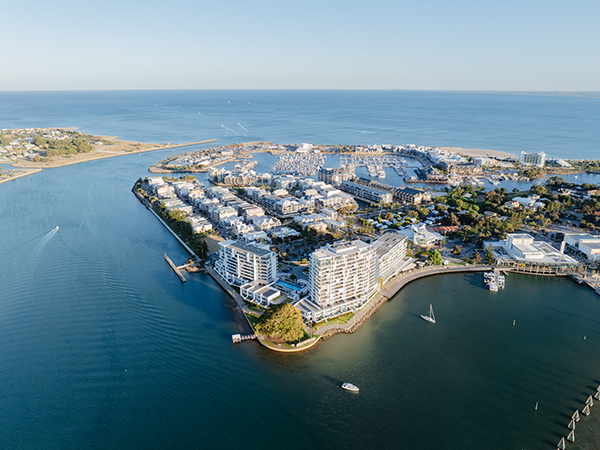
    Western Australia punches above its weight when it comes to coastal hot spots, but no other town or city has seen a tourism boom quite like Mandurah. Named Australia’s Top Tourism Town in 2023, it’s the relaxed, beachside break you’ve been searching for. And it’s perfectly placed, sitting between Margaret River and Perth, as it’s just a 55-minute drive from Perth’s CBD. Which is why we’ve put together your ultimate Mandurah guide.

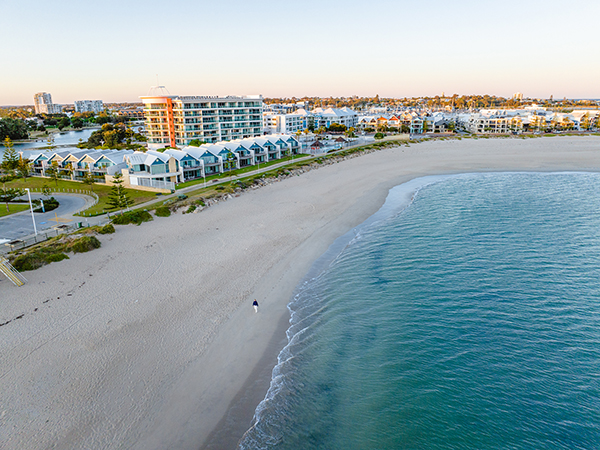
    Aerial view of Mandurah.
    Plan your perfect coastal escape to Australia’s Top Tourism Town of 2023.

    The best things to do in Mandurah

    Wetlands and rivers, ocean and inlet; Mandurah’s laid-back lifestyle centres around the aquatic. Its waterways cover twice the ground of Sydney Harbour – measuring some 134 square kilometres in total – and form a unique environment for oceanic and estuarine flora and fauna to thrive.

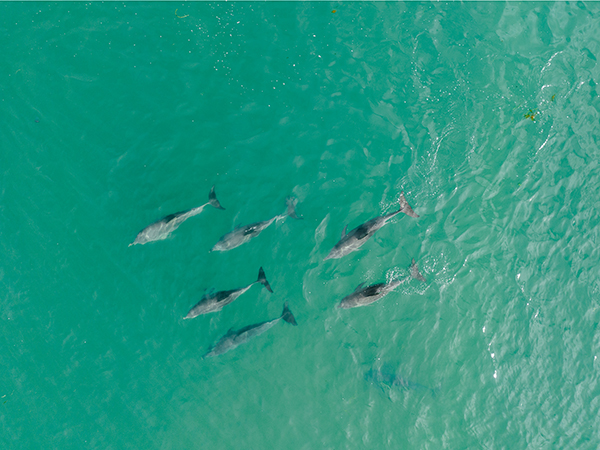
    In the city’s estuary lives perhaps the region’s most famed inhabitants – a resident pod of 100 bottlenose dolphins – and the inlet’s silty bottom is home to the prized blue manna crab. Spot the former breaching and playing on an hour-long dolphin cruise through the channels, or try your hand at catching the latter by wading through the estuary’s shallows with a scoop net in hand.

    While swimming at the circular Kwillena Gabi Pool, chance encounters with the local wildlife aren’t uncommon. The sheltered estuarine pool takes its name from the traditional custodians of the land, the Bindjareb people, and directly translates to ‘dolphin waters’. Jutting out of the eastern foreshore, it’s enclosed by a ring of net-free floating pontoons, which allow the dolphins to swim freely through the attraction.

    If that’s a little too close for comfort, book a kayak tour with Down Under Discoveries. The dolphins have been known to cruise beside the paddle-powered crafts, which are a fun, family-friendly way to explore the city’s inner waterways.

    Dolphins swimming in Mandurah.
    Watch dolphins glide by as you explore Mandurah.

    You don’t have to be on the water to appreciate the coastal city’s aquatic beauty, with 600 kilometres of cycleways and scenic walking trails traversing Mandurah’s estuary, inlet and coast.

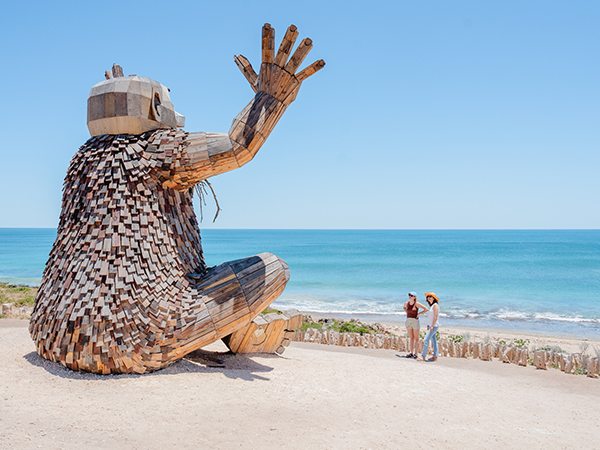
    Follow the 30-kilometre coastal trail and you’ll come face to face with one of Thomas Dambo’s headline-making ‘Giants of Mandurah sculptures, Santi Ikto, along the way. There are five sculptures around Mandurah in total, hidden among gum-filled reserves or sitting sentry over the water.

    Head to the Mandurah Visitor Centre to pick up a map to pinpoint their exact location and download the traveller’s companion to learn more about the sights along the way. Or join a three-hour e-bike tour from The Bike Kiosk and you’ll stop by two of the giants – Santi Ikto and Yaburgurt Winjan Cirkelstone – as you sightsee central Mandurah.

     The towering Santi Ikto, one of Thomas Dambo’s iconic Giants of Mandurah.
    Meet Santi Ikto, one of the legendary Giants of Mandurah.

    Where to eat in Mandurah

    Mandurah’s culinary scene reflects its laid-back lifestyle, with large, honest meals and locally brewed beer. After visiting Lake Clifton’s 2000-year-old thrombolites, head to the peppermint and gum-shaded beer garden at Thorny Devil Brewery. Tuck into a platter of house-smoked meats and an ale pulled fresh from the tanks. Closer to town and right on the waterfront is Boundary Island Brewery; here, woodfired pizza, pub-style seafood dishes and easy-drinking brews are centre stage.

    On a Murray River Lunch Cruise, the focus is as much on the environment around you as the food you’re filling up on. Help yourself to the colourful salads and freshly cooked meats on the buffet as you meander up the winding, jarrah tree-lined waterway, stopping at the heritage Cooper’s Mill for a quick walking tour along the way.

    Keep your eyes trained on the Creery Wetlands as you pass – you’ll spot much of the region’s migratory birdlife, and, as always, might see the playful bottlenose dolphins in the inlet.

    The most memorable meals aren’t necessarily always the fanciest, and lunch aboard a self-skippered Mandurah BBQ Boat is a testament to that. All food and beverage prep is left up to you as you cruise through the canals, sausages and steaks sizzling away on the central hot plate.

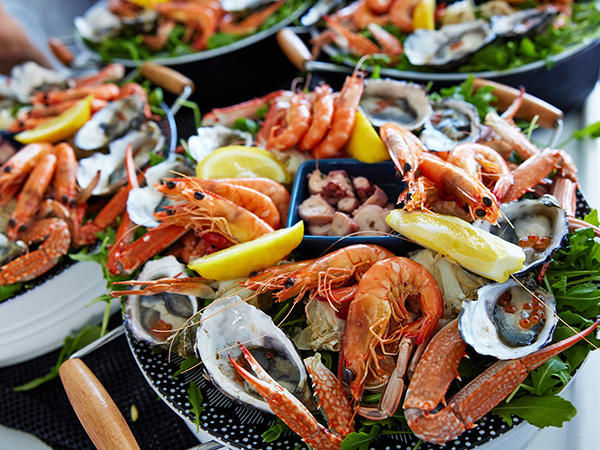
    If seafood is more your kind of fare, board the Wild Seafood Experience, where dolphin cruise meets long table lunch. Eight courses of crab, crayfish and scallops await.

    A table filled with plates of crab, crayfish, and scallops.
    Dine on the water with eight courses of ocean-fresh fare.

    Where to stay in Mandurah

    With so many waterways comes abundant waterside stays. Like the self-contained Seashells Mandurah on the shores of Comet Bay. The calm, oceanic outlook from the one-, two- and three-bedroom apartments and villas is as close to Maldivian as Mandurah gets. Families especially enjoy the property, bouncing between the protected cove and the beachfront pool for endless hours of fun.

    Seashells Mandurah; on the shores of Comet Bay.
    Stay right by the sea.

    The Sebel Mandurah, just a hop, skip and jump from the Mandurah Ocean Marina, has a different outlook entirely, overlooking the estuary and lively foreshore on the other side. It’s also within walking distance of the Mandurah Performing Arts Centre, cinema and a swathe of waterfront bars and eateries.

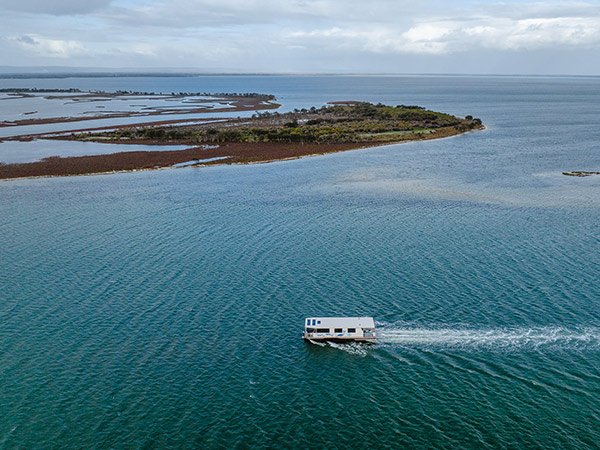
    But you can’t get any closer to the water than on a vessel from Mandurah Houseboats. You don’t need a skipper’s ticket to hire one, nor do you need comprehensive boating experience; just a full driver’s license and your undivided attention during the pre-departure tuition will do. Then you’re free to take to the estuaries and tributaries for a few nights of peaceful rest, surrounded by the very element that makes Mandurah so special.

    A houseboat cruising in Mandurah along the river
    Captain a houseboat to explore Mandurah at your own pace.

    Plan your next WA getaway in Mandurah.

    Gibb River Rd – Everything You Need to Know | Australian Traveller