The top places you should stop along the Nullarbor

hero media
The Nullarbor crossing is infamous among road trippers, with legends of how monotonous the 1256-kilometre route across southern Australia can be.  But there is plenty to surprise travellers embarking on the journey.

From cool ‘outback’ pubs and awesome ranch-style campsites to eerie horror-movie-style motels you should drive straight past, the Nullarbor is an iconic Aussie road trip that cements itself in your subconscious. Dismiss the rumours of mind-numbing boredom, get the music cranking and prepare yourself for a sometimes beautiful but often quirky journey.

Don’t miss: Driving the Nullarbor in summer: what you need to know

Your first stop in the east: Ceduna

There’s not much in Ceduna, South Australia, except a pretty foreshore, jetty and basic services, but it’s the last big-ish town you’ll come across before you head west and, therefore, the eastern launching point for any adventure across the Nullarbor. This is where you fill up on fuel (it’s worth comparing prices at the few service stations), stock up on groceries and ensure you have plenty of water for the journey.

Ceduna Jetty, SA
Ceduna in SA is the last big-ish town you’ll come across. (Image: South Australia Tourism Commission)

It’s also wise to pop into the Visitor Information Centre, as the staff members are a wealth of knowledge and you can pick up a detailed paper map to help you plot your route and number of travel days (four is a good amount).

Surfers’ secret: Cactus Beach

You’d be forgiven for thinking you’d stepped onto the set of a 1980s surf doco when arriving at Cactus Beach, officially called Point Sinclair Camping Ground. It’s a half-hour detour (21km) off the Eyre Highway at Penong but it’s worth it. Cactus is one of the first accommodation options after Ceduna and a highlight for any ocean-loving road-tripper.

Cactus Beach SA
Cactus Beach is a half-hour detour but worth it for the surf and camping spot. (Image: Michael Waterhouse Photography

Picture vintage caravans and 4WDs protruding from coastal scrub just metres from roaring waves that have attracted surfers for decades. Of course, you don’t have to camp here – you could just come for the surf – but the campsite is cool, with firewood topped up daily, a rudimentary camp kitchen where wetsuits and garlands of shells hang side by side, and two cold showers, including a “little old ladies’ shower" where privacy is guaranteed and wetsuits prohibited. Around the corner from the campground is Port Le Hunte, a wharf and shark-netted swimming area.

Camping at Eyre Peninsula
There are plenty of good camping spots by water during this part of the journey. (Image: Che Chorley)

Don’t miss: Crossing the Nullarbor: your top questions answered

Need tips, more detail or itinerary ideas tailored to you? Ask AT.

AI Prompt

Sand dunes & history: Fowlers Bay

If you’re fascinated with small Aussie towns then you’ll find Fowlers Bay one of the most curious stops along the Nullarbor. Odd in appearance due to the towering sand dunes encroaching on the buildings and the empty streets, this little-known town offers a peaceful respite from the bitumen. Named by English navigator Matthew Flinders in 1802, Fowlers Bay consists of a mix of historical stone houses and ramshackle fishing shacks, with a quiet beach, wharf and general store where you’ll be able to grab a cuppa and bite to eat.

Sand dunes at Fowlers Bay Conservation Park SA
Visit the towering sand dunes of Fowlers Bay Conservation Park. (Image: Naomi Mackie/@boys_run_free)

There are few people about the day I visit, meaning we share the foreshore with only a handful of other road-trippers and enjoy a bayside lunch before scaling the nearby dunes. From the top of the dunes, there are great 360-degree views, so make sure you take your camera. This once active port remains a good place to cast a fishing line off the wharf or beach, and has a reputation for great whale watching between May and October. The dirt road in can be heavily corrugated so take it slow and give yourself plenty of time to get there.

Kangaroos in Fowlers Bay SA
Spot the wildlife along the road as you pass through Fowlers Bay. (Image: Kane Overall)

After Fowlers Bay, you’ll pass through the long stretch known as Yalata. Keep an eye out for the great native animal road sign that’s worth a selfie.

Roadhouse stops: Nullarbor Roadhouse & more

There are plenty of roadhouses along the Nullarbor where you can top up your fuel, stretch your legs and fill your belly. One of the best is Nullarbor Roadhouse, where the manager is friendly and you can grab a coffee and slice of cake. It’s also a good spot to stay the night (there’s a motel and campground) as there’s a tidy little bar with a pool table and pinball machine. Be sure to wander over to the still-standing original roadhouse from the 1950s before moving on. Another great roadhouse full of character is Cocklebiddy Motel, over the border in WA. Again, there’s a quirky little bar and diner.

Nullarbor Roadhouse is one of the best places to stay or stop for food when crossing the Nullarbor. (Image: Michael Waterhouse Photography)

Caiguna is a somewhat weird stop and reminiscent of the roadside motels you see in American horror films – though, I’m sure they’re not like that inside – and besides, some might find that concept thrilling. Although the roadhouse itself is large and clean, the playground in front is a little dilapidated and looks somewhat unsafe; best not to linger.

Weekly travel news, experiences
insider tips, offers, and more.

The end of the line: Norseman

Norseman marks the end of the Nullarbor but it’s no oasis. This town is tiny and travellers still have a couple of hours’ driving before reaching the worthy stops of Kalgoorlie to the north or Esperance to the south. What Norseman is good for is more fuel, grabbing essential groceries and letting the kids run amok in the large public playground. And, of course, celebrating the official end of the Nullarbor crossing.

The Esperance landscape
Continue on from Norseman to Esperance in WA.
More: 10 Greatest Road Trips in Australia

Want to see more stories from Australian Traveller in your Google search results?

  1. Click here to set Australian Traveller as a preferred source.
  2. Tick the box next to "Australian Traveller". That's it.
Jennifer Ennion
Jennifer Ennion is a freelance travel and ski journalist who loves encouraging people to spend more time outdoors. From snorkelling with belugas in sub-Arctic Canada to hiking the Himalayas, Jennifer is constantly searching for stories that inspire readers to push their boundaries.
View profile and articles
hero media

8 ways to discover a new side of Port Stephens

    Kate Bettes Kate Bettes
    Aussies might think they know what Port Stephens is all about – but it’s time to take another look.

    You might’ve driven through this NSW coast town. Maybe even stopped for fish and chips or a quick dip. But spend a long weekend in the new Port Stephens, and you’ll seriously regret not doing it sooner. We’re talking treks across beaches, reef dives and up-close time with rescued koalas.

    All in all? It only takes a day before you see Port Stephens in a whole new light, and not much longer until it’s locked in as your favourite family destination.

    1. Stockton Sand Dunes

    Port Stephens incredible Stockton Sand Dunes are the largest moving sand mass in the Southern Hemisphere. They shift like an endless magic trick across the Worimi Conservation Lands, a 4200-hectare coastal co-managed by the Traditional Owners.

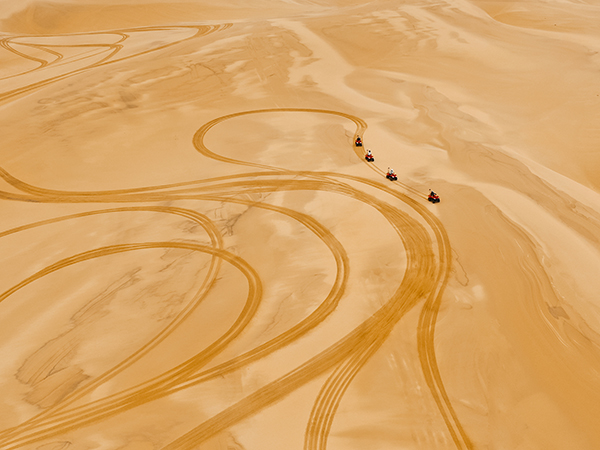
    Tear over them in a 4WD. Rev through valleys soft as melting ice cream on a quad. Carve down 30-metre slopes on a sandboard. However you choose to cross them, you’re guaranteed a seriously wild ride.

    Four rugged 4WDs kick up trails of golden dust as they charge across the sweeping desert landscape.
    Chase thrills across shifting sands. (Image: Destination NSW)

    2. Scale Tomaree Head Summit Walk

    A short climb through bushland opens up to the coastal drama of Tomaree Head. Spot Zenith, Wreck and Box Beaches. See the Fingal Island lighthouse and offshore rookeries where Australia’s rarest seabird, the Gould’s petrel, nests.

    History buffs can’t miss the WWII gun emplacements. And if you’re hiking between May and November, bring binoculars. Travelling whales might just be breaching below.

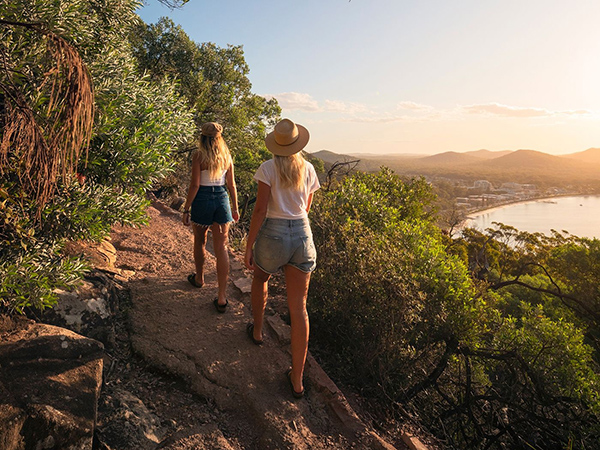
    Friends enjoying a scenic walk along the Tomaree Head Summit Walk in Tomaree National Park, Port Stephens.
    Climb Tomaree Head for jaw-dropping coastal views. (Image: Destination NSW)

    3. Watch out for whales

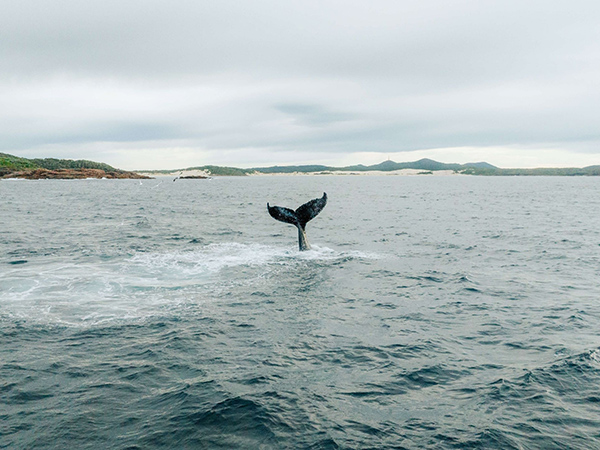
    You’ve seen the spouts of migrating humpbacks and southern right whales from shore. Set sail from Nelson Bay to see them up close. Cruise straight into the action, with tail-slaps, barrel rolls and all.

    And they’ve got competition from the local show-offs. Port Stephens bottlenose dolphins leap and play. Some tours even spot pudgy fur seals, spending lazy days soaking up the sun on Cabbage Tree Island.

    A whale’s tail on the sea’s surface.
    Watch for ocean tails. (Image: Destination NSW)

    4. Port Stephens Koala Sanctuary

    Pop into the Port Stephens Koala Sanctuary to learn about the rescued koalas who climb, nap, snack and heal in this natural patch of bushland. Wander the immersive Sanctuary Story Walk to discover more about their habits, then head to the SKYwalk – a treetop platform constructed for spotting these eucalyptus-loving locals. Peek into the hospital’s viewing window, where sick or injured koalas may be resting in their recovery enclosures.

    Not enough time around these adorable marsupials? Stay overnight in silk-lined glamping tents.

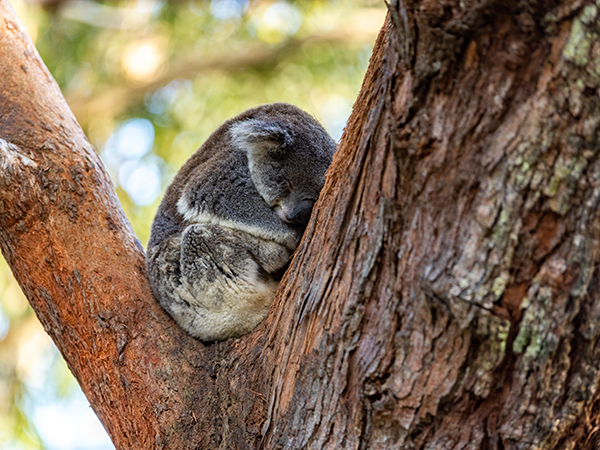
    Koala sleeping in a tree at Port Stephens Koala Sanctuary, One Mile
    See koalas in their natural habitat. (Image: Destination NSW)

    5. Diving Port Stephens

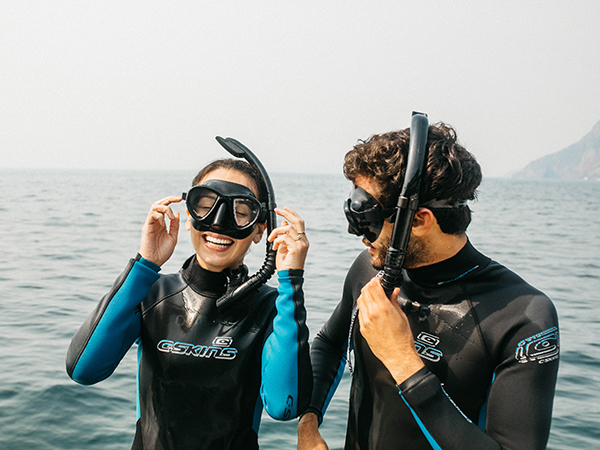
    Port Stephens has some of NSW’s best dive spots. At Fly Point, float through sponge gardens and coral castles thick with nudibranchs (AKA sea slugs). Halifax Park has blue gropers and crimson-banded wrasse, while Shoal Bay’s seagrass meadows hide pipefish, cuttlefish and octopus.

    Accessible only by boat, Broughton Island is home to a vast array of marine (and bird) life. Snorkel with blue devilfish and stingrays at sites like The Looking Glass and North Rock. More experienced divers can head out with one of the many PADI-certified operators.

    At nearby Cabbage Tree Island, expect to see shaggy-faced wobbegongs cruising along.

    A couple suited up and ready to dive into adventure.
    Suit up and dive into Port Stephens’ vibrant marine life. (Image: Destination NSW)

    6. Irukandji Shark and Ray Encounters

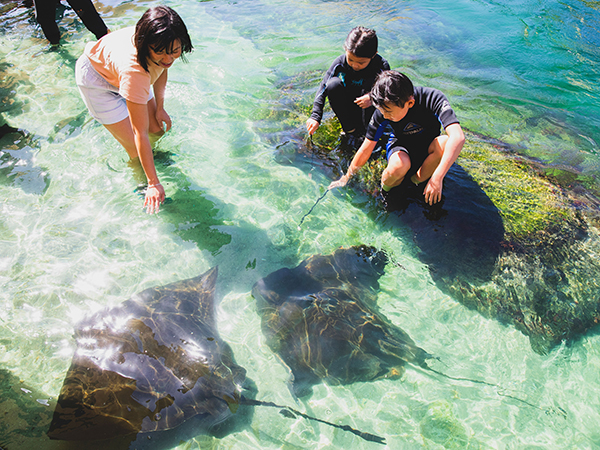
    Not quite ready to dive in? Irukandji Shark and Ray Encounters is the perfect way to spot local marine life without getting too deep. But there’s no obnoxious glass tank tapping here. Instead, this interactive aquarium allows guests to wade into natural-style lagoons that mimic the real thing.

    Gently pat Port Jackson and bamboo sharks, hand-feed rays, and feel their sandpapery skin with your fingertips. It is all under expert guidance. If you want to go deeper, pop on a wetsuit and swim alongside tawny nurse sharks, white-tipped reef sharks and zebra sharks in the lagoon.

    Family enjoying an animal feeding experience at Irukandji Shark and Ray Encounters, Anna Bay.
    Meet the ocean’s friendliest faces at Irukandji. (Image: Destination NSW)

    7. Fish the estuaries

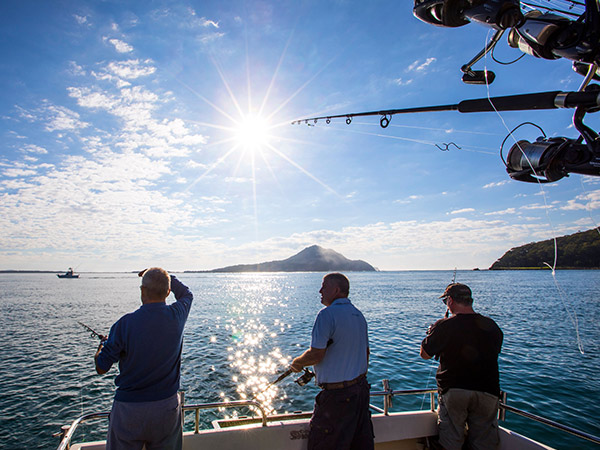
    Fishing fanatics will fall for Port Stephens hook, line and sinker. Here, one of the largest estuary systems in the whole state sees tidal rivers and mangrove ecosystems. Waterfronts are thick with oysters, and residential fish that might include anything from bream, whiting and flathead, to blue swimmer crabs, kingfish and longtail tuna.

    If you prefer to choose your own adventure and fish offshore, you can hire a boat from one of the marinas and set your own course.

    three men fishing on a boat in port stephens
    Join a tour or chart your own fishing trip. (Image: Destination NSW)

    8. Taste new Port Stephens flavours

    With plenty of activity to fill your days, refuelling on delectable cuisine becomes equally important. And Port Stephens answers the call.

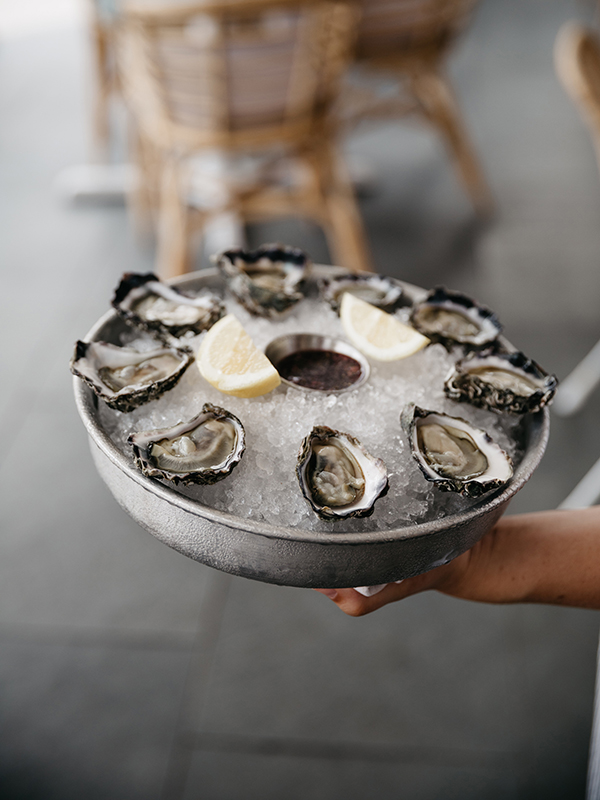
    Pop into Holbert’s Oyster Farm for fresh-farmed Port Stephens rock oysters and Pacific oysters, Australian king and tiger prawns, as well as a variety of tasty sauces to try them with.

    Take a group to Atmos for an authentic Greek experience over large shared dishes and Greek-inspired cocktails. Or feast on sea-to-plate, modern Australian dishes at the pet-friendly Restaurant 2317.

    A plate of fresh oysters.
    Slurp your way through the region’s best oysters. (Image: Destination NSW)

    Start planning your Port Stephens getaway at portstephens.org.au.