Everything you need to know about Australia’s Big Banana

hero media
You could say it is almost a rite of passage for Aussie families on their annual road trip to make a pitstop at the Big Banana in Coffs Harbour on their way up or down the east coast of Australia, but why do we love the oversized fruit so much?

In 1995, the Big Banana – arguably our most renowned Big Thing – was voted the most bizarre and grotesque tourist attraction in the world by 200 globetrotting young Australians, edging out the Big Pineapple at Nambour and the Giant Penis seat in Amsterdam’s Sex Museum. It might not be everyone’s idea of a tourist attraction, but there is more to the Big Banana than meets the eye.

The size of the Big Banana

Builder Alan Harvey began work on the 13m long, 5m high, 2.4m wide banana in September 1964 and had it finished in just three months, allowing the impressive-looking timber-framed, lurid yellow ferroconcrete structure to open just in time for Christmas.

Many people think the Big Banana has shrunk, secretly replaced by a smaller version a few years ago. “We did move the banana a few metres forward and a metre or so higher in 1995 to give it better visibility from the Pacific Highway, but it definitely hasn’t shrunk," says Rubie (the previous owner). “It’s just that people who come back to visit have grown up."

What to do at the Big Banana

No mere monstrous foodstuff, today the Big Banana is an educational resource and home to a myriad of banana-based recreational and cuisine delights that attract well over one million visitors each year.

Shop banana products and souvenirs

You can buy a bewildering bevy of banana products including fresh bananas, dried bananas, chipped bananas, banana jams, banana chutneys and banana pickles, choc-coated frozen bananas, banana splits, banana cake, banana muffins and banana smoothies.

You can go on a real banana bender in the souvenir shop, which boasts hundreds of balmy banana products, from the practical to the bizarre to the tasteless. Our favourites are the four different varieties of fridge magnets and the Big Banana water pistol.

Big Banana Souvenirs
You can pick up a souvenir to commemorate your visit to the Big Banana.

Need tips, more detail or itinerary ideas tailored to you? Ask AT.

AI Prompt

Cool off at the Water Park

The Water Park boasts 7 slides, including open-body slides, two-person tube slides and a 45-degree Kamikaze slide for thrill seekers. For the younger crowd, they have two inflatable slides and a kids’ water play area with a tower, 3 additional kids’ slides, interactive water jets, toys and a tipping bucket. A family ticket for two adults and two kids is $66.

Go on the rides at the Big Banana Fun Park

The Big Banana’s indoor Giant Slide is the biggest slide of its kind in Australia, with 6 lanes, each 83 metres long and standing at 17.5 metres tall, this is not for the faint-hearted. The competitive among us can race their loved ones down the slide with an interactive scoring system to report back who was the quickest. Prices start at $7 for two slides.

The 4D Ride Simulator gives visitors the choice between four films, including Moon Thunder, Dino Safari 2, Canyon Coaster and Wild West Mine Ride. Prices start at $8 for a single ride.

The Toboggan Ride runs wraps around the park for over half a kilometre, with views of the Pacific Ocean visible as you hug the turns and navigate your way around the track to the finish line. Prices start at $7.

You can also take a spin on the Ice Skating Rink, play a game of mini golf and fight it out in a round of Laser Tag.

Kids on Toboggan ride at the Big Banana
The toboggan is one of many rides at the Big Banana.

History of the Big Banana

American entomologist John Landi loved Australia so much while on a six-month research trip in 1962 that he and his wife, Betty, decided to emigrate and purchased a five-hectare banana plantation at Macauley’s Headland, just north of Coffs Harbour.

Inspired by a large pineapple he had seen on top of the Dole Cannery in Hawaii, Landi figured a similarly bewitching banana would help promote sales at his roadside fruit stall. The local chapter of the Banana Growers Federation thought it was such a good idea they agreed to meet half the construction costs and the Big Banana opened in December 1964.

In 1968 Landi sold his share of the business to his partner John Enevoldson, who kept it until 1988, when it was purchased by local entrepreneur Bob Johnson. Johnson acquired adjoining properties and undertook a $30 million redevelopment of the complex, turning it into a showcase for horticultural education. However, it all went pear-shaped, and Kevin Rubie and his wife Marie bought the complex from administrators in 1993. The couple went on to develop the Big Banana into more of a fun park by adding in the Wiegand Family Toboggan Ride in 1996 and the Ice Skating Rink in 1999.

The Rubie family and the development company Village Building Co. became joint venture partners in 2005. The partnership resulted in the addition of The World of Bananas Theatre and Tour experience, the Laser Tag arena, a three-hole Mini Golf Course and the biggest Water Park between Sydney and the Gold Coast. As of December 2016, Village Building Co. became the sole owner of the Big Banana Fun Park after purchasing the remaining share of the business from Kevin and Marie Rubie.

Big Banana
The Big Banana was constructed in the 1960s.

Weekly travel news, experiences
insider tips, offers, and more.

The Big Banana details

How to get there: The Big Banana is a five and a half hour’s drive from Sydney via the M1 and Pacific Highway, four and a half hours drive from Brisbane. You can fly from Sydney and Brisbane with Qantas, Tiger Air or Virgin.

Address: Pacific Highway, 3  kilometres north of Coffs Harbour, NSW

Contact: Phone: (02) 6652 4355

 This is an edited extract from Big Things: Australia’s Amazing Roadside Attractions by David Clark published by Penguin Books, rrp $24.95.

Are you planning a road trip along Australia’s northeastern coast this year? Make sure you read our guide to where to eat, sleep and stay on the NSW North Coast.

Want to see more stories from Australian Traveller in your Google search results?

  1. Click here to set Australian Traveller as a preferred source.
  2. Tick the box next to "Australian Traveller". That's it.
Australian Traveller

Australian Traveller

View profile and articles
hero media

Why the Central Coast is a foodie mecca

    Elise Cullen Elise Cullen
    Underpinned by grassroots hospitality and award-winning organic produce, the Central Coast’s gastronomy scene is thriving, with the region quickly becoming one of the best destinations in NSW for epicures.

    Revered for its rugged natural splendour and laid-back seaside charm, NSW’s Central Coast has soared in popularity in recent years, becoming a top choice for an affordable slice of weekend escapism for Sydneysiders. Just a short 45-minute drive north of Sydney, it’s the kind of place that, no matter how many times you visit, leaves you with the sense that there’s always more to uncover. But while the ocean pools, bushwalks and beaches have (rightly) taken the spotlight, it’s the Central Coast food offerings which have been quietly simmering in the background.

    From fresh-as-it-gets seafood and juicy organic citrus you can pluck yourself, through to regenerative farming and reputable farm-to-fork dining, this coastal gem has become an idyllic foodie mecca. Here are some of the best ways to immerse yourself in grassroots hospitality and gastronomic glory on the NSW Central Coast.

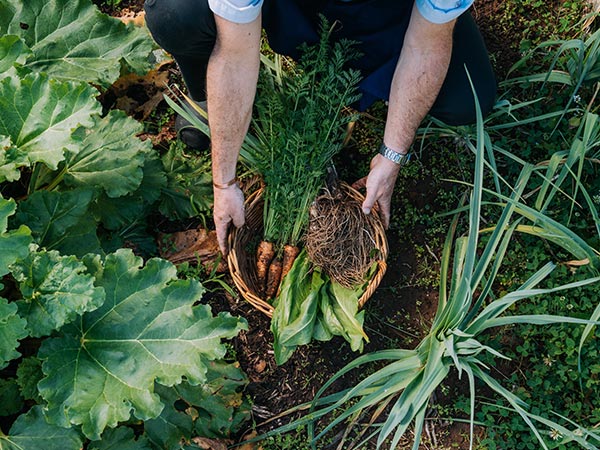
    vegetables in a basket at Bells Garden at Bells At Killcare
    From picking your own, to farm-to-table, discover the best Central Coast food experiences. (Image: Remy Brand)

    Central Coast oyster experiences

    From humble grub to opulent delicacy, oysters have ascended into a league of their own. Epicureans are fascinated by them – willing to pay upwards of $35 per dozen (double at some of Sydney’s reputable fine dining restaurants) – and ‘shuck bars’ seem to be popping up at every milestone celebration.

    But it’s rare to find places that really draw back the curtain on how they’re farmed and why everyone is mad for these molluscs. The Central Coast, however, is home to several of these venues. With its pristine waters, mild climate and nutrient-rich estuaries, it’s the perfect breeding ground for oysters.

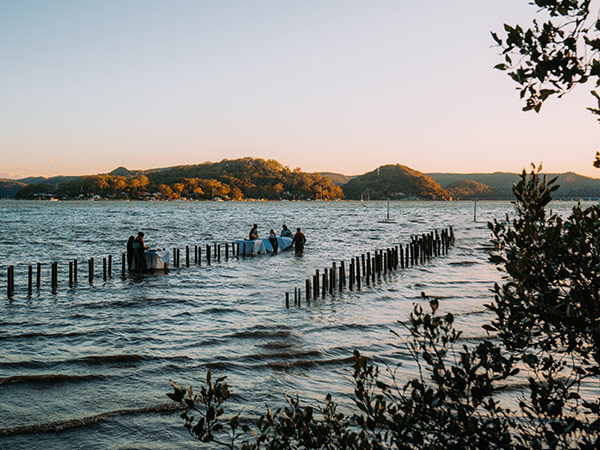
    Learn about oyster farming and, importantly, how to shuck them at Sydney Oyster Farm Tours. Nestled on the Hawkesbury River at Mooney Mooney, Sheridan Beaumont and her team offer a hands-on foodie experience where you can feast on dozens of oysters (white tablecloth and all) while wading through the calm waters. You can even bring your own bottle of bubbles to wash them down.

    guests in the water for an experience at Sydney Oyster Farm - Central Coast food
    Learn tricks of the trade at Sydney Oyster Farm Tours. (Image: Remy Brand)

    Elevate your oyster knowledge even further by heading north over the Hawkesbury River Bridge to the Hawkesbury River Oyster Shed. Tour their scenic oyster leases and saltwater paddocks by boat to uncover the distinct characteristics of the Sydney rock oyster and creamy Pacific oyster. They’ve also partnered with Broken Bay Pearl Farm to offer a one-of-a-kind oyster and pearl farming guided tour, showcasing the Central Coast’s very own pearl oyster, the Broken Bay ‘Akoya’. But if you’re simply in the mood to devour a dozen delectable oysters while soaking in the tranquil river views, pull up a chair at the shed. It’s friendly in every sense of the word: pets, families and BYO welcome.

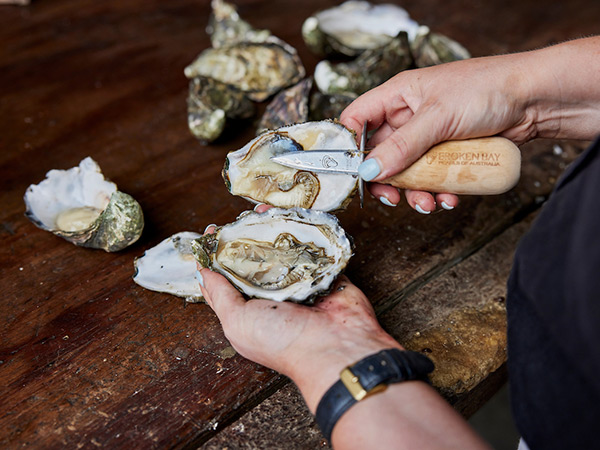
    shucking oysters at Broken Bay Pearl Farm
    Taste freshly shucked oysters at Broken Bay Pearl Farm. (Image: James Horan)

    Central Coast farms to pick your own fruit

    While the Central Coast is known for its breathtaking 40 beaches and 80-kilometre coastline, its lush hinterland is equally impressive – abundant with orchards and agriculturally rich farmland. And when it comes to the simple joy of picking your own fruit, the Central Coast is a ripe playground.

    Family-owned Meliora Farm at Peats Ridge is an orchard that blends conventional, biodynamic and organic philosophies. Third-generation farmer Tim Kemp and his wife Elise are dedicated to honouring the family legacy by growing a rich variety of oranges, lemons, limes, mandarins and avocados. In late May, roam the sustainable and nutrient-dense property during ‘Pick Your Own’ weekends.

    Eastcoast Beverages is another bountiful citrus orchard boasting over 60 hectares of fruit. From June you can learn about the cultivation of high-quality ingredients – like lemons, limes, grapefruit and oranges – by touring both the farm and factory before setting out and picking your own straight from the source. You can also sample an array of citrus-inspired sweet and savoury treats at their on-site cafe, Bambino’s.

    If it’s just juicy oranges you’re after, Cedar Farm in Dooralong is a must-visit. Located about 30 minutes north of Peats Ridge, it features 15 flourishing orchards and over 3000 orange trees – with take-home bags during the season (from July) at low prices. Not bad for a fruity weekend haul.

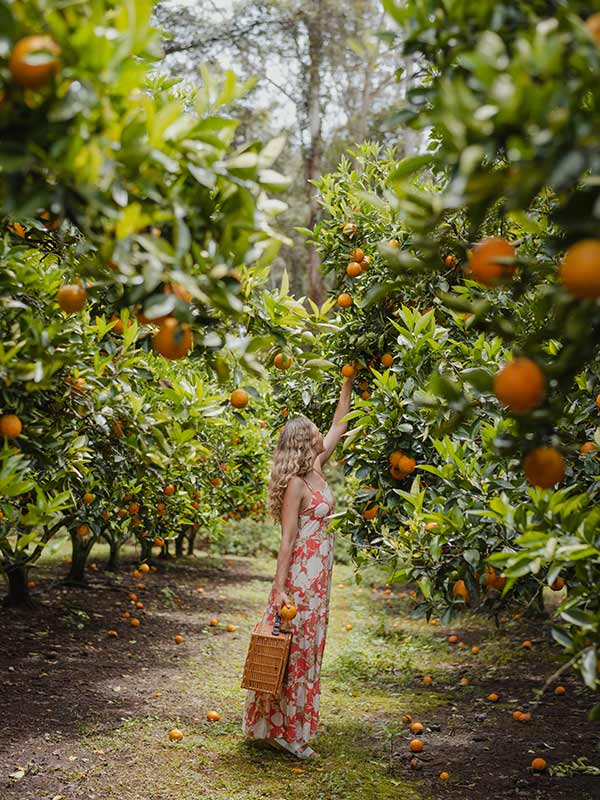
    woman picking oranges at Oranges at Dooralong
    Pick your own citrus fruits on the Central Coast. (Image: James Vodicka)

    Organic dining

    What makes the Central Coast hinterland so special is the unwavering respect the communities have for their cherished backyard. Locally owned and operated farms are all striving for more sustainable practices and methods to both enhance biodiversity and reduce environmental impact, each with a heartwarming food philosophy.

    The Food Farm in Wyong Creek believes good food is worth both the work and the wait. Devoted to regenerative farming, first-generation ‘farmily’ Tim Eyes and Hannah Greenshields are recognised for their grass-fed, grass-finished beef and pasture-raised, gold medal-winning chickens. With an open gate policy, The Food Farm encourages visitors to swing by and try some of their slow-grown produce at their small ‘honesty’ farm shop. With no staff, you can pick up a few quality cuts of meat and pasteurised eggs, leaving the owing amount in cash or via eftpos.

    Keeping the spirit of generational organic farming alive is Fanelli Organics. Nestled in the Central Coast’s scenic and sleepy Mangrove Mountain, founders Eden and Louise Fanelli own over 45 hectares of plentiful farmland and orchards that produce a huge range of organic fruit and vegetables, like purple Dutch carrots, blood oranges, broccoli and Tuscan kale. A true home-grown operation, Fanelli Organics shares its fresh produce with local restaurants and community markets, including the beloved markets at Like Minds Cafe at Avoca Beach every Wednesday afternoon.

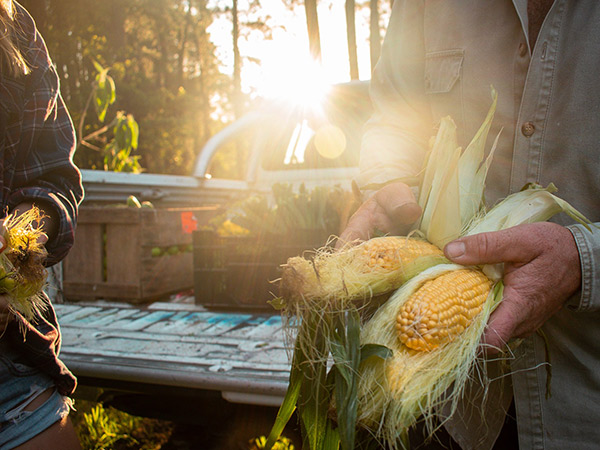
    farmers holding fresh produce picked at Fanelli Organics
    See where your food comes from at Fanelli Organics.

    Paddock-to-plate dining

    High-quality ingredients go hand in hand with premium dining, and the Central Coast is home to several paddock-to-plate restaurants that showcase its diverse and rich agriculture. Paired with warm, grassroots hospitality, there are culinary triumphs, new menus and revered chefs constantly popping up, putting the local dining scene firmly on the map.

    Award-winning Mount White restaurant Saddles is a quintessential Australian dining destination, dedicated to country-style cooking and seasonal produce. Nestled in thick bushland with wraparound verandahs, floral gardens and an idyllic dam, the gourmet homestead and bakehouse is unlike any restaurant on the Central Coast. Here, head chef Reece Collins and his team serve up an impressive breakfast and lunch menu that oozes rustic charm. Pull up a comfy armchair on the expansive deck, listen to birdsong, and tuck into flavoursome dishes like the farmhouse Benedict with honey-cured ham, lemon myrtle hollandaise and Warrigal gremolata, or the hearty beef brisket pie with confit garlic potato purée and rainbow chard.

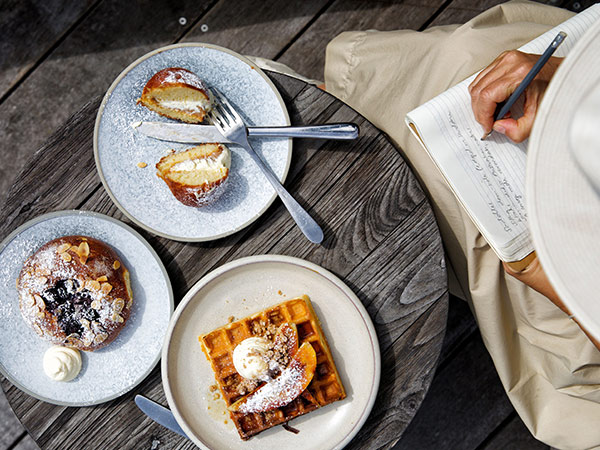
    woman writing in notebook next to a table of food at Saddles, Central Coast food
    Taste country-style cooking at Saddles. (Image: Destination NSW)

    Delivering a slice of sophistication and luxury to the shores and bushland of Bouddi Peninsula is Bells at Killcare. One of the few boutique resorts on the Central Coast, it’s known for its premium service and five-star suites, as well as its bountiful kitchen gardens that boast an orchard, olive trees, avocado trees, free-range hens and a honey bee hive.

    Cameron Cansdell has returned to Bells at Killcare as head chef, bringing his expertise to the casual yet refined menus that feature a raw bar with Oscietra caviar, freshly shucked Sydney rock oysters and Moreton Bay bugs, all served alongside optional matched wines. Sample some of Australia’s best regional wines and standout dishes, like roasted Wollemi duck with grilled leeks, rocket, grilled grapes and 10-year-aged balsamic, or the shareworthy salt-crusted snapper with herb salad and salsa, before roaming the picturesque gardens, wine in hand.

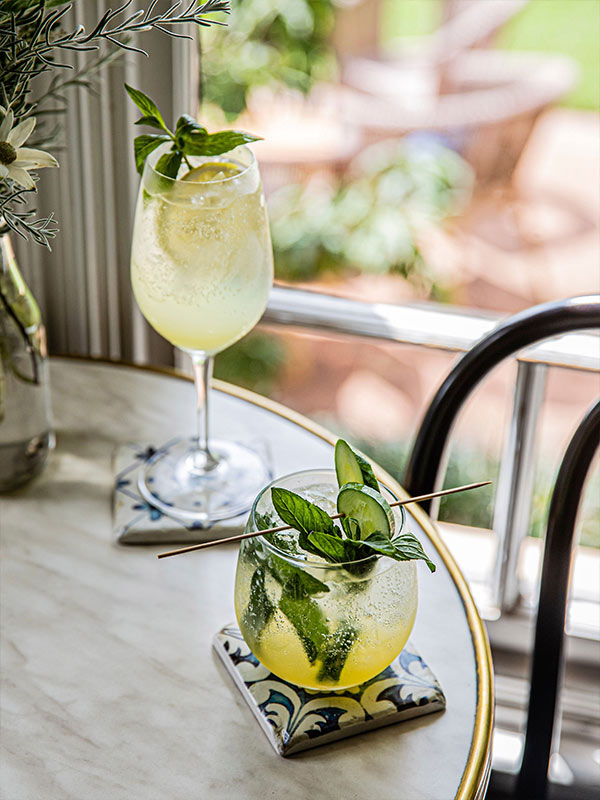
    cocktail at Bells At Killcare
    Sample incredible wine, cocktails and dishes at Bells At Killcare. (Image: Nikki To)

    Plan your next visit to the delicious Central Coast.

    The Fascinating Story Behind The Big Banana | Australian Traveller