The biggest mistakes to avoid on an outback road trip

hero media
Steve Madgwick has made the outback road trip blunders so you don’t have to…

It’s lucky no one can hear you swear halfway along the Oodnadatta Track. I gingerly shimmy under the stricken Nissan Patrol for my third attempt to jack it up on the soft track. The passenger-side rear tyre has a gaping hole in it, thanks to a sharp rock that must have been lurking under the red dirt.

This was my first ‘real’ middle-of-nowhere outback road trip, last decade. The 4WD had threatened to fall on me twice as I tried to raise it. I hadn’t seen another vehicle in hours. And I knew that even if I did manage to change the wheel before wedge-tailed eagles snacked on my entrails, I would be sans spare tyre for the next few hundred kilometres.

a 4WD driving on the road
Be prepared before you set off with ample provisions and knowledge. (Image: Maxime Coquard)

It’s obvious now that my hour-long obscenity-fest was driven by fear and should have been directed at my own ineptitude, complacency and ill-preparedness instead of inanimate objects. But lessons were learned.

Don’t learn the hard way if you don’t have to

My Oodnadatta Track shemozzle boils down to two factors. Number one: I ignored advice from locals and people who had gone before me. Number two: I began my journey with niggling, unanswered questions.

an overhead shot of the Ochre Cliffs, Oodnadatta Track
See the Ochre Cliffs of the Oodnadatta Track. (Image: South Australian Tourism Commission)

If I’d deflated my tyres appropriately for that section of track – as advised by a servo attendant and bush-hotel publican the day before – they would have been much more likely to ‘spread’ than shred.

The 4WD rental company had offered to give me a thorough once-over of the vehicle and its features, but I’d man-bluffed my way through: “I’ll work it out if I need to." (It took me 10 minutes just to find and extract the jack from under a seat.)

an aerial view of the rugged landscape in outback South Australia
Condition your vehicle before navigating the rough terrain. (Image: South Australian Tourism Commission)

I’d also left Adelaide still wondering to myself if I would need a second spare tyre and tyre pressure gauge. Fail. Fail. Fail. Recently, I applied lessons learned from the Oodnadatta Track and other outback near-misses to my most challenging road trip yet: a 2000-kilometre drive from Adelaide to Birdsville, via the Strzelecki Track and smaller, remote roads.

Coincidentally, I picked up my rental Toyota HiLux from the same place in Adelaide, but this time I owned my ignorance and popped all niggling thought bubbles. Naturally, I’d pre-ordered a second spare wheel and tyre gauge. I’d also rented a satellite phone because I’d had pre-trip daymares about the consequences of taking a simple but life-changing wrong turn and/or rolling the 4WD 500 kilometres from assistance.

a girl in the car driving along the outback South Australia
Driving the rugged roads of the South Australian outback. (Image: Tourism Australia)

Need tips, more detail or itinerary ideas tailored to you? Ask AT.

AI Prompt

Stock up on old-school maps and a compass

I now treat outback journeys as analog rather than digital experiences. You simply cannot trust the internet to save your frying bacon out in the boondocks, especially if Telstra is not your service provider. Any country boy or girl worth their salt won’t trust Google Maps once the tarmac ends (even pre-downloading the maps).

a photo of Oodnadatta Track road sign
It’s a long drive between stops on the Oodnadatta Track. (Image: South Australian Tourism Commission)

Consider buying/hiring a dedicated GPS navigator (Navman, Garmin or Hema, for example) or even stocking up on old-school maps and a compass (and learn how to use them). Deferring to local knowledge extends to chinwagging with oncoming drivers – because they have been where you want to go.

desert road signs in outback South Australia
Prepare for a desert road-trippin’. (Image: Jonathan Cami)

Do your research

On side tracks especially, I stopped and swapped anecdotes on upcoming track conditions, badly signed turn-offs and opening hours of fuel stops (which I’d already researched). I chatted about tyre pressure like pensioners converse about the weather. There are various schools of thought regarding when you should/shouldn’t deflate tyres to reduce the chance of a flat and increase your purchase in sand.

Suffice to say, this should be a well-researched decision that can be re-confirmed with your local peers, just as you drive headlong towards that gnarly sandy section or crawl across that naturally booby-trapped dry creek bed. Ultimately, the best advice I can offer is to read much, much more than just this when planning a jaunt along the Birdsville Track, Gibb River Road et al.

Embrace being a beginner; trawl 4WD blogs and gear review sites; dive deeply into YouTube wormholes on soft-sand driving techniques, tyre-pressure tutorials and low-range gear masterclasses. Never, ever be left wondering, “What does this button do?" You can’t bluff your way out of strife in the outback. But with some solid prep work, any foul-mouthed fool can do it. I am living proof of that.

two rock wallabies sitting side by side
The distinctive rock wallabies reside in the outback. (Image: Jonathan Cami)

Weekly travel news, experiences
insider tips, offers, and more.

Last-minute tips and reminders

  • Carry plenty of drinking water (three litres per person per day, as a guide).
  • Buy in bulk beforehand.
  • Check current and recent weather conditions. As a rule, don’t plan outback trips in peak summer or after heavy rain.
  • Never cross a flooding river.
  • Tell someone where you are going and when you’re due to arrive. Update them about sudden itinerary changes.
  • Take your sweet time and drive to the conditions. The outback can quickly turn small mistakes into serious ones.
  • Give road trains a very wide berth, at least for your windscreen’s sake.
  • Pack a ‘what-if ’ kit for longer trips: basic spares, jerry can, first-aid kit etc.

Want to see more stories from Australian Traveller in your Google search results?

  1. Click here to set Australian Traveller as a preferred source.
  2. Tick the box next to "Australian Traveller". That's it.
hero media

8 ways to discover a new side of Port Stephens

    Kate Bettes Kate Bettes
    Aussies might think they know what Port Stephens is all about – but it’s time to take another look.

    You might’ve driven through this NSW coast town. Maybe even stopped for fish and chips or a quick dip. But spend a long weekend in the new Port Stephens, and you’ll seriously regret not doing it sooner. We’re talking treks across beaches, reef dives and up-close time with rescued koalas.

    All in all? It only takes a day before you see Port Stephens in a whole new light, and not much longer until it’s locked in as your favourite family destination.

    1. Stockton Sand Dunes

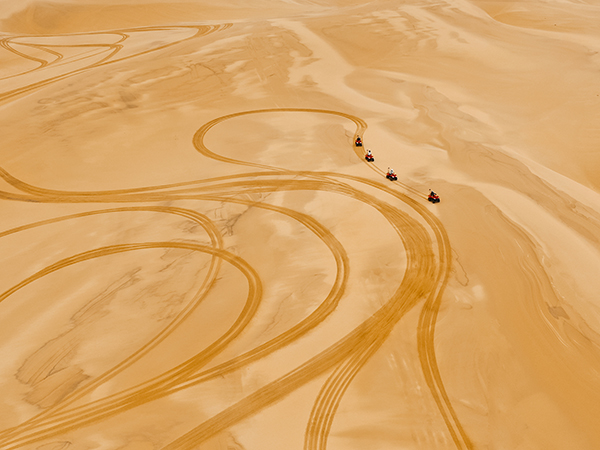
    Port Stephens incredible Stockton Sand Dunes are the largest moving sand mass in the Southern Hemisphere. They shift like an endless magic trick across the Worimi Conservation Lands, a 4200-hectare coastal co-managed by the Traditional Owners.

    Tear over them in a 4WD. Rev through valleys soft as melting ice cream on a quad. Carve down 30-metre slopes on a sandboard. However you choose to cross them, you’re guaranteed a seriously wild ride.

    Four rugged 4WDs kick up trails of golden dust as they charge across the sweeping desert landscape.
    Chase thrills across shifting sands. (Image: Destination NSW)

    2. Scale Tomaree Head Summit Walk

    A short climb through bushland opens up to the coastal drama of Tomaree Head. Spot Zenith, Wreck and Box Beaches. See the Fingal Island lighthouse and offshore rookeries where Australia’s rarest seabird, the Gould’s petrel, nests.

    History buffs can’t miss the WWII gun emplacements. And if you’re hiking between May and November, bring binoculars. Travelling whales might just be breaching below.

    Friends enjoying a scenic walk along the Tomaree Head Summit Walk in Tomaree National Park, Port Stephens.
    Climb Tomaree Head for jaw-dropping coastal views. (Image: Destination NSW)

    3. Watch out for whales

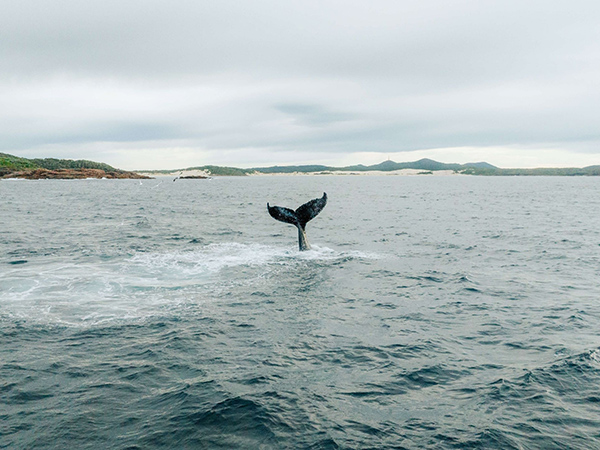
    You’ve seen the spouts of migrating humpbacks and southern right whales from shore. Set sail from Nelson Bay to see them up close. Cruise straight into the action, with tail-slaps, barrel rolls and all.

    And they’ve got competition from the local show-offs. Port Stephens bottlenose dolphins leap and play. Some tours even spot pudgy fur seals, spending lazy days soaking up the sun on Cabbage Tree Island.

    A whale’s tail on the sea’s surface.
    Watch for ocean tails. (Image: Destination NSW)

    4. Port Stephens Koala Sanctuary

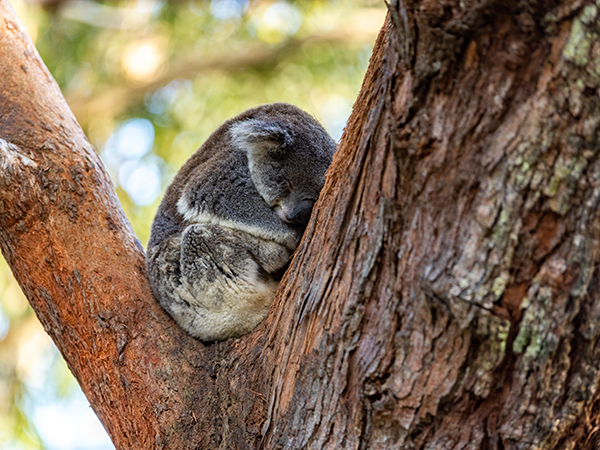
    Pop into the Port Stephens Koala Sanctuary to learn about the rescued koalas who climb, nap, snack and heal in this natural patch of bushland. Wander the immersive Sanctuary Story Walk to discover more about their habits, then head to the SKYwalk – a treetop platform constructed for spotting these eucalyptus-loving locals. Peek into the hospital’s viewing window, where sick or injured koalas may be resting in their recovery enclosures.

    Not enough time around these adorable marsupials? Stay overnight in silk-lined glamping tents.

    Koala sleeping in a tree at Port Stephens Koala Sanctuary, One Mile
    See koalas in their natural habitat. (Image: Destination NSW)

    5. Diving Port Stephens

    Port Stephens has some of NSW’s best dive spots. At Fly Point, float through sponge gardens and coral castles thick with nudibranchs (AKA sea slugs). Halifax Park has blue gropers and crimson-banded wrasse, while Shoal Bay’s seagrass meadows hide pipefish, cuttlefish and octopus.

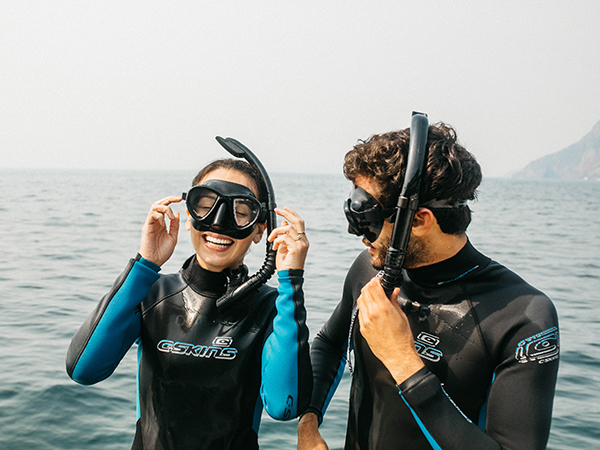
    Accessible only by boat, Broughton Island is home to a vast array of marine (and bird) life. Snorkel with blue devilfish and stingrays at sites like The Looking Glass and North Rock. More experienced divers can head out with one of the many PADI-certified operators.

    At nearby Cabbage Tree Island, expect to see shaggy-faced wobbegongs cruising along.

    A couple suited up and ready to dive into adventure.
    Suit up and dive into Port Stephens’ vibrant marine life. (Image: Destination NSW)

    6. Irukandji Shark and Ray Encounters

    Not quite ready to dive in? Irukandji Shark and Ray Encounters is the perfect way to spot local marine life without getting too deep. But there’s no obnoxious glass tank tapping here. Instead, this interactive aquarium allows guests to wade into natural-style lagoons that mimic the real thing.

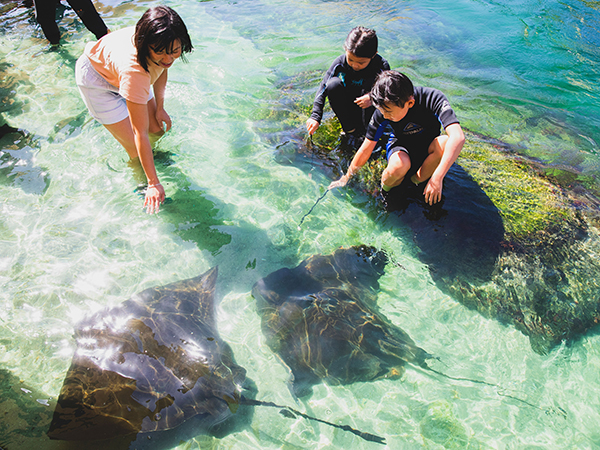
    Gently pat Port Jackson and bamboo sharks, hand-feed rays, and feel their sandpapery skin with your fingertips. It is all under expert guidance. If you want to go deeper, pop on a wetsuit and swim alongside tawny nurse sharks, white-tipped reef sharks and zebra sharks in the lagoon.

    Family enjoying an animal feeding experience at Irukandji Shark and Ray Encounters, Anna Bay.
    Meet the ocean’s friendliest faces at Irukandji. (Image: Destination NSW)

    7. Fish the estuaries

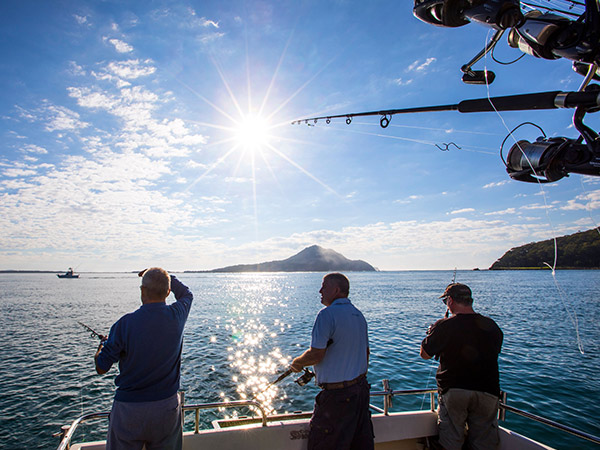
    Fishing fanatics will fall for Port Stephens hook, line and sinker. Here, one of the largest estuary systems in the whole state sees tidal rivers and mangrove ecosystems. Waterfronts are thick with oysters, and residential fish that might include anything from bream, whiting and flathead, to blue swimmer crabs, kingfish and longtail tuna.

    If you prefer to choose your own adventure and fish offshore, you can hire a boat from one of the marinas and set your own course.

    three men fishing on a boat in port stephens
    Join a tour or chart your own fishing trip. (Image: Destination NSW)

    8. Taste new Port Stephens flavours

    With plenty of activity to fill your days, refuelling on delectable cuisine becomes equally important. And Port Stephens answers the call.

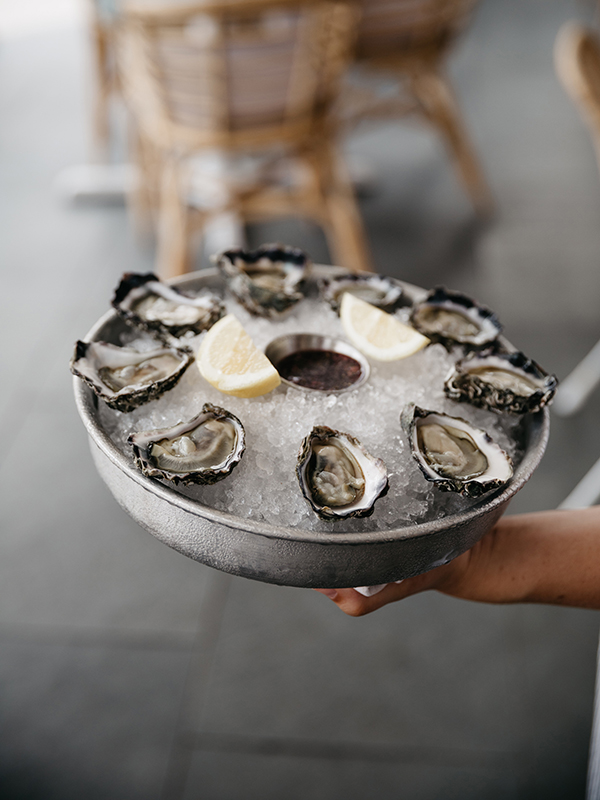
    Pop into Holbert’s Oyster Farm for fresh-farmed Port Stephens rock oysters and Pacific oysters, Australian king and tiger prawns, as well as a variety of tasty sauces to try them with.

    Take a group to Atmos for an authentic Greek experience over large shared dishes and Greek-inspired cocktails. Or feast on sea-to-plate, modern Australian dishes at the pet-friendly Restaurant 2317.

    A plate of fresh oysters.
    Slurp your way through the region’s best oysters. (Image: Destination NSW)

    Start planning your Port Stephens getaway at portstephens.org.au.

    The Worst Outback Road Trip Mistakes- Australian Traveller