Outback survival stories that’ll stop your heart

hero media
The outback is a very beautiful place – but venture into it unprepared and you’ll soon find out just how hazardous it can be. Lauren Camp explores a few of the more miraculous (and ridiculous) stories of wilderness survival in what can often be a harsh and unforgiving place.

1. Spiritual quest goes awry

One of Australia’s most famous outback desert rescues occurred in 1999, when 33-year-old Alaskan fire fighter Robert Bogucki was found after 43 days wandering lost and alone in the Great Sandy Desert on a quest to “make peace with God". A little unluckily for Bogucki (and pray this never happens to you), he was found in some gorges east of Broome, not by police, Aboriginal trackers or the professional team of rescuers brought in from the US, but by Channel Nine’s A Current Affair news team.
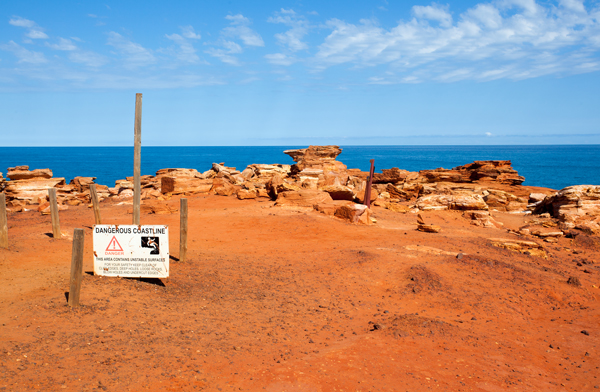
Gantheaume Point, Broome.

ACA came under intense scrutiny when it was revealed that, instead of flying him to a nearby camp to receive medical treatment, they spent almost 20 minutes interviewing Bogucki before flying him an hour back to Broome with their own TV reporter.


All-told, the rescue cost police and Bogucki’s parents around $150,000 – and Bogucki, who lost 20kg and survived by drinking muddy water and eating flowers and plants, told BBC News that he’d definitely “scratched the itch" that had him out there in the first place.

2. Addicted to getting lost

In September 2006 in Alice Springs, 50-year-old English tourist Martin Lake earned himself the nickname “the Bumbling Brit" when he got lost, in the words of local police, “within shouting distance of help".
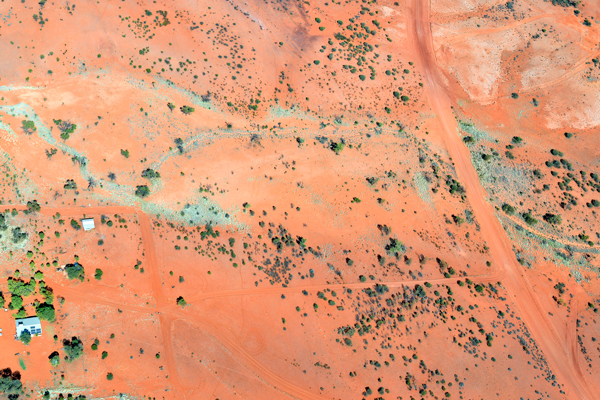
Alice Springs, NT.
Australia, NT, aerial view to farm in outback south of Alice Springs.

Wearing a black T-shirt and shorts, with no water, no hat and an almost-flat phone battery, he wandered off the path while looking for the old telegraph station north of town and wasn’t found for three days. But that’s not the absurd part. After apologising and receiving a stern lecture from rescue services, less than a week later he became lost again, under a mile from the exact same spot.


The helicopters and search parties were organised once more, to the tune of tens of thousands of dollars for local taxpayers, and Lake was re-rescued, this time after four days of wandering. It’s believed that he returned to the area because he dropped something the first time around and wanted to retrieve it.

Need tips, more detail or itinerary ideas tailored to you? Ask AT.

AI Prompt

3. Always carry a gizmo

Uluru (Ayers Rock), Uluru-Kata Tjuta National Park, Northern Territory.
Uluru (Ayers Rock), Uluru-Kata Tjuta National Park, Northern Territory, Central Australia.

In January 2009, an experienced Romanian hiker, who’d previously trekked through the likes of South America and Asia, got a nasty fright when he became lost for six days during a 45km walk near Uluru.


He ran out of food and water on day three and had to head sluggishly back. Once within mobile phone range – which is pretty incredible because the reception is very dodgy out there – he managed to alert rescuers by getting a message to his family back in Romania, including his GPS location.


Rescuers said it was this fact alone that saved the man, which proves how important it is to be well prepared in the food, water and GPS stakes before venturing into the unknown.

4. Survival of the fittest

When 35-year-old Ricky Megee from Brisbane was heading to Port Hedland in late January 2006, he stopped to help a group of stranded motorists near the WA/NT border and agreed to ferry the smallest of the group to the nearest town.
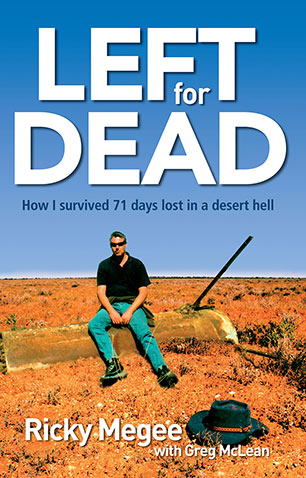
Left for Dead, the true story of Ricky Megee's outback survival.
Left for Dead, the true story of Ricky Megee’s outback survival.

That fateful day ended with Megee being drugged by his passenger and left for dead in a ditch, covered by a tarpaulin weighted down with rocks. He then wandered aimlessly for ten days before setting up camp under an old cattle trough beside a dam, which allowed him a constant flow of water and a diet of toads and lizards.


He survived in this fashion for ten weeks, before being discovered and rescued by two passing station hands – 60kg lighter, lucky to be alive.


Check out his book Left for Dead.

Weekly travel news, experiences
insider tips, offers, and more.

5. No water, plenty of beer

In October 2002, 36-year-old German man Kim Hardt sat alone in his 4WD for three days after getting bogged at Lake Disappointment on the rugged Canning Stock Route. He’d heard about the challenge the CSR presented to outback drivers on a German TV show, which must have been missing a few salient survival details because Hardt showed up by himself with hardly any water, no phone or GPS, but carrying ten litres of beer and a packet of bikkies.


Nothing like being well prepared. Some fellow tourists discovered Hardt and were able to leave some more water while they trundled off to alert a rescue team. By the time the team returned, Hardt was drinking the salt water from Lake Disappointment. Apparently he’d thought it would take about three days to traverse the 1700km CSR, 900 sand dunes and all.

6. Where there’s smoke, there’s a fire engine

This might not quite qualify as a survival story, but back in 2000, 43-year-old Edward Furtak got it into his head that a good way to give up smoking would be to drive his ancient converted fire engine into the desert and camp by himself for six months. “I needed to actually get out in the middle of nowhere where I just couldn’t have a smoke," he said later in an ABC radio interview.


While he claimed he “had a great time", his parents certainly didn’t, reporting him missing after three months. A police search was mounted but proved fruitless. The mystery of his disappearance from Sydney was finally solved after another three months went by, and he emerged from the desert into the small town of Forrest, 1150km east of Perth, to call his mum on her 78th birthday.


Still keen for an outback holiday? Of course you are! You now have your wits about you, so check out our guide to outback holidays right here.

Want to see more stories from Australian Traveller in your Google search results?

  1. Click here to set Australian Traveller as a preferred source.
  2. Tick the box next to "Australian Traveller". That's it.
hero media

Farm fresh produce to a trail of lights: the ultimate guide to Mildura

    Rachel Lay Rachel Lay
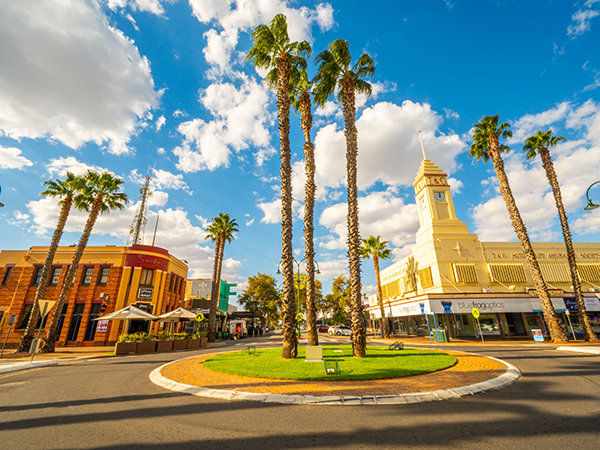
    The charm of Mildura is hidden in plain sight along the Sturt Highway. The capital of Tropical North Victoria is in a league of its own.

    From the moment you arrive in Mildura, the warm air and palm trees invite you to slow down. While most Australians might drive right past it, Mildura is full of surprises. Here you’ll spend one day witnessing over 50,000 years of First Nations history in a UNESCO-listed National Park, and the next dining in a hatted restaurant after wandering through 12,500 fireflies as the outback sunset bursts to life above. From roadside fruit stalls and family-run wineries to houseboats and galleries, it’s time to explore Mildura.

    Feast Street, at the heart of Langtree Avenue in Mildura.
    Taste, wander and be surprised in Mildura.

    Taste Mildura’s produce

    It makes sense to start your trip by addressing the most important question: where to eat. In the beating heart of Australia’s food bowl, sample the local produce directly from the source. And then, of course, experience it through the menu of a hatted chef. Or sandwiched between pillowy slices of Nonna’s ciabatta.

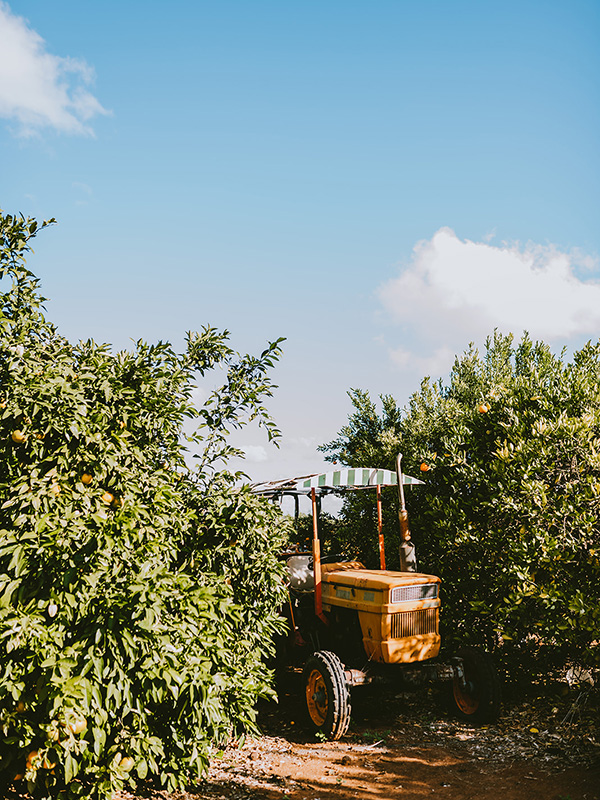
    Rows of orchards and olive groves invite you to spend the day traipsing from farm to farm. Taste olives propagated from Calabrian trees brought over in the 40s, oranges picked right from the tree and squeezed into juice and spoons full of honey. Bring the holiday back to your kitchen by stocking your pantry at roadside produce stalls, or calling into the ‘silver shed’ (Sunraysia’s gourmand Mecca).

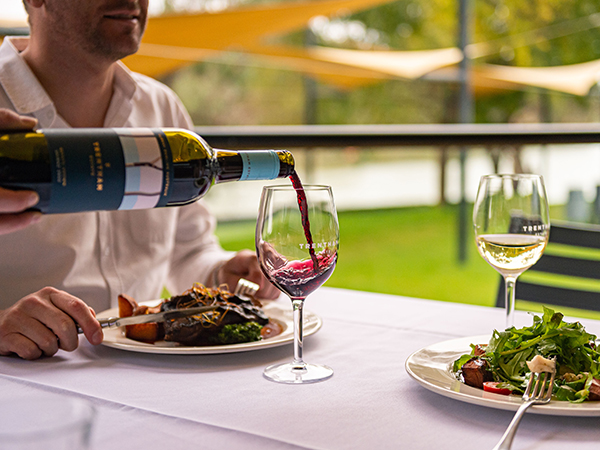
    Thanks to the warm, balmy air and fertile soils, the wineries dotted along these hills produce award-winning local wines. Like Chalmers, a family-run, innovative winery dedicated to making their wines as sustainable as possible. And picturesque Trentham Estate offers views of the snaking Murray River as you sample their vintages.

    Venture beyond the gnarled shadows of olive groves and fragrant rows of blossoming fruit trees and you’ll find an otherworldly side to Mildura. With Discover Mildura as your guide, visit Murray River Salt’s Mars-like stacks. The naturally pink salt is formed from an ancient inland sea and evaporated entirely by the sun to create one of the region’s most iconic exports.

    Start your day with just-squeezed sunshine.

    Hatted dining & Italian history

    Mildura is home to a proud community of Calabrians and Sicilians. This, paired with the exceptional local produce, means that you can find paninos on par with those in Italy. The Italian is a Paninoteca serving up made-to-order, hefty, authentic Sicilian paninos. Nonna Rosa’s pork meatballs, slowly cooked in tomato ragu and served in a crusty, fluffy roll topped with gratings of Grana Padano cheese and salsa verde, will call you back to Mildura for the rest of your days.

    To find hatted dining in Mildura, simply follow the staircase down into the basement of the historic Mildura Grand Hotel to find Stefano’s. Following the muscle memory and instinct of his Italian roots, he delivers on the principle of ‘cucina povera’. That is, the Italian cooking ideology that turns simple, local ingredients into magic.

    Things to do in Mildura include dining at the acclaimed Stefano’s, where simple local ingredients are transformed into Italian culinary magic beneath the historic Grand Hotel.
    Bite into Mildura’s Italian heritage.

    Discover a thriving culture scene

    The city is alive with culture. Whether it’s painted on the town’s walls, told in ancient yarns, or waiting for you in a gallery.

    The Mildura Arts Centre was Australia’s first regional art gallery. Behind the walls of Rio Vista Historic House, you’ll find a lineup of ever-changing exhibitions. The gallery’s wall space pays tribute to the art and songlines of local First Nations People, the region’s awe-inspiring landscapes and more. Outside, on the gallery’s lawn, find 12 contemporary sculptures in the Sculpture Park.

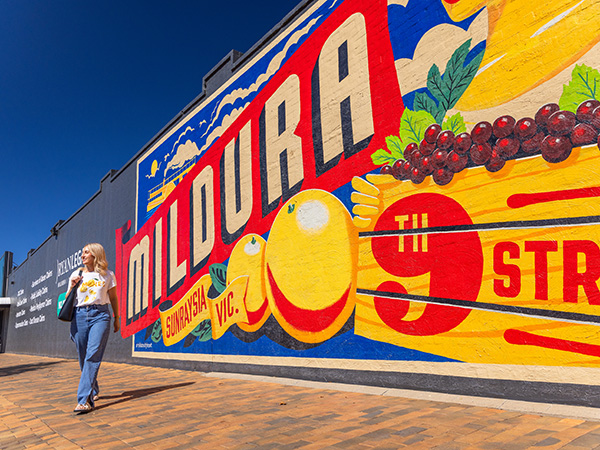
    Mildura’s streetscapes are a punch of colour. Swirling strokes of paint blend the winding artery of the Murray River, red dirt and local characters into a story you can see with your own eyes, thanks to the Mildura City Heart’s Mural Art Project. Pick up a copy of the Murals of Mildura guide from the Visitor Information Centre.

    Follow the border of NSW and Victoria on a map and you’ll see it hugs the curves of a tiny island on the Murray. That’s Lock Island, where, as the sun and moon trade places, the island comes alive as darkness falls. The island is dotted with 12,500 firefly lights that lead you on a meandering path through the outback sunset. The installation is known as Trail of Lights and was created by the same visionary who dreamt up Field of Light at Uluṟu, Bruce Munro.

    Things to do in Mildura include exploring its rich cultural scene. From vibrant street art and ancient stories to exhibitions at the Mildura Arts Centre, Australia’s first regional gallery.
    Find culture around every corner.

    Wonder at ancient landscapes

    The landscapes of Mildura feel almost transcendental. The skyline bursts to life with reds, pinks, and deep, sparkly night skies.

    The nature will leave you in awe. See hues of pink water changing with the weather at Pink Lakes inside Victoria’s largest national park, Murray Sunset National Oark. Cast a line into Ouyen Lake. Watch the sunset against 70-metre tall red cliffs that reflect the setting sun. Or get the heart racing and sandboard down the Perry Sandhills dunes, formed 40,000 years ago at the end of an ice age.

    Just don’t leave without following the twists and turns of the Murray. Stroll or ride along the Shared River Front Path, or jump onboard a boat for a scenic ride.

    Your itinerary will be incomplete without a visit to UNESCO World Heritage-listed Mungo National Park. Head out with an Indigenous ranger to witness ancient campsites and footprints, before standing in awe of ancient civilisation near the discovery site of Mungo Man—Australia’s oldest human skeleton at 42,000 years old.

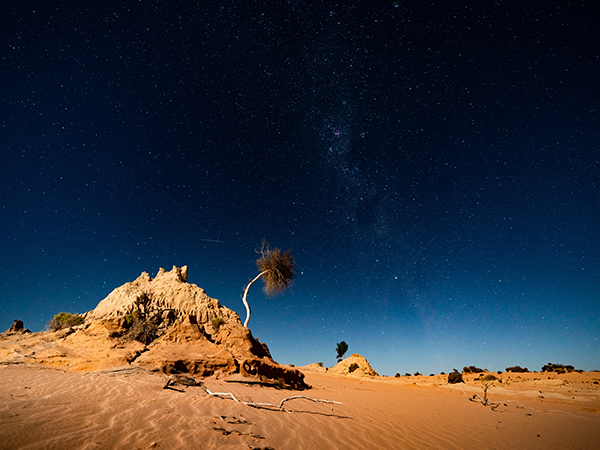
    Mungo National Park at night is a vast, silent landscape where ancient dunes glow under moonlight and stars blanket the sky in breathtaking clarity.
    Walk in the footsteps of ancient civilisation.

    Meet your home away from home

    On equal par with planning your meals and adventures, is finding the perfect place to relax at the end of each day.

    Sleep inside a Palm Springs postcard at Kar-Rama. A sleek boutique hotel complete with a butterfly shaped, sun-soaked pool. Here you’re staying right in the heart of Mildura but you’ll feel worlds away. Or if you really wish to connect with nature, a night glamping under the stars at Outback Almonds will have you spellbound.

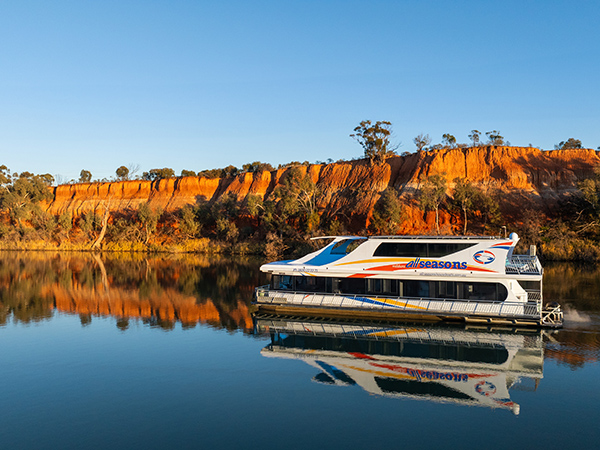
    When in Mildura it’s only right to stay on one of the Murray River’s iconic houseboats. Wake up each day to the calm waters of the Murray lapping outside your window. Enjoy days full of river swims, fishing and exploring. All boats are solar-powered and can be self-skippered or moored along the river.

    A solar-powered houseboat on the Murray River in Mildura.
    Stay and play on the Murray in a solar houseboat.

    Start planning the perfect getaway at mildura.com.

    Outback Australia Survival Stories