How to be a better campfire cook

hero media
Seasoned camp cook Rachel Bartholomeusz shares her tips on making light work of good meals in the great outdoors.

I have never understood why camping is synonymous with bad food.Growing up, my favourite meal was the one my family always ate on the first night of our annual camping trip. A few days before we set off, Mum would prepare the smore.


Not s’more, the North American marshmallow dessert, but the Sri Lankan slow-cooked beef variety, which is equally at home around a campfire. A local take on the European beef pot roast, this pickled and curried hunk of meat is perfect for taking on long trips. The marinade acts as a preservative, and the dish improves with a few days’ rest.


After setting up our tent we would warm the smore, the smell of spices wafting over the other campers. The ubiquitous campground kids on BMX bikes would turn up their noses at its pungency while our mouths watered in anticipation of the fall-apart meat, of mopping up that gravy with fresh bread bought from a small town bakery. Needless to say, no one eats trail mix for dinner on my watch.


Holidays usually revolve around eating good food, and camping doesn’t have to be an exception. I like to approach a camping meal like a MasterChef mystery box challenge, but instead of a ticking clock and George Calombaris breathing down your neck, there’s a quickly setting sun.


Necessity forces creativity; new flavours come together simply because they’re swimming in the bottom of your esky. And the break from a kitchen full of gadgets is a reminder of just how little you need to cook a great dinner. Here are my tips for being a better camp cook.

Need tips, more detail or itinerary ideas tailored to you? Ask AT.

AI Prompt

Bring the basics

You don’t need a whole lot of equipment, but if you’re camping with a car then an esky, a portable gas cooker, a saucepan, a frying pan, a sharp knife, a wooden spoon, a chopping board and a can opener are a good place to start. A steamer basket that doubles as a strainer is really useful, and a stovetop coffee pot is a wonderful luxury. Ziplock bags are also incredibly handy for bringing small amounts of ingredients, and storing leftovers.

The pantry

Olive oil, salt and pepper, fresh garlic and ginger, dried chilli flakes, soy sauce, balsamic vinegar and a small selection of dried spices are my essentials. Beyond that, consider what you like to cook and pack ingredients that can be used in multiple ways, across cuisines, and are hardy – carrots, for instance. Space is usually at a premium, so think smart – buy a fresh chilli, rather than carrying a bottle of chilli sauce. Wraps can be eaten for lunch, used as tortillas, to substitute naan and mop up curry sauce, or used as pita for Middle Eastern and Mediterranean dishes.

Look to other cultures

Every culture has its own camping foods, so if you’re stuck for inspiration, look beyond your own backyard. Korean campers take over public barbecues to grill meats they then dip in sauces and wrap in lettuce leaves with kimchi. Middle Eastern families will often arrive with a container filled with marinated meat to cook over coals and eat with salad and flatbreads. Taiwanese friends take sticky rice parcels wrapped in lotus leaves on hikes, and we have Americans to thank for ‘cooler corn’ – cobs of corn cooked in an esky by pouring boiling water over the top, and closing the lid for half an hour.

Plan ahead (if you can be bothered)

Sauces, stews or curries made ahead of time and frozen in ziplock bags can double as ice bricks, and make excellent reheats. If that all sounds too ‘soccer mum’ for your liking, a simple curry paste or a pesto, a spice mix or a pickle made at home can have multiple uses and will make light work of impressive camping meals.

Pack a salami

A salami and a large wedge of hard cheese such as parmesan are indispensable. Both keep well, and can be eaten as a snack, sliced on sandwiches, or added to pastas, sauces or any dish that needs a savoury boost. The salami can also be fried and rendered for its fat.

Weekly travel news, experiences
insider tips, offers, and more.

Keep it simple

With limited burners at your disposal, one-pot dishes will often form the bulk of your camping repertoire – a pot of spicy mussels, for instance, is no harder to make indoors or out. Pasta is another camping classic, but getting it al dente can be hard on a camping stove. Opt for short pastas such as penne that are easier to cook in a smaller saucepan of water.

Get inspired by local produce

The secret to good, simple food, whether camping or otherwise, is to use good produce. Find the regional speciality, and eat it. If you’re driving through a wine region, you’re obliged to drink good wine from a tin mug and eat cheese for dinner. Buy roadside fruit for breakfast, or learn how to shuck fresh oysters.

A tinnie a day

Cooking with a drink in hand is a crucial element of camping, and a tinnie will prove your best friend: add a splash of beer whenever you’d normally use wine in a dish, such as deglazing a pan for a stir-fry, or in a pasta sauce. And there’s no reason you should feel limited to a tinnie: bring the makings of a negroni cocktail or a bottle of whisky if you really want to up the ante.


Love camping with the family? Check out Top 6 ‘camping with children’ commandments

Want to see more stories from Australian Traveller in your Google search results?

  1. Click here to set Australian Traveller as a preferred source.
  2. Tick the box next to "Australian Traveller". That's it.
Rachel Bartholomeusz

Rachel Bartholomeusz

View profile and articles
hero media

7 features of a quintessential Aussie road trip

    Kassia Byrnes Kassia Byrnes
    No one does road trips like Australians. Make your journey perfect.

    The humble road trip is a way of life in Australia, and it’s not the same here as it is anywhere else. Sure, you could fly, but then you’re missing out on the bonding time and priceless memories that get made along the way (good or bad, you’ll be sharing them for years to come). Not to mention, some of Australia’s most worthwhile and untouched places can only be accessed by road.

    But how to ensure your road trip is quintessentially perfect? Why use this checklist, of course.

    1. Start with the perfect vehicle

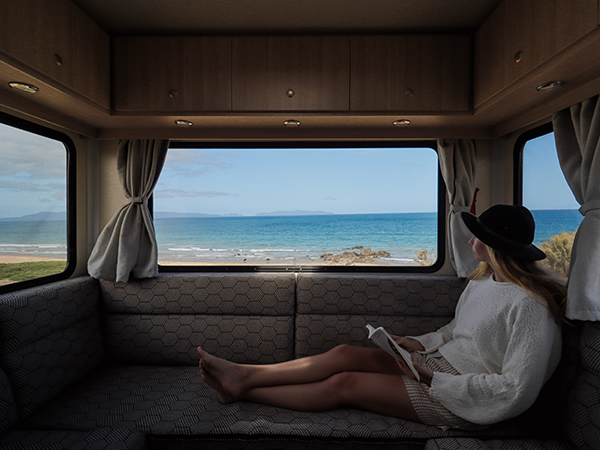
    A woman sitting while reading inside Star RV Motorhomes spacious Polaris 6.
    Relax with stunning views in a spacious motorhome. (Image: Demi Gavin)

    I can tell you from experience, nothing will push even the most tight-knit group to devolve into chaos and fighting faster than a vehicle that isn’t up to the task of a proper road trip. Enter the premium options of Star RV Motorhomes.

    They have a range of sizes to suit any group, from solo travellers and couples to families. And they’re designed to be easy to drive.

    Take the Polaris 6, for example. This light-filled sanctuary of comfort has plenty of space for bigger groups. Three double beds, a shower and toilet, and an extendable awning (with room to move between them all) make it perfect for exploring Australia.

    Couples might prefer the Polaris 2 with a fully self-contained bathroom, kitchen and a bed for two that transforms into comfortable seating during the day. Both models are pet-friendly.

    2. Pack the tastiest snacks

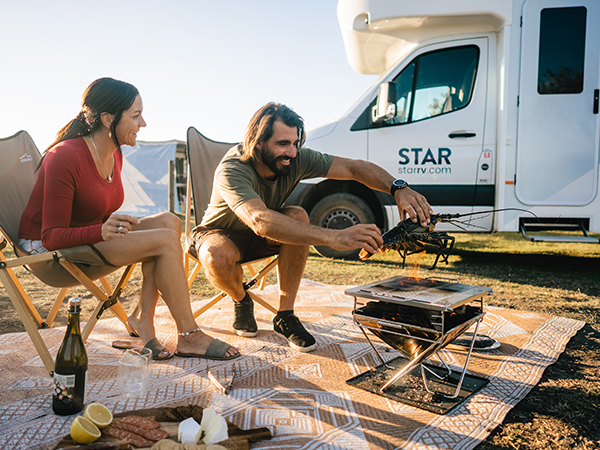
    A couple having a picnic beside Star RV Motorhomes.
    Make use of the spacious storage in your Star RV.

    Road trip snacks are an Australian art. Some, you’ll need to pick up along the way. We’re talking the iconic Chico Roll, choccie milk and maybe a sneaky potato scallop (or several).

    Others, you can pack ahead of time to save on time and, usually, money. Thankfully, Star RV Motorhomes all come with plenty of storage space, so your snacks can last as long as your road trip. Think fresh fruit and other supplies to cook lunch and dinner along the way. Plenty of lollies and maybe even some soft drinks and Red Bulls for the road.

    Not to mention, many Star RV motorhomes have a kitchen onboard, complete with a full-size kitchen, so you won’t need to lug an esky around.

    3. Bring your pet for the ride

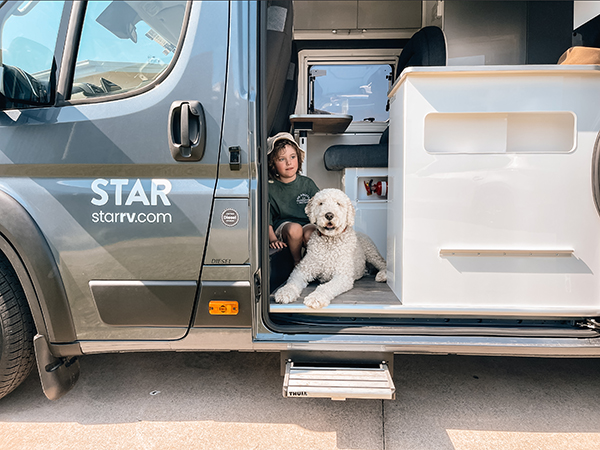
    A child and its pet inside Star RV Motorhomes.
    Travel Australia with your four-legged co-pilot. (Image: Erin Bacchi)

    Man’s best friend is essential for a truly Aussie road trip. Pet-friendly Star RV Motorhomes not only mean your dog (or cat, if they enjoy the open road more than mine do) can experience Australia with you, but that you save a small fortune on pet sitters or dog hotels.

    4. Prepare the perfect soundtrack

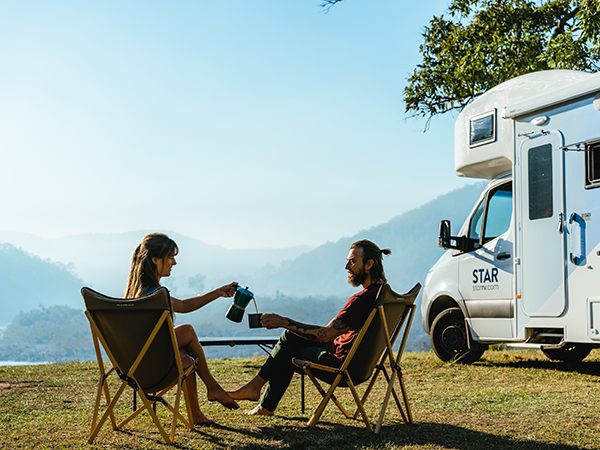
    Two people having coffee with a view.
    Chase the journey and the destination.

    No ifs, ands or buts, the perfect soundtrack can make or break a road trip. It’s really up to you, but we recommend plenty of Australian classics. Cold Chisel never hits quite the same as when you’re listening to it with only gumtrees and kangaroos for company.

    Of course, this means you’ll also need a good sound system to listen to your carefully curated tunes on. Star RV motorhome sound systems allow you to connect your device and play your own music. Goodbye, spotty radio reception.

    5. A spacious tent and camping gear

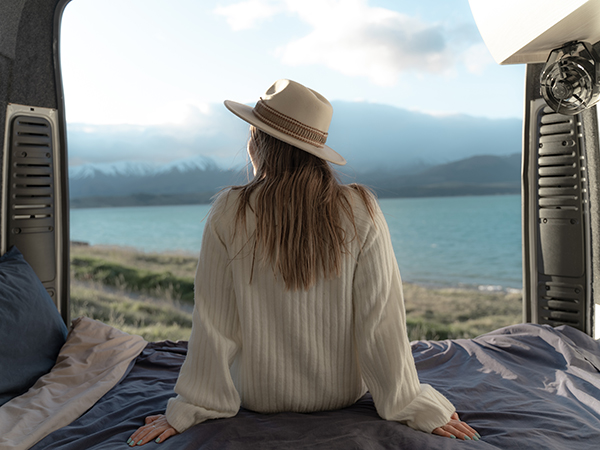
    A woman sitting inside Star RV Motorhomes with a view of the lake in the background.
    Enjoy soft linens and space to stretch. (Image: Cariund Hannes)

    If there’s one thing that a road trip can guarantee, it’s a campsite or several. So you’d better source a good sturdy tent, sleeping back, and a camping mattress that probably won’t help much – but it’s better than the ground.

    Or, just hire a motorhome so your vehicle is also your bed, and comfort is a priority (goodbye foam camp mattresses) with linens provided. And you’ll have room to unpack and move around. Heaven.

    6. Plan your toilet breaks

    Typically, an Aussie road trip means pulling over at a good bushy area or finding a horrific pit toilet on the side of the road – the smell of which will stay with you forevermore. If you’re planning to camp, better pack that handy shovel and find a good, bug-free place to dig your own loo hole.

    To avoid that hassle (and smell), forgo the shovel and hire a motorhome with an onboard toilet. When the toilet comes with you, there are no emergency roadside stops. Plus, it’s a whole lot fresher.

    7. Pick the ultimate destination

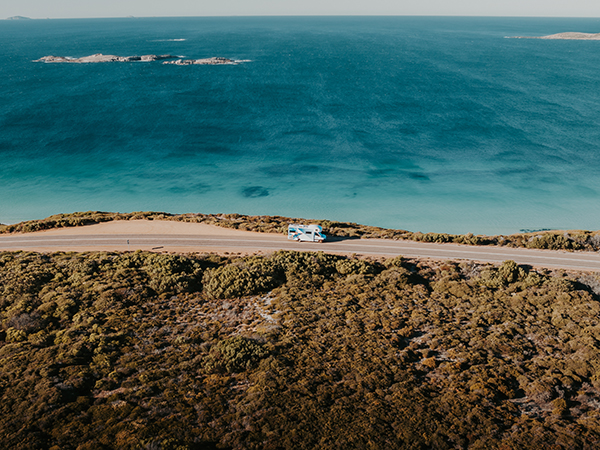
    Aerial view of the Polaris 6 cruising along a coastal road with sweeping beach views.
    Hit the road, Aussie-style. (Image: Matt Finch)

    Of course, the journey is half the fun. But the other half is an incredible destination. With accommodation and transportation sorted out with one motorhome, you have the flexibility to choose a gorgeous view for the night (or several).

    There are endless views to choose from, like the rugged cliff faces of Queensland’s Carnarvon Gorge National Park. Carnarvon Gorge camping area (near the visitor area) and the Big Bend walkers’ camp both have bushy surrounds and a trail to the gorge itself.

    Or Lake Argyle, Western Australia‘s largest man-made freshwater reservoir. Find the only dedicated camping and caravan park at Lake Argyle Resort.

    Meanwhile, Mount Buffalo National Park in Victoria is prolific for its wildlife. Wander through snow gum forests and keep an eye out for wombats, Australian kestrels and more. There are several camp options here.

    Start planning your Australian road trip adventure (and get 15 per cent off on any Star RV motorhome rental in Australia) at starrv.com/au.

    How to prepare campfire cuisine | Australian Traveller