The ultimate guide to becoming an eco-camper

hero media
From solar power to beeswax wraps, here’s our ultimate guide to becoming an eco-camper.

1. Solar panels

Let’s start with one of the best decisions you could make for a more environmentally-friendly camping experience: solar panels. Whether you’re towing a caravan or driving a van, installing solar panels is a no-brainer. Keep in mind that in case of bad weather you will have to recharge your battery or else contact a tow truck to take you to a place where you can either replace or change your vehicle battery.

Not only do they mean you’re not drawing on a town’s electricity supply, but they’ll give you the freedom to go anywhere. Relying on the sun to power a 12-volt fridge, lights, camera, laptops and your phone means you can camp in remote locations, and that means more money in your pocket for tours and eating out when you return to civilisation. You don’t have to permanently attach solar panels to your vehicle either, with plenty of collapsible set-ups on the market. Folding solar panels and solar blankets are great because they can be moved during the day to capture the best sunlight and then packed away easily at night.

Check out… 4WD SupaCentre and REDARC to familiarise yourself with the options.
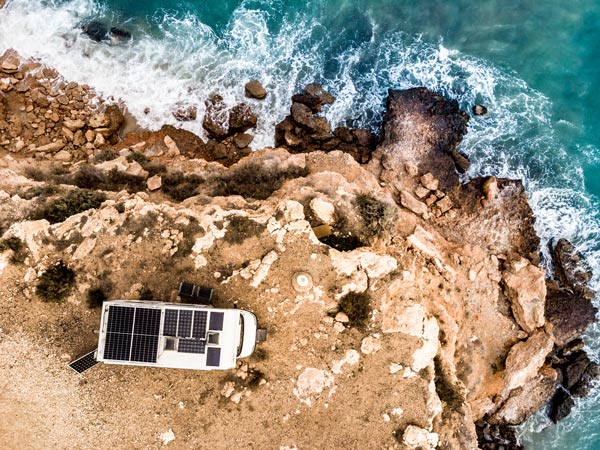
A van with solar panels on the roof camping on cliff sea shore.
Solar power means more money in your pocket (or more travel)

2. Mozzie spray

Those nostril-burning mosquito repellents certainly do their job, but one sniff and it’s obvious they’re not doing the environment – or your skin – any good. Thankfully, there are natural alternatives, mostly in the form of creams.

Keep an eye out for the term “DEET-free" and look for child-friendly options. Essential oils such as citronella, tea tree, lemongrass and eucalyptus are said to keep mozzies at bay, so get yourself a designated camping diffuser. If nights are cool, light a campfire as the smoke is also believed to be a deterrent. 

Check out… Australian-made Nature’s Botanical or any repellent made from essential oils. 

Woman spraying insect repellent on skin outdoor.
DEET-free mozzie repellent is a lifesaver.

3. DIY washing machine

Forget saving up coins for caravan park laundries, which can be stocked with dated (read: power-zapping) washing machines, and let your caravan or car wash your clothes for you. Yes, you heard right. Buy a tub with a lid from a hardware store, fill it with water and soap, and then stuff it with your red-dirt-stained camp clothes before you head to your next destination.

As the car or caravan moves, the water and clothing will agitate, knocking that dirt out of your favourite sundress. Once you arrive at the next campsite, rinse the clothing under a tap, hang it in the sun to dry and Bob’s your uncle.

Check out… Bunnings Warehouse for a cheap, hardy bucket. 

Need tips, more detail or itinerary ideas tailored to you? Ask AT.

AI Prompt

4. Beeswax wraps

Tupperware was so last century and using plastic wrap is a wasteful, bad habit. Stay ahead of the crowds by replacing both products with beeswax wraps. At $30 a pop for a three-pack, they’re expensive but worth the coin.

Not only do they take up less room in your caravan kitchen, but they’re better for the environment and your long-term health. Simply made out of cloth and beeswax, the wraps can be used as a lid for ceramic and glass crockery, and can be wrapped around cheese and cut vegetables to keep them fresh. You’ll find a lot of small businesses producing them, too, so you know your money is going directly into the pocket of the creator. 

Check out… @bumblebeewraps on Instagram. The 100 per cent cotton wraps are handmade in the NSW Riverina and the business is part of the #buyfromthebush social media movement supporting communities in drought.
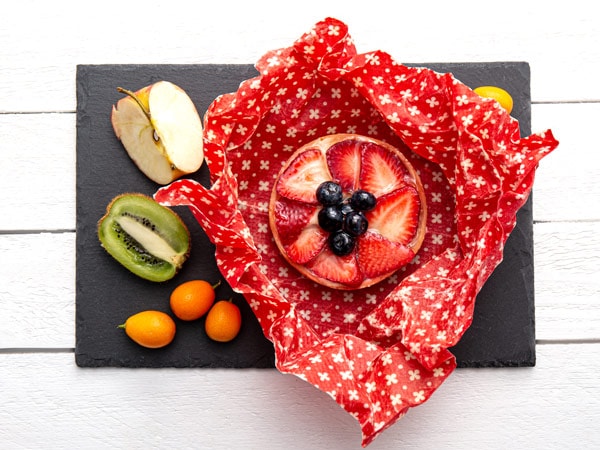
Take away cake inside homemade beeswax wraps. Wrapping food in handmade beeswax wrap cloth indoors, alternative for plastic. Using iron machine to melt beeswax into cotton cloth.
The ultimate kitchen essential.

5. Shop local

The lure of big supermarkets for both convenience and low prices can be strong when you’re travelling but, wherever possible, you should also head along to produce markets to stock up on your camping food and beverages.

While it might mean you are paying a bit more, this is offset by the fact you will be reducing your food miles, buying in-season fruit and veg, and supporting local farmers, which in turn boosts the economy of the tourist town you’re enjoying so much. If you’re travelling through Queensland, you’ll likely come across a tonne of roadside stalls selling bananas, passionfruit and other delicious produce for reasonable prices. Make sure you pull over and stock up.

Check out… some of our favourite markets, such as Albany Farmers’ Market and Albany Boat Shed Markets in WA; Rusty’s Markets in Queensland; and Mudgee Farmers’ Markets in NSW.
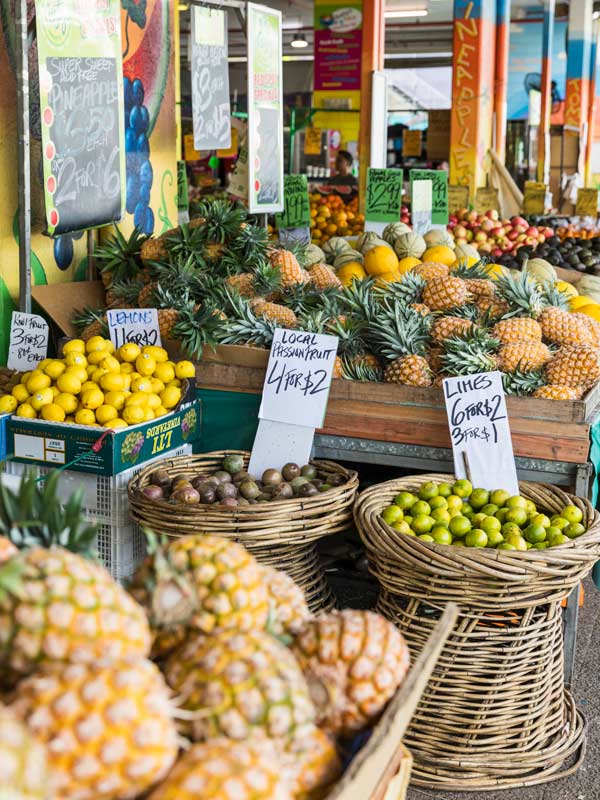
Fresh tropical fruit stalls at Rusty's Markets in the heart of Cairns. (Image: Tourism and Events Queensland)
Rusty’s Markets is a must-stop in the heart of Cairns. (Image: Tourism and Events Queensland)

6. Wood fires

It may be harder, but relying on old-fashioned newspapers and matches to light a campfire is far gentler on the environment than quick-to-ignite fire starters made from kerosene (paraffin). If you’re determined to stick with fire-starters, look for products that are labelled “no kerosene".

Recycle any newspapers and cardboard by using them in the fire, and follow national park rules about only burning fallen branches. Get the kids to collect any sticks around the campsite for kindling (it’ll keep them busy and they’ll love helping). 
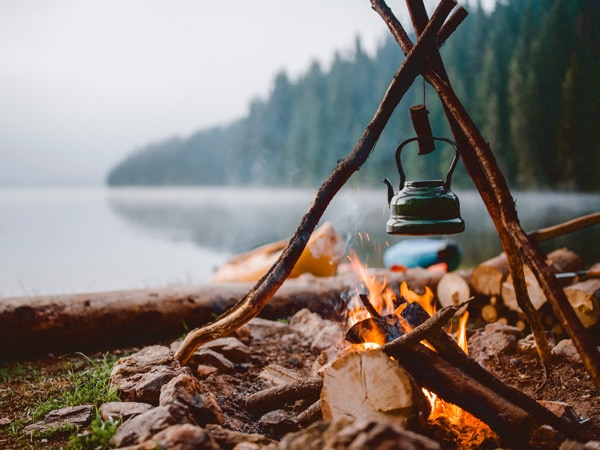
Campfire with a vintage kettle next to the beautiful lake.
Steer clear of the kerosene when lighting your campfire.

Weekly travel news, experiences
insider tips, offers, and more.

7. Your location

Camping on the beach can be controversial due to fragile dunes and unruly 4WDers who ignore signs about protecting the vegetation. Then there’s the issue of inexperienced campers incorrectly disposing of human waste (carry a shovel, people).

That’s why it’s important to pick an appropriate campsite for your style of travel. If you’re not willing to obey local council rules about where you can pitch a tent or you couldn’t be bothered to take your rubbish home, it’s best you stick to holiday parks. Also, while rinsing off in a free beach shower is fine, it’s not acceptable to use soap in the ocean or fragile river ecosystems.
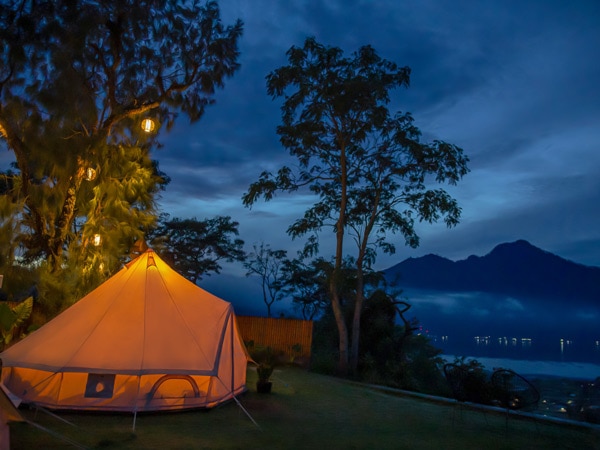
Shot of illuminated tent in a romantic glamping site at night with Mount Batur view.
Be mindful of where you choose to set up camp.

8. Take 3 for the Sea

You’d be surprised by how many campers leave their rubbish behind, sometimes unwittingly, after a weekend away with mates. Throwing your beer bottle tops in the campfire doesn’t make them disappear and, if you head to the beach for a morning coffee, carry a reusable mug.

If camping and fishing go hand in hand for you, be sure to bin any cut fishing line and hooks, and avoid casting a line where it’s likely to get snagged on rocks and end up in the ocean. 

Check out… Instagram account @take3forthesea for inspiration on doing the right thing.
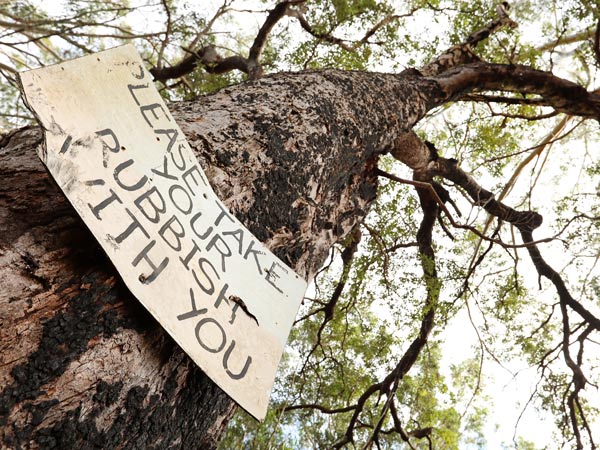
multiple views of an old worn sign post instructing campers fishermen bush walkers hikers to take responsibility for removing all waste trash rubbish and take it with them. Environmentally responible behaviour. warning sign no littering. Say no to illegal dumping concept story
Pretty self-explanatory…

Want to see more stories from Australian Traveller in your Google search results?

  1. Click here to set Australian Traveller as a preferred source.
  2. Tick the box next to "Australian Traveller". That's it.
Jennifer Ennion
Jennifer Ennion is a freelance travel and ski journalist who loves encouraging people to spend more time outdoors. From snorkelling with belugas in sub-Arctic Canada to hiking the Himalayas, Jennifer is constantly searching for stories that inspire readers to push their boundaries.
View profile and articles
hero media

7 Kimberley experiences that need to be on your bucket list

From thundering waterfalls to ancient Indigenous art, Kimberley’s raw beauty will take your breath away.

Wild, pristine, and shaped by nature, the Kimberley Coast is one of Australia’s most spectacular landscapes. A remote and rugged frontier that remains a bucket list destination for many travellers. Its most breathtaking attractions – including Montgomery Reef, King George Falls and Horizontal Falls – are accessible only by sea or air, making a guided expedition cruise aboard Silversea’s luxury expedition ship, Silver Cloud, the ideal way to explore it.

From its intricate intertidal zones to ancient rock art, extreme tides and rare wildlife found nowhere else in Australia – or the world – this journey offers an unparalleled exploration of one of Earth’s last true wildernesses.

Why Silversea?

Silversea offers a 10-day expedition departing Broome, or an extended 16-day expedition voyage from Indonesia, including landings on the hidden gems of Palopo Sulawesi and Komodo. Accompanied by expert guides and specialists in marine biology, history and geology, guests gain a deeper understanding of the Kimberley’s dramatic landscapes, rich cultural heritage and extraordinary biodiversity.

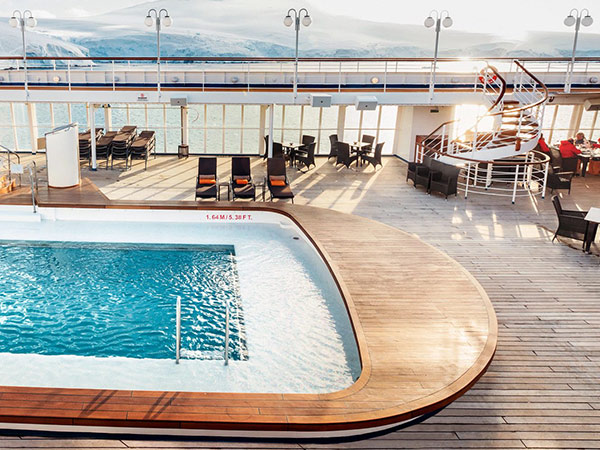
Silversea offers one of the experiential travel industry’s leading crew-to-guest ratios. Along with all-suite accommodation (80 per cent with private verandah), 24-hour butler service, a swimming pool and four dining options. Silver Cloud also has an experienced crew of multilingual expedition guides and specialists in marine biology, history and geology to enhance your Kimberley Experience.

silversea cruise ship pool deck
Take a dip in the pool deck.

1. Koolama Bay

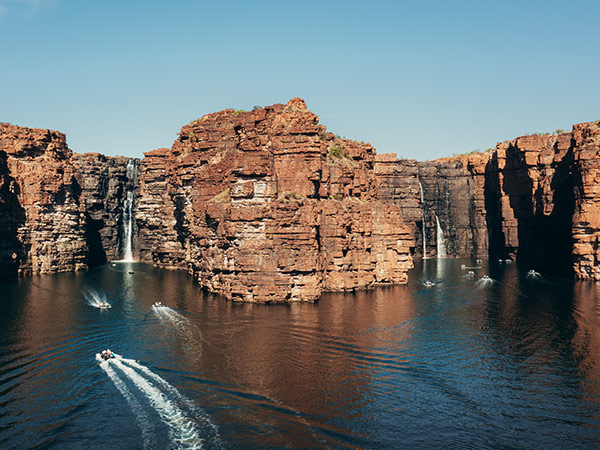
​​Before visitors see King George Falls, they hear them – a growing rumble in the distance, steady and foreboding as the Zodiac glides through the gorge, the sound echoing off sheer rock formations. At 80 meters tall, the twin cascades carve through the red cliffs, churning the waters below in a spectacular finale – but Koolama Bay holds secrets beyond its striking scenery.

Named after a ship that beached here following an aerial attack by Japanese bombers in World War II, the bay may seem desolate, yet it teems with life. With Silversea’s expert guides on their 10-day Kimberley itinerary, guests gain a sharper eye for its hidden wonders – rock wallabies darting across the cliffs, crocodiles lurking among dense green mangroves, and high above, the silhouette of a bird of prey circling the sky.

King George Falls at koolama bay excursion on Silversea Kimberley Cruise
Take a shore excursion to see King George Falls.

2. Freshwater Cove / Wijingarra Butt Butt

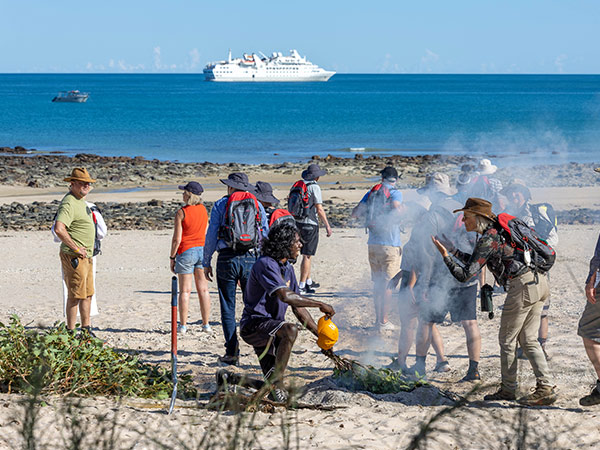
Connect with Country on a wet landing at Freshwater Cove, also known as Wijingarra Butt Butt. Considered one of the most special experiences on both the 16-day and 10-day Kimberley cruises, Silversea guests are welcomed by the traditional Indigenous custodians of the land, painted with traditional ochre, and invited to take part in a smoking ceremony.

Located on the mainland near Montgomery Reef, Wijingarra Butt Butt holds deep cultural significance to the local Indigenous community. Here, rock formations along the shore represent spiritual ancestors, and guests are guided to a nearby rock overhang filled with ancient art, where traditional owners share the stories and meaning behind these sacred paintings.

welcome to country on freshwater cove during silversea kimberley cruise
Take part in a smoking ceremony. (Image: Tim Faircloth)

3. Vansittart Bay (Jar Island)

Modern history, ancient culture and mystery converge in Vansittart Bay, which is also known as Jar Island. Here, the first thing to catch the eye is the dented, silver fuselage of a World War II-era C-53 plane – a striking relic of the past. Yet, the true cultural treasures lie just a short hike away where two distinct styles of Indigenous rock art – Gwion Gwion and Wandjina – can be found.

The Wandjina figures, deeply connected to Indigenous traditions, stand in stark contrast to the enigmatic Gwion Gwion (Bradshaw) paintings, which date back more than 12,000 years. Significantly different in form and style, the two different styles create a striking juxtaposition, offering a rare glimpse into the region’s rich and complex past.

aerial view of Vansittart Bay, See it in you Silversea Kimberley Cruise.
Explore ancient Gwion Gwion rock art at Vansittart Bay. (Image: Janelle Lugge)

4. Horizontal Falls

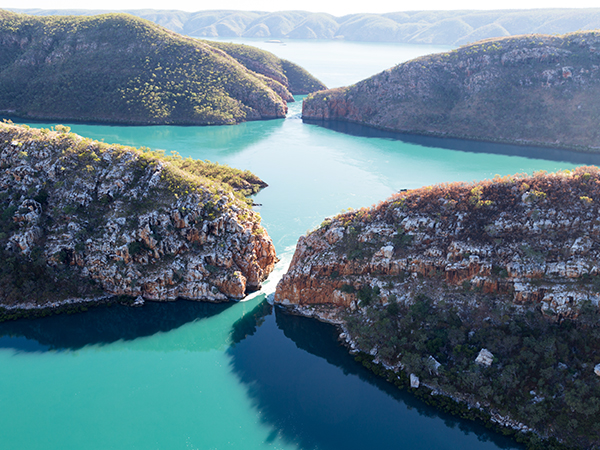
Part illusion, part natural phenomenon, the Kimberley’s much-lauded Horizontal Falls aren’t a waterfall, but a tidal and geographic spectacle that visitors have to see to comprehend. Known as Garaanngaddim, the phenomenon occurs when seawater rushes through two narrow gaps- one just twenty metres wide, and the other seven metres in width, between the escarpments of Talbot Bay.

With each tidal shift,  the force of the water creates whirlpools, furious currents and the illusion of a horizontal cascade as thousands of gallons of water are pushed and pulled in through the gap every six hours with relentless movement, making this one of the Kimberley’s most mesmerising natural wonders.

Horizontal Falls are described as "One of the greatest wonders of the natural world". They are formed from a break in-between the McLarty Ranges reaching up to 25m in width. The natural phenomenon is created as seawater builds up faster on one side of the gaps than the other, creating a waterfall up to 5m high on a King tide.
Watch whirlpools and furious currents collide. (Image: Janelle Lugge)

5. Montgomery Reef

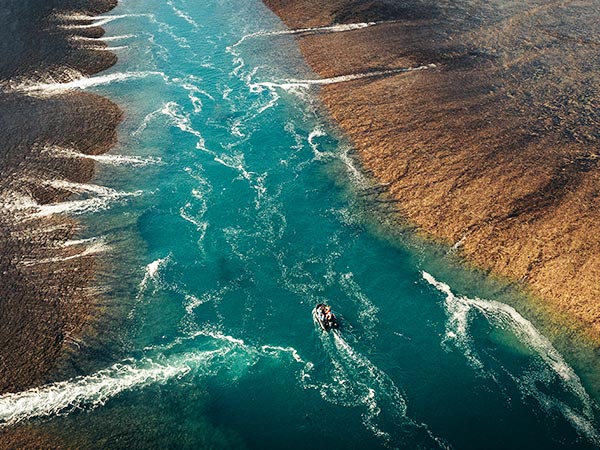
As the tide turns in Montgomery Reef, magic happens. With the Kimberley’s legendary tides varying up to ten metres, at low tide the submerged reef almost appears to rise from the depths: exposing up to four metres of the sandstone reef.

The impact is otherworldly: as the water drains, waterfalls cascade on either side of the channel,  turtles left exposed scramble and dive, and fish leap in search of sanctuary in shallow pools. Meanwhile, the dinner bell rings for the migratory seabirds dugongs, reef sharks and dolphins that scavenge and feast in the area.

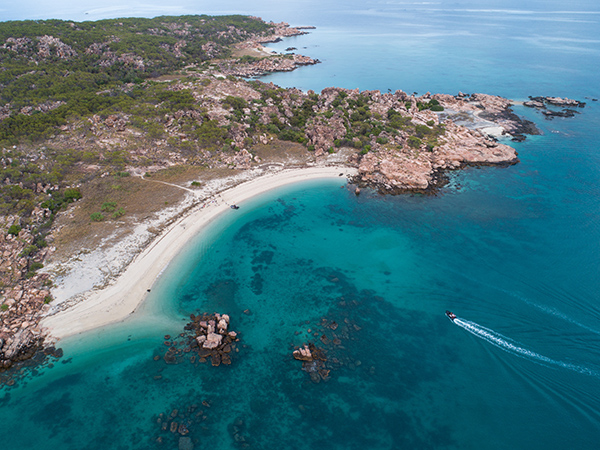
Using zodiacs, guests cruise through one of the world’s most significant inshore reef systems navigated by experienced guides, exploring the most intricate and fascinating parts of a 300-square-kilometre-wide biodiversity hotspot.

aerial view of boat going along Montgomery Reef
Witness seabirds, dolphins and reef sharks on the hunt.

6. Mitchell Falls by Helicopter

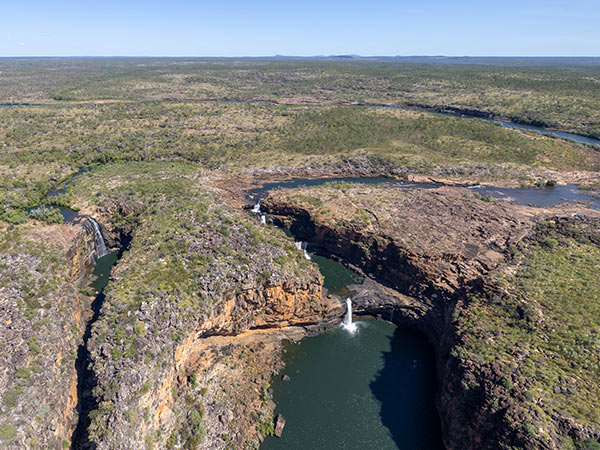
Experiencing the Kimberley by sea allows you to feel the power of the tides, but travelling by helicopter reveals the sandstone tapestry of the Kimberley, a landscape geologists believe is over 1.8 billion years old.

One of Silversea’s most popular optional excursions, guests who opt to fly into the interior from the onboard helipad soar up above the rust-coloured landscape of the Mitchell plateau, taking in one of Australia’s most scenic waterfalls: Mitchell Falls, a series of four emerald-coloured pools gently cascades into each other, before plunging down to the river below.

Seeing the landscape from above reveals a landscape weaved and shaped by the power of the freshwater wet season, juxtaposed to the constant lapping of the relentless and powerful tide on the coast.

aerial view of mitchell falls on silversea helicopter excursion
See emerald pools cascade into the river below. (Image: Tim Faircloth)

7. Indigenous Art Caves, Wandjina Art

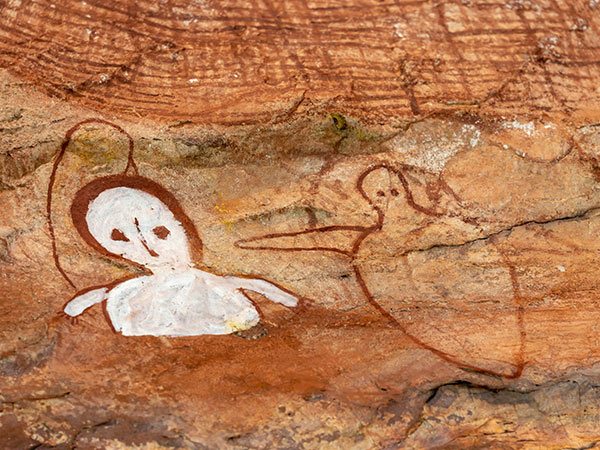
The Kimberley Region of Western Australia is home to some of the most striking and significant

Indigenous rock art in Australia. Dotted throughout the landscape are caves, cliffs and rock overhangs depicting the striking, ethereal image of Wandjina, the rainmaker spirit and creation being central to many of the Dreamtime stories in this region.

Some of the paintings are regularly repainted by traditional custodians, while others are believed to be over 4,000 years old. Each artwork serves as both a cultural record and a living connection to the past, offering a rare opportunity to engage with the enduring traditions of the Kimberley’s Indigenous communities.

Freshwater Cover Rock Art the kimberleys
Walk among cultural records preserved in stone. (Image: Tim Faircloth)

See the best of this incredible part of the world on a Silversea Kimberley cruise. Book your 10- or extended 16-day expedition voyage at silversea.com

The Ultimate Guide To Becoming An Eco-Camper