The best fermentation foodie workshops across the country

hero media
Never has gut instinct played such a literal role when it comes to our travel choices, but growing interest in gut health is leading to more Australians making travel choices with their wellbeing in mind. Jennifer Ennion joins a fermentation workshop to find out what it’s all about.

“This is not rotten food," assures Cornersmith Picklery teacher Jaimee Edwards. Laughter erupts in the tiny store in Sydney’s Marrickville.


“When food perishes, it’s the breakdown of protein," Jaimee continues. “When food is fermented, it’s the breakdown of carbohydrates."


It’s a small but important difference and the roomful of beginner fermenters takes note. Most of us have travelled here to learn about gut health and how we can manage our own. I’ve been wanting to learn how to make fermented foods for years and the growing gut-health catchcry from nutritionists has spurred my interest. My biggest concern, however, is knowing when not to eat something. Jaimee assures me that making fermented food at home is safe. She simplifies the process: “It’s the yeast and bacteria on the surface of our produce [that, when] deprived of oxygen, turn the carbohydrates of the produce into lactic acid and the lactobacillus that we want."


It’s this lactic acid that preserves food and makes it safe for consumption. It’s basic enough, until I learn that all the food we jar today will ferment on our watches. I snap into student mode.

The fermentation process

We start with likely the most well-known of fermented foods – sauerkraut. It’s surprisingly simple: four kilograms of green cabbage, finely shredded, with two tablespoons of salt, plus seasoning. I opt for the classic Eastern European additions of caraway and juniper. We bash the cabbage with the end of a rolling pin until we can squeeze water out of it, add the seasoning and pack it tightly into a jar, ensuring we leave a layer of brine on top. It’s a lot of fun and we sip on a fermented tonic and chit-chat as we label our batches.


Next is kimchi, a Korean staple. Again, it’s easy but this time we use daikon (a winter radish), wombok (a Chinese cabbage), leek, ginger and garlic. We also add a touch of salt, sugar and chilli. It’s messy business as we pound, crush and stuff the vegetables. By now, chopping boards are covered with juice and vegies off-cuts. The picklery is buzzing with talk and laughter, and I can see the workshop is just as much about a great morning out as it is about learning a new culinary skill. It’s also about putting in place some long-lasting habits to improve our health, as opposed to adopting a green-smoothie-like fad.


“I want to avoid fermented foods going down that path," says Jaimee. “There is no one thing that you can consume, and it’s certainly not kombucha, that is going to deliver you optimum health," she says.


It’s this desire to improve our health that has seen fermentation workshops bloom across the country. Food continues to play a big role in our travel choices and, just as many of us travel to explore food markets and eat at award-winning restaurants, we’re also now holidaying for our health.

Need tips, more detail or itinerary ideas tailored to you? Ask AT.

AI Prompt

What’s the attraction of a fermentation workshop?

There is a mix of men and women attending Cornersmith’s two-and-a-half-hour Fermenting Vegetables workshop and an array of ages. I join a trio of women in their early fifties, one of whom has travelled from the New South Wales South Coast. The ladies met at university 30-odd years earlier and are starting a new tradition of catching up during culinary classes. So far, they’ve ticked off three. Chris Anthony, 34, from Sydney is attending solo and rounds out our group. He’s signed up because he is tired of seeing cabbage “left looking sad at the back of the fridge" after his regular vegie delivery.


“I’m trying to be healthy and not to be wasteful," he says, as we start making brines.


Although Jaimee may have discovered fermentation a decade ago, thanks to her Russian heritage, she says more people are spending their leisure time learning about the benefits – and travelling to do so. The frequently sold-out fermentation class is the second most popular at Cornersmith, after “preserving for the season", and there has been strong growth over the four years the picklery has been running. Most attendees are Sydneysiders but many are visiting from Newcastle and the Blue Mountains and making a weekend of it.


The class I’m attending goes all too quickly, but I leave smiling, a jar of fermented green tomatoes in my hands. I’m inspired to continue my journey with fermentation, and the feeling doesn’t dissipate weeks later, as my tomatoes thrive in their little jar taking pride of place in my kitchen.

5 places to try fermentation workshop

– The Fermentary, in Victoria, is the place to go to make kvass (a fermented drink), learn about SCOBYs and try pickling.


– Green Living Australia runs half-day workshops in Queensland that focus on vegetables, kimchi, kefir and yoghurt.


– Buchi Kombucha, also in Queensland, doesn’t just centre on making the popular drink, but also offers workshops on cultured desserts, kimchi and miso.


– Foley’s Frothing Fermentations, in WA, offers a beginner’s guide to fermenting vegetables at home.


– Get Fermented is for people living in and travelling to the tropics, with classes about water and milk kefir, in the Northern Territory.

Fermenting: the facts you need to know

1. Put the fermenting food in a spot you’ll remember out of direct sunlight, not forgotten in the pantry


2. Summer ferments will happen much faster than in winter


3. If attending a workshop, take extra glass jars


4. To avoid air pockets in jars, slide a knife down the inside edge of the jar


5. Check your ferments every couple of days


6. The higher the sugar content in produce, the faster it ferments


7. The fridge slows the fermenting process down but doesn’t stop it

Weekly travel news, experiences
insider tips, offers, and more.

Want to see more stories from Australian Traveller in your Google search results?

  1. Click here to set Australian Traveller as a preferred source.
  2. Tick the box next to "Australian Traveller". That's it.
Jennifer Ennion
Jennifer Ennion is a freelance travel and ski journalist who loves encouraging people to spend more time outdoors. From snorkelling with belugas in sub-Arctic Canada to hiking the Himalayas, Jennifer is constantly searching for stories that inspire readers to push their boundaries.
View profile and articles
hero media

The ultimate 8-day Brisbane to Port Douglas road trip itinerary

    Lucy Cousins Lucy Cousins
    Explore some of Australia’s most stunning coastlines on this epic route.

    This scenic, 1800-kilometre Brisbane to Port Douglas road trip takes in some of Australia’s most beautiful landscapes, from the wildlife on Bribie Island to the rainforests of Far North Queensland. Our advice? Slow it down, take your time and really get to know this part of Australia.

    Day 1: Brisbane to Noosa

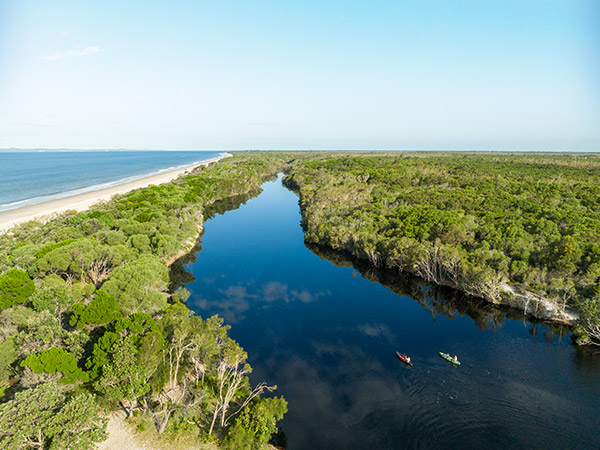
    Wake up in the luxurious Sofitel Brisbane Central, enjoy a hot buffet breakfast and a swim in the outdoor pool before hitting the road to travel north. Take the exit to Bribie Island to view the abundant wildlife.

    aerial view of bribie island
    Enjoy the beauty and animals of Bribie Island. (Image: TEQ)

    In the afternoon, check into Peppers Noosa Resort & Villas hidden near Noosa National Park and spend the afternoon relaxing at the luxury Aqua Day Spa. Daredevils can book a seat on an Ocean View Helicopters tour and experience the adrenaline of exploring the Glasshouse Mountains from the air.

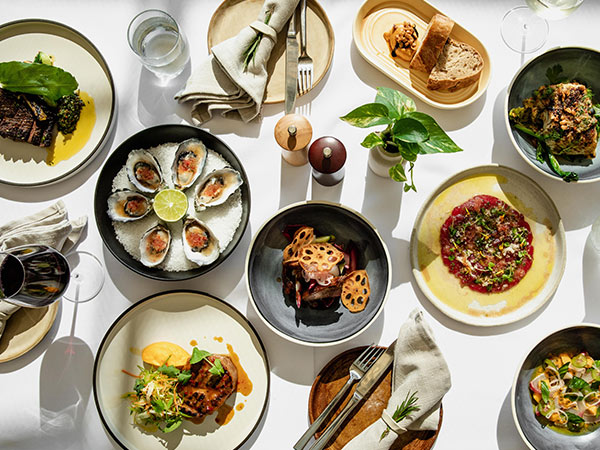
    Before dinner, head to the Original Eumundi Markets just 25 minutes away or explore the nearby trails in the national park. For dinner, book a table at Park & Cove located just near your hotel and feast on a locally-sourced menu that changes with the seasons.

    table spread at Park & Cove Novotel Sunshine Coast
    Refuel at Park & Cove.

    Day 2: Noosa to Bundaberg

    Wake up to sounds of the rainforest outside your window and take the opportunity for a quick swim before you dive into a freshly cooked buffet breakfast at Park & Cove. After breakfast and an expertly brewed coffee, stroll down the hill and spend the morning shopping along Hastings Street in the various boutiques, or hire a kayak or surfboard and conquer the waves.

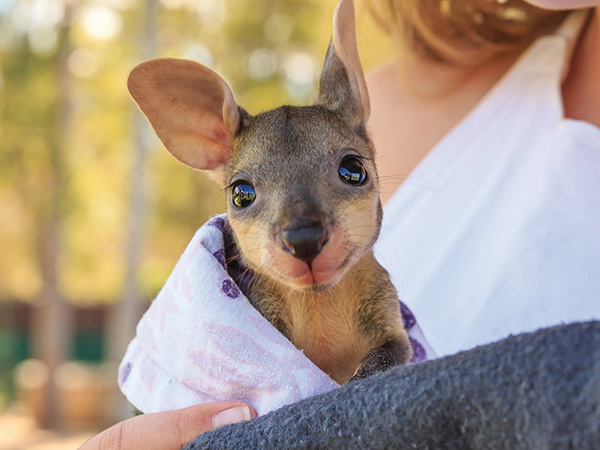
    After lunch, head north for the three-hour drive to historic Bundaberg. If you feel like feeding a kangaroo or wallaby, visit the Fraser Coast Wildlife Sanctuary. Once in Bundy, head to Spitter’s Farm just outside of town. This 160-acre property offers a unique experience in their deluxe glamping safari tents, where you can listen to the cows mooing as the sun sets.

    baby kangaroo at australian wildlife Sanctuary
    Say hello to the adorable creatures of Fraser Coast Wildlife Sanctuary. (Image: Jewels Lynch)

    Day 3: Bundaberg to Rockhampton

    Before getting back on the road, take time to visit the many museums, and, of course, the famous Bundaberg Rum Distillery for a tour. Then head to the Beef Capital of Australia, Rockhampton.

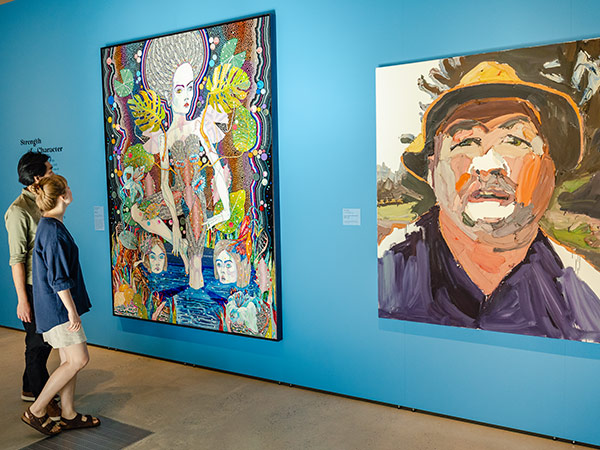
    Although, ‘Rocky’ is surrounded by beef cattle farms, your first stop should be to the impressive Rockhampton Museum of Art, which features an art collection valued at over $16 million. Rest your head at the centrally-located Mercure Rockhampton overlooking the mighty Fitzroy River. Grab a quick swim in their outdoor pool before enjoying a steak at their in-house restaurant.

    Rockhampton Museum of Art
    Take it all in at Rockhampton Museum of Art. (Image: TEQ)

    Day 4: Rockhampton to Mackay

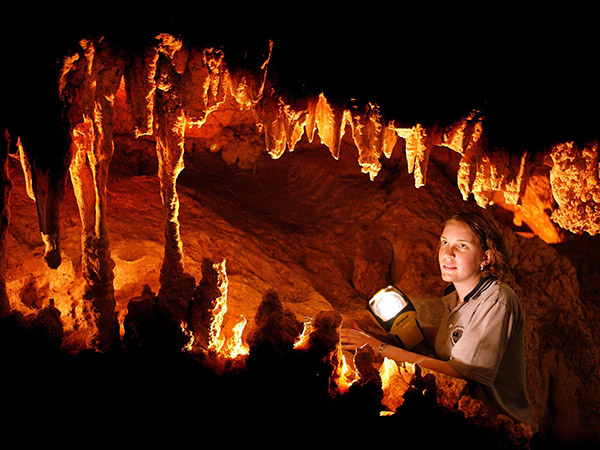
    Grab a strong coffee at your hotel and drive the short distance to the nearby Capricorn Caves for a morning tour of these natural limestone beauties. Then hit the road for the four-hour drive to Mackay.

    Reward yourself with a swim in the large, resort-style pool at the Mantra Mackay. Overlooking the marina, it’s the perfect location from which to explore the city, before enjoying a sundowner and dinner at the popular Latitude 21 on the hotel terrace.

    woman exploring the Capricorn Caves in queensland
    Explore the Capricorn Caves. (Image: TEQ)

    Day 6: Mackay to Townsville

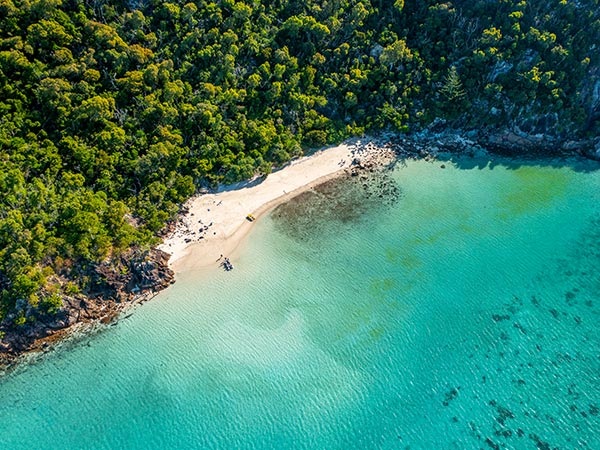
    Grab your breakfast to go, then head just out of town to Finch Hatton Gorge. Here, spend the morning ziplining 25 metres above the rainforest floor with Forest Flying. Head to Airlie Beach for lunch and a swim in the famous Airlie Beach Lagoon, before heading north to Townsville.

    Hop on a 20-minute ferry – they leave regularly – and check into the stunning Peppers Blue on Blue Resort. Spend the evening swimming in their two pools with views across the private marina to Mount Cook National Park, before feasting on fresh seafood at their on-site restaurant, Boardwalk Restaurant and Bar.

    aerial view of beach at Airlie Beach queensland
    Dive into the crystal clear waters around Airlie Beach. (Image: TEQ)

    Day 7: Townsville to Cairns

    After a morning swim on one of Magnetic Island’s beautiful beaches, hop back on the ferry and travel north to the sleepy Mission Beach for lunch. You’ll be sandwiched by rainforest on one side, and the beach on the other.

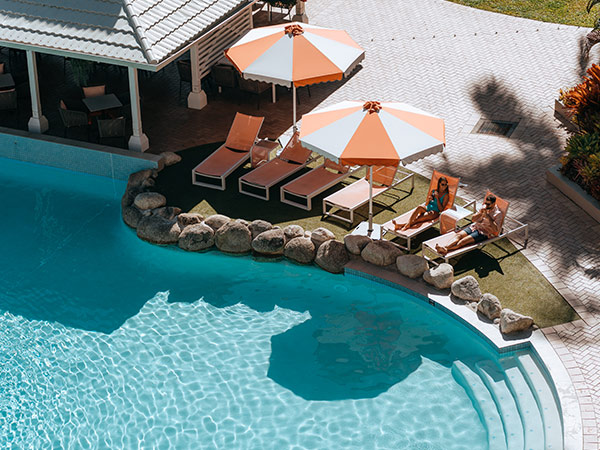
    Continue on to Cairns and check in at the centrally-located Novotel Cairns Oasis, where the lagoon-style pool and swim-up bar alone is worth the visit. Or continue north for 25 minutes to the coastal village of Palm Cove.

    Once there it’s a tough choice between the luxurious, five-star Pullman Palm Cove Sea Temple, or the beautifully designed Peppers Beach Club and Spa Palm Cove, where the pool has its very own beach.

    two people in deck chairs by Novotel Cairns Oasis' lagoon-style pool
    Relax by Novotel Cairns Oasis’ lagoon-style pool.

    Day 8: To Port Douglas

    No matter where you spent the night, your journey to Port Douglas will be one of the most scenic road trips you’ll ever experience. Following the coastline, travel past champagne-coloured beaches, offshore islands and submerged reefs, before rolling into town at Port Douglas.

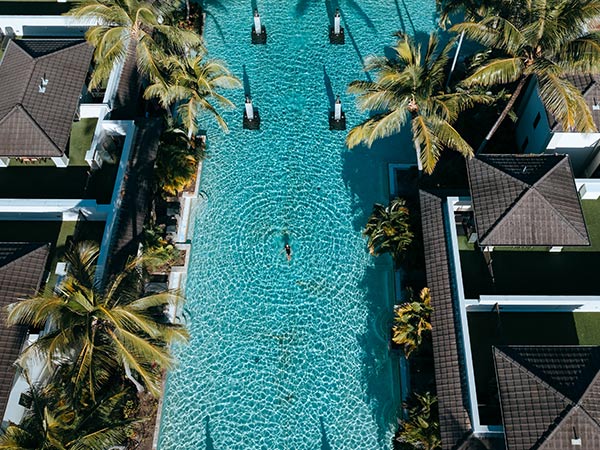
    Although you’ll be spoilt for choice with hotels, two of the best are Peppers Beach Club Port Douglas, which is closer to town (think stunning pool and walking distance to Macrossan Street) and the famous, five-star Pullman Port Douglas Sea Temple Resort & Spa, located a little further down the beach. If the 3000-metre-squared lagoon-style pool isn’t enough at this hotel, you’ll also find the exclusive Vie Spa and popular restaurant, Aluco Restaurant & Bar, widely known as being one of the finest restaurants in Port Douglas.

    aerial view of pool at Pullman Port Douglas Sea Temple
    Revive from road-tripping in one of the best pools in Port Douglas.

     Start planning your Queensland adventure at all.com.