Where to see Australia’s unique wildlife

hero media
Australia boasts a weird and wonderful menagerie of creatures on land, sea and air.

Kangaroo

One half of the national coat of arms (the other is the emu), the kangaroo is one of the country’s most celebrated animals. There are four different species of kangaroo: The Red; Antilopine; Eastern Grey; and Western Grey. The Red holds the distinction of being the world’s largest marsupial; some males stand as tall as six feet and weigh in at 200 pounds.

Fast fact: There are more kangaroos than humans in Australia (roughly 50 million versus 25.7 million), with an estimated 15.8 million red kangaroos alone.

Where to see them: You’ll find kangaroos all over Australia. They’re social creatures, so chances are if you see one there are more close by. They rest during the heat of the day, so the best time to catch sight of them is at dawn and dusk.
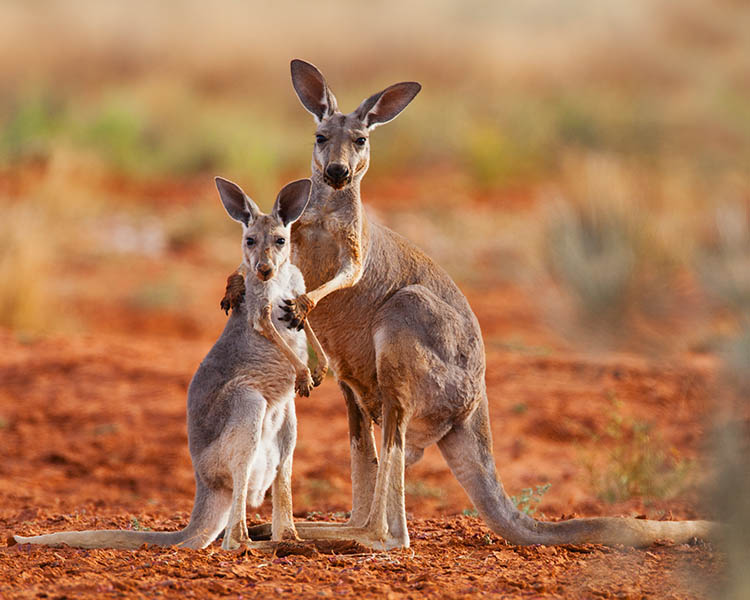
Kangaroo with its joey
The kangaroo is one of Australia’s most celebrated animals.

Koala

When it comes to the Aussie animal most visitors want to tick off their list, chances are it’s the koala. This impossibly cute tree-dwelling marsupial mammal survives on a diet exclusively made up of eucalyptus leaves. The trees are also their home, with koalas spending up to 19 hours a day sleeping in them before waking up to feed at night, making them largely nocturnal. While koalas have a pouch like kangaroos, they are more closely related to the wombat.

Fast fact: While they look all chubby and cuddly, koalas have seriously sharp claws and when threatened can run as fast as a rabbit.

Where to see them: Due to the fact that they spend most of their time up trees, koalas can be elusive to spot in the wild. Keep an eye out for them along the Great Ocean Road and on Raymond Island in Victoria, and around Port Stephens and Port Macquarie in New South Wales.
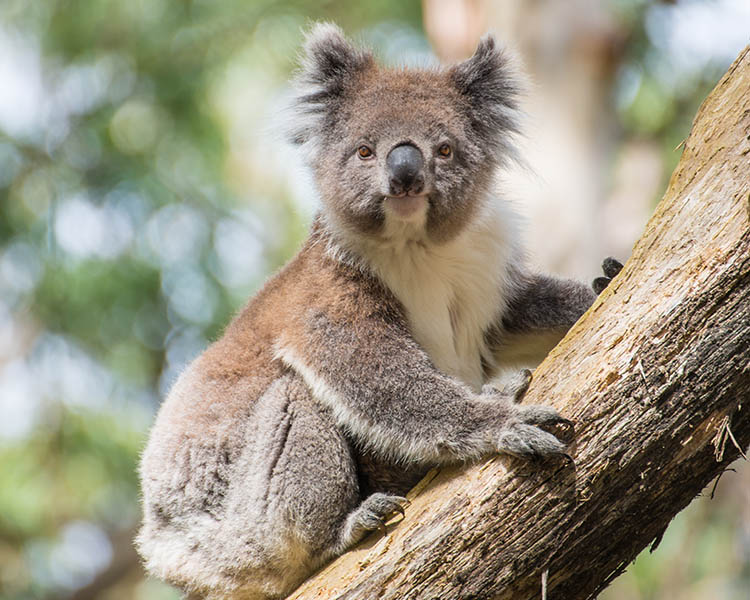
A Koala holding onto a branch
Koalas survive on a diet exclusively made up of eucalyptus leaves.

Wombat

These chubby creatures live in burrows and emerge at night to feast on a diet of grasses, bark and roots. Consisting of three species – the Common Wombat, the Northern Hairy-Nosed Wombat and the Southern Hairy-Nosed Wombat – wombats are an evolutionary wonder: they have a pouch like other marsupials but it faces backwards so that it doesn’t fill with dirt when they are digging. And its rump consists mostly of cartilage so that when it retreats headfirst into its hole it is almost impossible for predators to get a grip on.

Fast fact: Wombats’ poop is shaped like a cube. The theory is that as they mark their territory by defecating, the shape stops it from rolling away.

Where to see them: Wombats thrive in cool, damp environments, so you have a good chance of spotting them in places like Cradle Mountain-Lake St Clair National Park and Maria Island in Tasmania, Wilsons Promontory National Park in Victoria, and the Southern Highlands, less than two hours from Sydney.
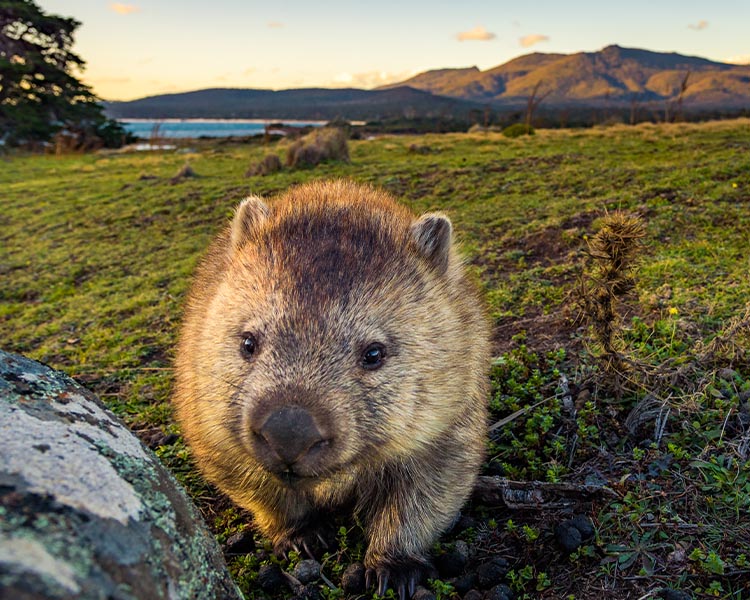
Wombat looking at the camera
Wombats live in burrows and emerge at night to feast on a diet of grasses, bark and roots.

Possum

When you are out and about at night in Australia, whether in the heart of Sydney or in the wilds of Freycinet National Park in Tasmania, chances are you will catch a glimpse of either a Common Brushtail Possum or a Common Ringtail Possum, the most prolific of Australia’s 23 species of possums.

With their soft fur and sweet faces, possums are one of the easiest marsupials to spot as they are quite adventurous in the pursuit of food. And if you can’t see them, you’re sure to hear them; researchers have identified at least 18 different sounds made by possums including screeching, hissing and grunting.

Fast fact: Both brushtail and ringtail possums have prehensile tails, which they use as a type of hand to cling to trees and carry things.

Where to see them: Brushtail and ringtail possums are found all over the country and are easy to spot when feeding at night – just look up.
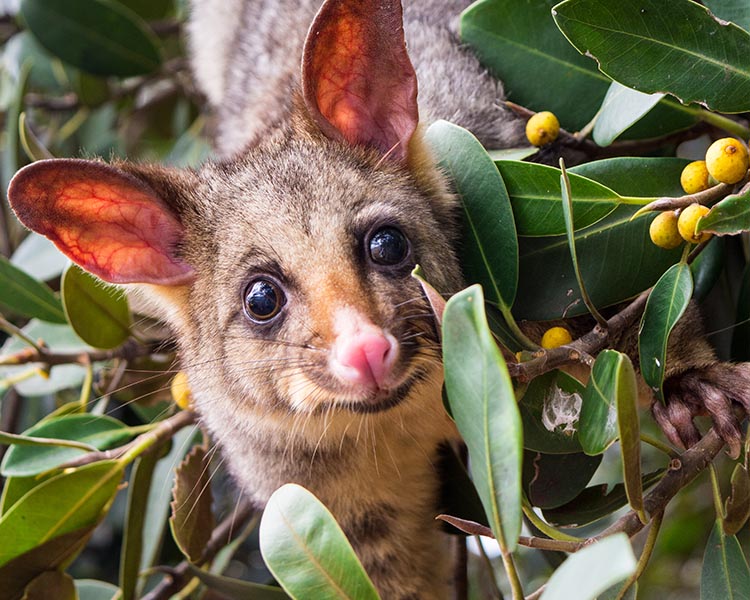
Possum looking into the camera
Possums are one of the easiest marsupials to spot.

Need tips, more detail or itinerary ideas tailored to you? Ask AT.

AI Prompt

Wallaby

A marsupial cousin of the kangaroo, wallabies are widely found across the country. Smaller than kangaroos, there are some 30 species of wallaby in Australia including the Rock Wallaby, Swamp Wallaby and the Tammar Wallaby, all of which hop to get around, tend to be more active at dawn and dusk, and carry their young in a pouch. Unlike kangaroos, however, wallabies are solitary creatures.

Fast fact: If a wallaby becomes pregnant while she still has a joey (baby) in her pouch, she can pause the gestation of the new embryo until its sibling has vacated the space.

Where to see them: Wallabies are widespread and plentiful, which means you are in with a good chance of seeing these delightful little creatures in any of Australia’s abundant National Parks.
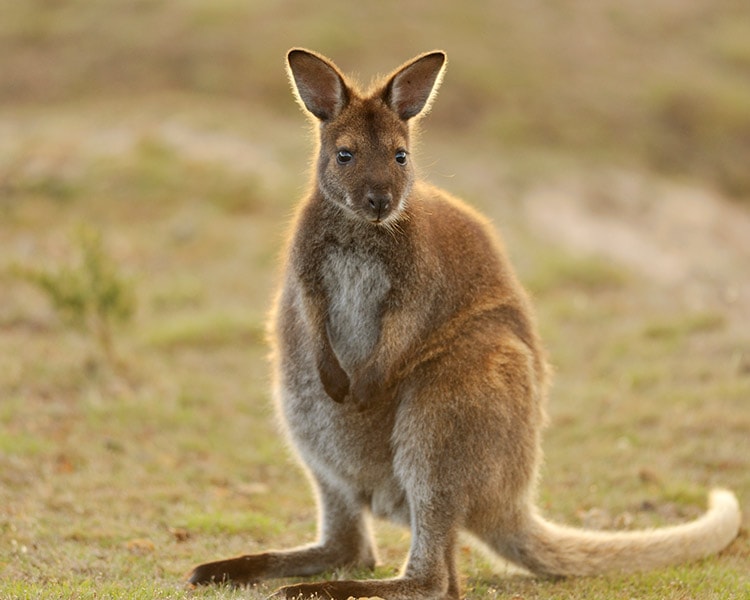
Wallaby
Wallabies are marsupial cousins of the kangaroo.

Kookaburra

Australia is home to abundant birdlife, but none is more genuinely wondrous than the kookaburra. Also known as the Laughing Kookaburra, this Kingfisher is famous for its loud and clear call that sounds like a hearty belly laugh but is actually a method to warn other birds off its territory.

Fast fact: Kookaburras are believed to pair for life, so when you see one bird its mate will most likely be nearby.

Where to see them: Found predominantly on the East Coast, you will usually hear them before you see them.
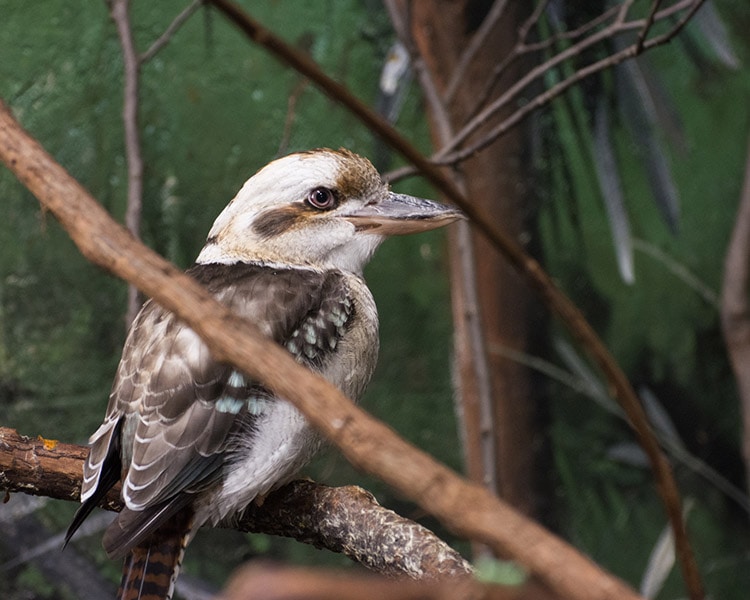
Kooraburra
Kookaburras are famous for their loud and clear call that sounds.

Tasmanian Devil

Found exclusively on the island state from which it gets its name, this carnivorous marsupial is actually a lot like its Looney Tunes cartoon persona, a snarling, irascible whirlwind of teeth and attitude. With a vocabulary of growls, grunts and snarls, they are vociferous (and slightly vicious) when threatened or protecting their food.

Fast fact: Further cementing its reputation, the Tasmanian Devil has the most powerful bite of any animal in the world based on its size.

Where to see them: As the devil is nocturnal, it is difficult to see in the wild; instead visit the Tasmanian Devil Conservation Park in Taranna, an easy drive from Hobart, Bonorong Wildlife Sanctuary, north of Hobart, or Devils @ Cradle Wildlife Park near Cradle Mountain National Park.
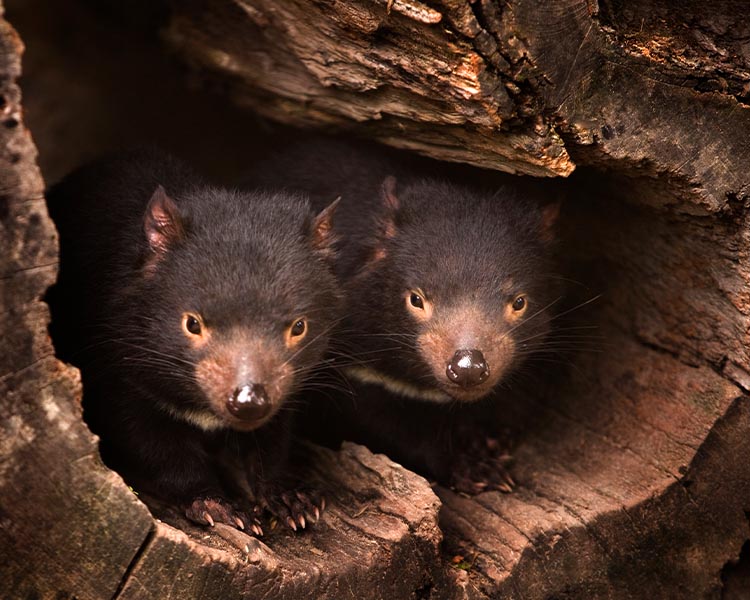
Two Tasmanian Devils
Tasmanian Devils are found exclusively on the island state from which it gets its name.

Also watch out for…

Echidna

This little egg-laying mammal is covered in sharp spikes and eats a diet largely made up of ants, hence its alternative name, the spiny anteater. They thrive in all manner of habitats, too.
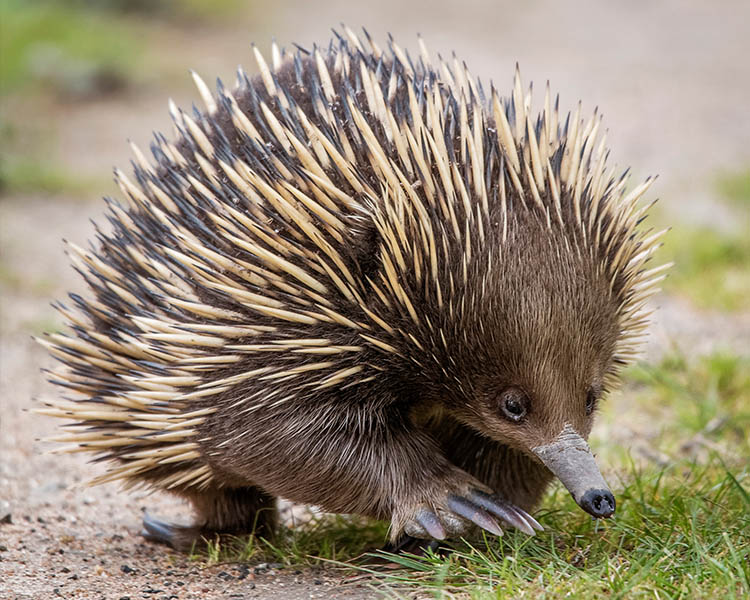
Echidna
The echidna eats a diet largely made up of ants.

Weekly travel news, experiences
insider tips, offers, and more.

Emu

The other half of the coat of arms, this flightless bird is the second biggest in the world after the ostrich; they can grow up to 6.5 feet tall. You’ll find them across mainland Australia.
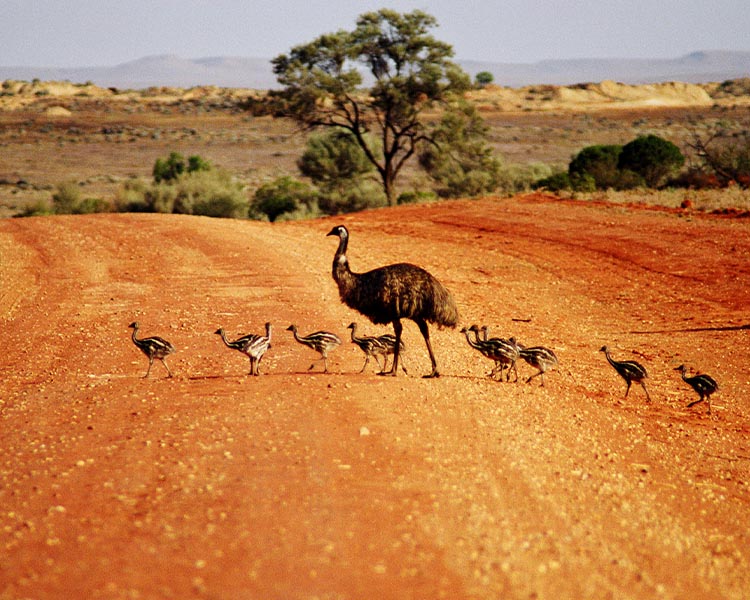
Emus crossing the road
Emus are the second biggest birds in the world after the ostrich.

Platypus

One of only two egg-laying mammals in the world (the other is the echidna), the platypus has a ducklike bill, webbed feet, is covered in fur and sleeps 14 hours a day on average.
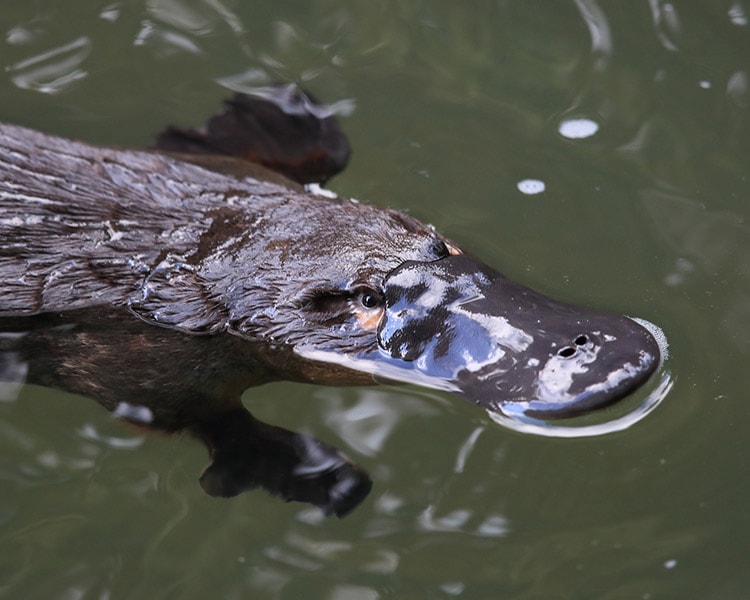
Platypus
One of only two egg-laying mammals in the world.

Dingo

Australia’s native wild dog, dingoes are found throughout the mainland states, including in the Northern Territory, and are known for their characteristic howl.
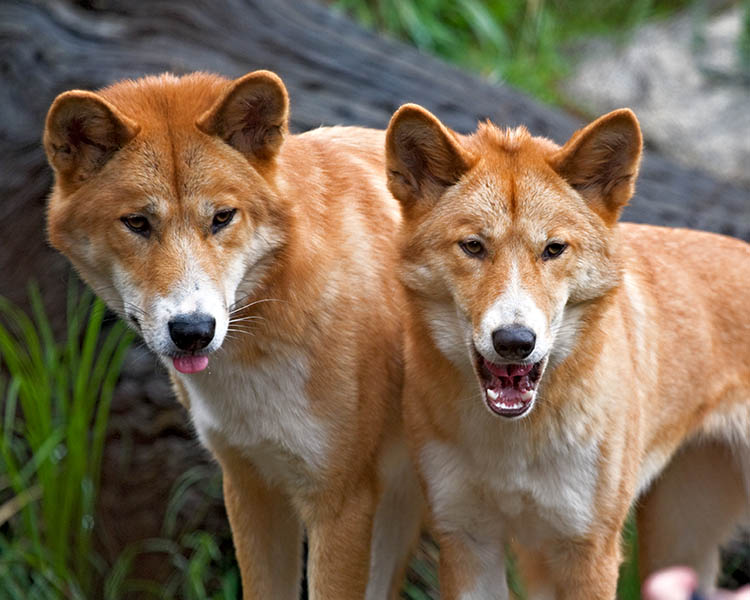
Two dingos
Dingoes are found throughout the mainland states.

Sulphur-crested Cockatoo

You’ll hear these cheeky native birds screeching loudly during the summer months as they dart from tree to tree or hang upside down from electricity wires.
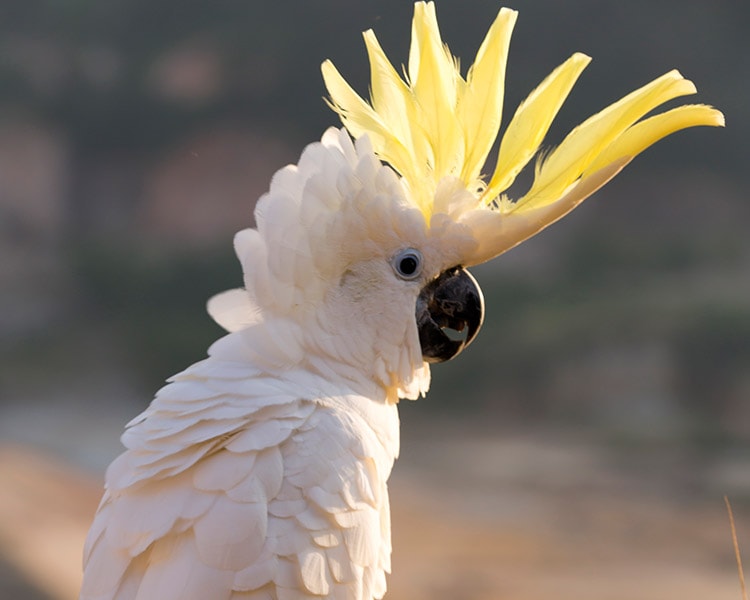
A white Sulphur Crested Cockatoo
Keep your eyes peeled for a Sulphur Crested Cockatoo.

Quokka

Native to Rottnest Island in Western Australia, the cuddly quokka is quite possibly Australia’s happiest marsupial, whose delightful grin has featured in many a cute selfie and social media post.
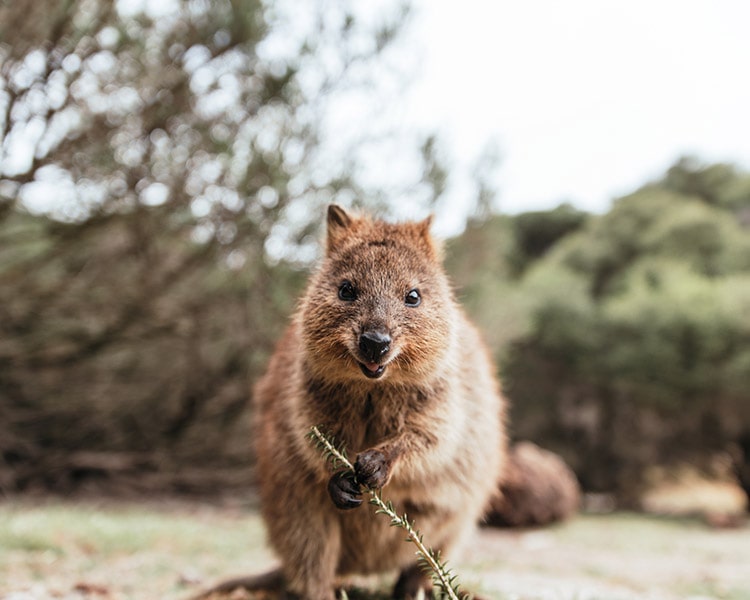
Quokka smiling at the camera
The cuddly quokka is quite possibly Australia’s happiest marsupial.

Want to see more stories from Australian Traveller in your Google search results?

  1. Click here to set Australian Traveller as a preferred source.
  2. Tick the box next to "Australian Traveller". That's it.
Australian Traveller

Australian Traveller

View profile and articles
hero media

No time to hibernate: experience the best of winter in NSW

    Kate Bettes Kate Bettes
    Whales breaching, fires crackling and slow-cooked feasts that make the cold so cosy, one might wish it lasted longer. Winter is no time to stay at home in NSW.

    When the mercury drops, winter in NSW comes into its own. Beaches are quieter, the air is crisper and hearty food tastes even better when there’s ice on the windows.

    Winter here isn’t for hiding away. It’s for long walks, deep baths, deeper reds and the kind of fireside lounging that feels simultaneously indulgent and entirely deserved after a day of exploring. From whale-watching up north to moodily lit bushwalks and pastry pilgrimages, we’ve mapped out your new favourite season.

    a beach winter in nsw
    From coastal walks to tasty delights, winter in NSW is a time to get out and about.

    The Tweed

    In winter, the NSW north coast has a front-row seat to one of nature’s greatest migrations. From May to November, humpbacks cruise past the Tweed coast between Antarctica and the Great Barrier Reef. Spot them from the Cabarita Beach headland or get up closer with a boat cruise.

    Inland, find the Tweed Regional Gallery & Margaret Olley Art Centre, which is home to a rotating cast of big-name exhibitions (including Monet).

    Later, grab a table at Bistro Livi, where the modern Spanish menu features whipped salt cod on toast and spanner crab with curry butter and spelt flatbread. Stick around to poke through the artist studios and indie boutiques of M|Arts Precinct.

    visitors at Tweed Regional Gallery & Margaret Olley Art Centre
    Browse the art. (Image: Destination NSW)

    The next day, jump aboard the Indigenous Lunch Cruise with Tweed Escapes. You’ll cruise upriver listening to yarns from local Indigenous guides, stop at the Minjungbal Aboriginal Cultural Museum and tuck into lemon myrtle-crusted snapper.

    Next, drive out to Farm & Co to pull apart some juicy smoked lamb shoulder with green olive tapenade while gazing out over the macadamia fields and avocado groves of this working farm.

    End the day at Mantra on Salt Beach where you’ll enjoy beach access, a heated rock spa and a lagoon pool.

    dining room at Bistro Livi
    Taste modern Spanish at Bistro Livi.

    Blue Mountains

    The cold season is hands down the best time to visit the Blue Mountains. Temperatures are perfect – sunny enough for hikes, and crisp enough at night for snuggling up.

    For a trip that equally soothes and stirs, start with a meditative meander through the national park’s eucalypts and Australian wildflowers. Brave the steepest passenger railway in the world, Scenic Railway, then hop the Skyway aerial cable car for unrivalled Three Sisters views.

    Thaw out at the Japanese Bath House in South Bowenfels. Soak in steamy outdoor onsens filled with natural mineral water and mountain views, wander the rose and zen gardens, or sip hot drinks in the tea house.

    group leader at Blue Mountains Stargazing
    Rug up for Blue Mountains Stargazing. (Image: Destination NSW)

    Afterwards, head to Ates in Blackheath, where everything revolves around a 150-year-old ironbark-fuelled oven – like the wood-roasted duck with nectarines and Szechuan spice. Or visit Tempus Katoomba, which leans experimental and sustainable, serving up dishes like braised fennel with cumin, spiced yogurt and Aleppo pepper.

    Rug up and head into the night with Blue Mountains Stargazing. Sessions are guided by astrophysicists, helping you understand what you’re looking at as you look into deep space.

    Wrap it all up at Fairmont Resort Blue Mountains – MGallery Collection. There’s a whiskey bar in the basement (and crackling fires that make a dram taste even better), indoor and outdoor pools and a day spa. Kids will love the mirror maze and ice rink, too.

    dishes laid out on table at Fairmont Resort Blue Mountains
    End the day with delicious meals at Fairmont Resort Blue Mountains. (Image: Destination NSW)

    Southern Highlands

    Good food and wine by the fire, experienced between sifting through second-hand treasures, is a winter vibe in Bowral.

    Start with a lap around Dirty Janes, an antique and vintage market. Recover from your shopping frenzy at Bendooley Book Barn, where floor-to-ceiling shelves and a roaring fire set the tone for an afternoon of red wine or hot coffee.

    When it’s time to eat, head to Hickory’s Restaurant & Bar, Peppers Craigieburn Bowral’s onsite restaurant. Try the crispy pork belly with Granny Smith crisps and apple gel, or ocean trout with wakame, lemon gel and pickled radish.

    couple looking through Dirty Janes in bowral
    Wander the antiques at Dirty Janes. (Image: Destination NSW)

    Another option, Onesta Cucina, does Italian with flair. For something more casual (with cocktails), Flour Bar swings between brunch and dinner, with an onsite bakery, over 400 wines and a hidden deli in the old bank vault.

    Later, clamber Mt Gibraltar, where trails wind through eucalypt forest to views over Bowral and Mittagong.

    Stay at Peppers Craigieburn Bowral, a century-old estate with open fires, elegant lounges and a nine-hole golf course.

    woman and her dog winter in nsw at Peppers Craigieburn Bowral
    Stay cosy at Peppers Craigieburn Bowral.

    Penrith

    Shake off winter inertia with an adrenaline boost out in Penrith. Kick things off with a kayak paddle on the Nepean River with Horizon Line, or head to Cables Wake Park, where cold-weather wetsuits take the edge off a wipeout.

    For something a bit more cruisy, opt for the Nepean Belle Paddlewheeler for slow-floating views and a hot cuppa.

    kayakers on the nepean river in penrith
    Head out on the Nepean River. (Image: Destination NSW)

    Refuel at Marcel Bar & Bistro, where reimagined European comfort food – like seafood risotto in bisque with little neck clams and Moreton Bay bugs – is king. Then check in at the Pullman Sydney Penrith, the area’s first international five-star hotel, to enjoy your well-earned rest.

    Pullman Penrith
    Set yourself up at Pullman Penrith.

    Start planning your NSW winter getaway at all.com.