The Australian Outback’s best myths and legends

hero media

The Australian outback is home to as many tall stories and fallacies as it is feral camels (more than a million, at last count). But which are true, and which are merely folklore? AT rates these as its top five from the myths and legends vault. By Craig Roberts

1. The Bunyip: Don’t stray too close to the billabong

Unfamiliar to the sights an alien environment, early European settlers quickly took to the idea of a Bunyip being a new creature waiting to be discovered, and set out on foolish attempts to find one in the hope of fame and riches. To various local Aboriginal tribes, this wasn’t the case; the Bunyip was a malevolent force that lurked at the bottom of creeks and billabongs, ready to devour anyone silly enough to wander down at the wrong time. (At least this was the line used on wayward children.)


Like any good folkloric tale, the Bunyip legend has been fuelled by unsubstantiated sightings and incompatible facts. Bunyips have been reported to have horse’s manes, dog faces, flippers, fangs, tusks, one eye, two eyes, shaggy fur, short hair, horns, and to be variously as big as a horse and as small as a dog. All very confusing. What we know for certain is that this is one myth that has been embraced by Indigenous and non-Indigenous Australians alike.

Did you know?

Some say the legend of the Bunyip stems from Aboriginal ancestral memories of the Diprotodon australis, a three-tonne, bear-like creature that was the biggest marsupial in existence – before it became extinct around 40,000 years ago.

2. Drop Bears: If attacked, take two Panadol and prepare for certain death

We all know the joke; we’ve all pulled the punch line. Usually on some newly arrived tourist, terrified of a country filled with man-eating sharks, killer crocs and venomous snakes. So what’s the harm to add one more? Even better, why not take our fluffiest, and thus cutest, creature, the snuggleriffic koala, and turn him into a remorseless widow-maker with a taste for the sweet, sweet tang of human flesh?


For those who don’t know the details, get up to speed here and remember a few basics, in case anyone with an accent asks: Drop Bears are related to koalas, although they’re slightly darker with blood-dripping fangs, and they hunt at night.

Did you know?

Here at AT we have no ethical qualms whatsoever in suggesting to British backpackers that vegemite smeared liberally on the face is the only effective deterrent for Drop Bears.

Need tips, more detail or itinerary ideas tailored to you? Ask AT.

AI Prompt

3. The Great Inland Sea: BYO rowboat

Given that every other continent worth its salt has a huge and intricate internal river system, early European settlers theorised thatAustraliamust surely have one too. And since Australian rivers flowed inland, the question rang out: where was all this water being stored? There must be a giant Mediterranean-sized sea in the deep, dark interior.


This presumption was so great that it gave birth to dozens of failed expeditions intoAustralia’s red centre on fruitless searches for water – none more foolhardy than that mounted by Charles Sturt, who departed civilisation with 15 men and a boat.


Sturt became trapped for six months near Milparinka, NSW, and got as far the Simpson Desert before giving up, broken, in temperatures so hot that the party’s lead fell from their pencils, and scurvy blackened skin fell from their mouths.


Not to worry, though. The search continues to this day, but far underground. Speculators are eternally drilling in the hope of finding anotherGreatArtesianBasinthat could allow the desert to flourish with flowing water for generations to come.

Did you know?

The Great Inland Sea inspired several books on the subject, none more ridiculous than Thomas J Maslen’s The Friend of Australia, which managed to contain maps, detailed advice on navigating the sea and rivers and local knowledge of the interior, despite the fact that the author never, EVER set foot on Australian soil.

4. Jandamarra: Che of the outback?

In the 1890s, while working for police in the southern Kimberleys, Jandamarra, an Aboriginal from the Bunuba tribe, helped capture a large group of his own people. But, upon seeing their suffering, Jandamarra rebelled, shot a trooper, freed the captives and stole some guns. The story of an Aboriginal bounty hunter gunning down a white trooper raised local fevers, and soon Jandamarra became the most wanted man in theKimberley.


For nearly three years, Jandamarra lead police and outraged posses of bounty hunters on wild goose chases throughout theKimberley. His hit and run guerrilla raids were the first time European tactics and guns were used against whites, and it was signal that he and his people would not go quietly; they would defend themselves and their lands. His extensive knowledge of the local landscape allowed him to “disappear" at will and helped fuel rumours that he may not have been human at all.


When Jandamarra couldn’t be caught, the police brought in Micki, an Indigenous tracker from an opposing tribe. With skills equal to Jandamarra’s, Micki did what was seemingly impossible for white troopers: he unravelled Jandamarra’s bush tricks, tracked him down and shot him dead at his Tunnel Creek hideout. Micki, the Indigenous tracker, had killed the Indigenous resistance.

Weekly travel news, experiences
insider tips, offers, and more.

Did you know?

In the end, Jandamarra’s body was decapitated and the head sent toEnglandto be displayed as a trophy.

5. Lasseter’s Reef: the Holy Grail of lost gold mines

Just before the turn of the 20th Century, 17-year-old Harold Lasseter set out on foot fromAlice Springsto the WA goldfields to make his fortune. And somewhere along the way he claims to have done so. Only problem was he couldn’t remember where he left it. Thus began the legend of Lasseter’s Reef, a supposed 14-mile long, gold-rich Quartz-Ironstone outcrop somewhere west ofAlice.


Since then, many have wandered into the desert with visions of uncovering its vast riches. Lasseter himself died some 30 years later on just such a journey, in 1931. Many have wasted countless hours, their own fortunes and their sanity on the basis of a kid’s tale. Some have claimed to have already found it – Lutz Frankenfeld, founder of the Alice Springs Beer Can Regatta, reckons he did so back in 1994 and is just waiting to form a joint venture with the right mining company.


More recently, in Nov ‘08, a Mutijulu Elder – who recalls caring for Lasseter out in the desert before he perished – also passed away, severing what could be the final link to the lost reef of gold.

Did you know?

Facing bankruptcy, the South Australian Government funded Lasseter’s last expedition, not because they thought he was right, but in hopes that the subsequent gold fever would see many of the unemployed leave Adelaide.

Want to see more stories from Australian Traveller in your Google search results?

  1. Click here to set Australian Traveller as a preferred source.
  2. Tick the box next to "Australian Traveller". That's it.
Australian Traveller

Australian Traveller

View profile and articles
hero media

5 of the best day trips from Hobart

    Rachel Lay Rachel Lay
    Hobart has quietly become our coolest capital, but the real wonder lies just beyond the city limits.

    In the cool shade of Kunyani/ Mt Wellington, Hobart has earned a reputation. Home to culture-defining Dark MOFO, the city blends rugged, raw wilderness and rule-breaking galleries. But, step beyond the thrumming capital’s border and you’ll find a new perspective: historic towns, Jurassic-era cliffs and a UNESCO City of Gastronomy. With ALL Accor as your home away from home, fill your days with epicurean odysseys and wild scenery on the best day trips from Hobart.

    Where to stay

    Behind every good road trip is the perfect home base. Somewhere central to review your camera roll, make the most of Hobart’s dining scene and relax before setting off again.

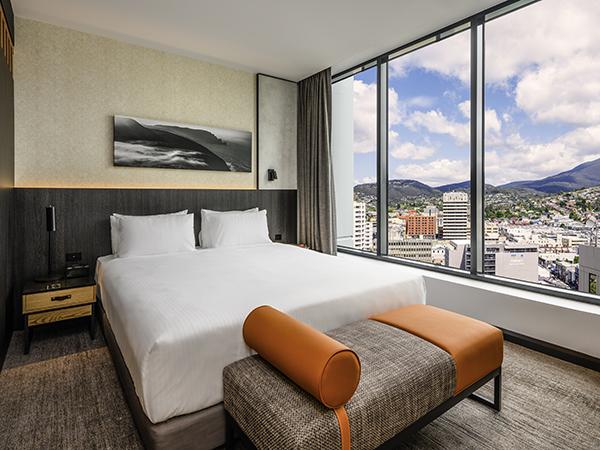
    For modern, Tasmanian-inspired design, book a stay at the Movenpick Hotel Hobart. Standing at the Salamanca Markets, look to the Hobart skyline and the award-winning hotel will catch your eye. As the third-tallest building in the CBD, the views across the harbour toward Antarctica are totally unique to your room. Here, end each day at the daily free chocolate hour (plus a free Movenpick ice cream for the little ones).

    For a more budget-conscious option, head to the picture book, sandstone buildings of Macquarie Street. Nestled along the buzzing, historic streetscape, you’ll find Tasmania’s biggest hotel: the Ibis Styles. Return home each day to defrost in one of the hotel’s two saunas. Make use of the proximity to MONA, or take an easy stroll to the candy-coloured cottages of Battery Point between your adventures.

    A stylish, Tasmanian-inspired bedroom at Mövenpick Hotel Hobart, your perfect base for relaxing after the best day trips from Hobart.
    Elevate your Hobart stay with sleek style at Mövenpick.

    1. Bruny Island

    Craggy cliffs and tropical-hued, white sand beaches signal your arrival to Bruny Island/ Lunawanna-Alonnah.

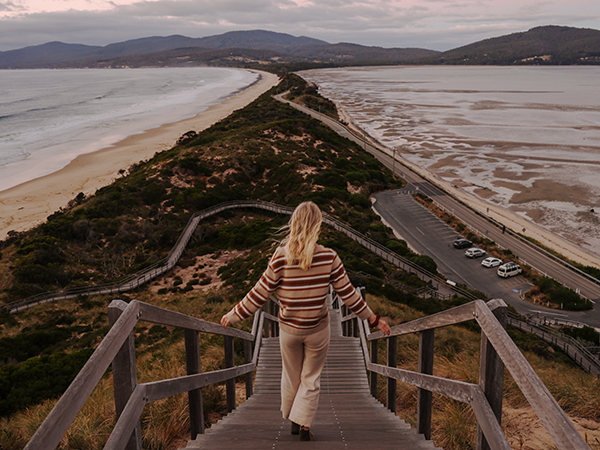
    Start your day trip at the island’s most iconic spot, the Neck Game Reserve. Scale the Trunganini steps to gaze out over the teensy stretch of land that juts through the sea connecting the two ends of the island.

    Catch a rare glimpse of the white furred wallabies that call Bruny Island home at Adventure Bay. Then, for ocean-fresh oysters, pull into the drive-thru window at Get Shucked. Sample Bruny Island cheese at the cellar door before catching the ferry home with an esky full of local produce.

    Bruny Island Neck is an isthmus of land connecting north and south Bruny Island.
    Begin your adventure with a climb and a view. (Image: Elise Weaver)

    2. Mount Wellington

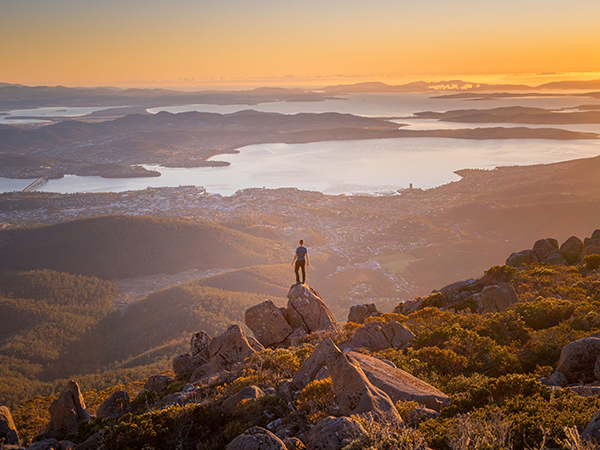
    At 1271 metres, Mount Wellington watches protectively over Hobart. Follow the winding road to climb through alpine forest and tufts of snow to reach the summit. Gaze down over Hobart and out to sea, or over your shoulder to the southwestern wilderness.

    Reset your adrenaline with a mountain bike ride back down. Or, make like the locals and head into the mountain on foot. Try the hike to the Jurassic-period Organ Pipes which slips under the mountain’s magnificent dolerite cliffs (perfect for families thanks to the trail’s minimal incline).

    For a view of Mount Wellington itself, hike nearby Cathedral Rock.

    No matter where you are in Hobart you are never far away from the City's beloved mountain, Kunanyi / Mount Wellington
    Climb through alpine forest to the summit. (Image: Paul Flemming)

    2. Port Arthur

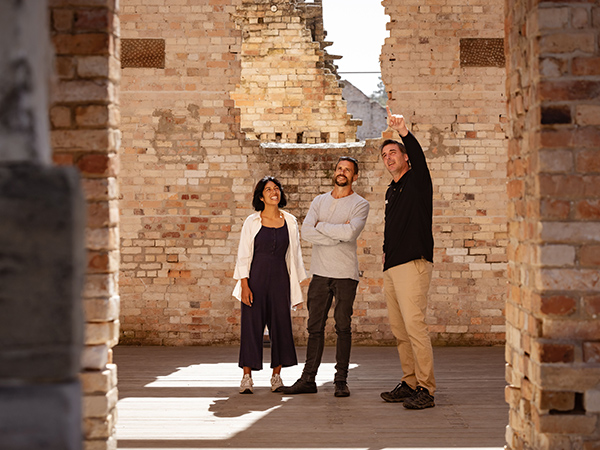
    Constructed entirely by convicts, the manicured gardens and penal buildings of Port Arthur offer a day trip that practically hums with history.

    The rugged, seagirt location was chosen for its difficult escape conditions. Now, you can cruise the coast below the towering, jagged cliffs of the Tasman National Park or wander the sloping fields of fragrant lavender.

    Tickets to Port Arthur include a walking tour and harbour cruise. See the Isle of the Dead where 1000 men are buried in marked and unmarked graves. And Point Puer, Britain’s first prison for children.

    The Port Arthur Historic Site is one of Australia's most important heritage sites and tourist destinations. Located on the scenic Turrakana / Tasman Peninsula in the south east of Tasmania, it offers a unique and essential experience for all visitors to the area.
    Wander convict-built grounds and gardens. (Image: Dearna Bond)

    3. Launceston

    You’ll find Launceston at the confluence of three rivers after an easy 2.5-hour drive from Hobart. Launceston is a patchwork of old and new. Here, heritage streetscapes meet modern architecture.

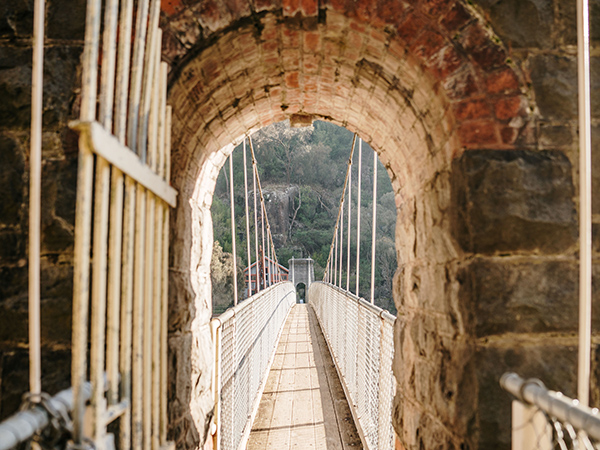
    Visit Cataract Gorge, the green, sun-dappled heart of the town and sacred meeting point for Tasmania’s indigenous communities. Pull up at roadside produce stalls that dot the Tamar Valley, or dine out. Launceston is, after all, a UNESCO City of Gastronomy.

    Should the local wine scene persuade you, simply extend your time in Launceston at Peppers Silo (but definitely at least stop by the onsite restaurant, Grain of the Silo, for a farm fresh menu) or Mercure Launceston before heading back to Hobart.

    Walk the sunlit paths of Cataract Gorge. (Image: Nick H Visuals)

    4. Bonorong Wildlife Sanctuary

    Take a 35-minute drive from your hotel and you’ll find Bonorong Wildlife Sanctuary. This social enterprise is run by a team of extremely passionate Tasmanians with a mission to look after critically endangered species who have found sanctuary here after facing extinction on the mainland.

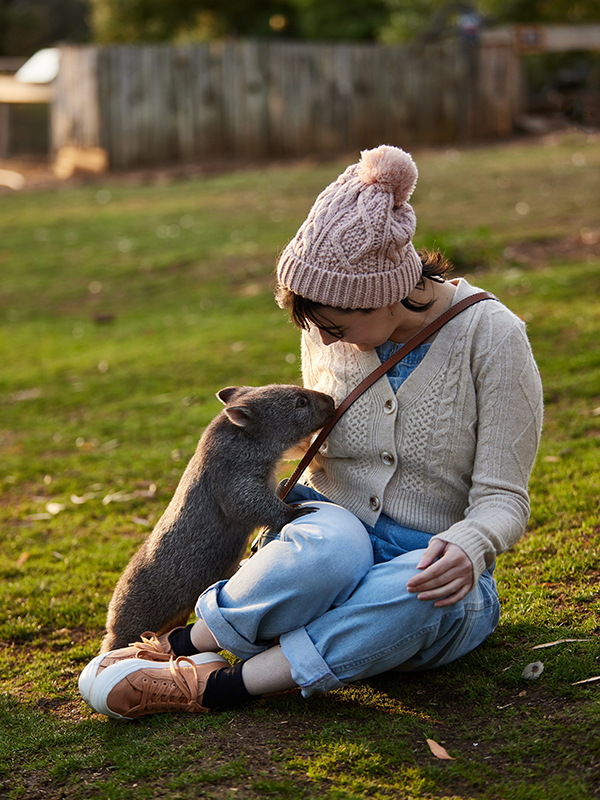
    Choose to wander the sanctuary at your own pace or join a guided tour (free with your ticket) to come face to face with Tassie’s most iconic species. Tasmanian Devils, wombats and echidnas are part of the free tour. You can book up close encounters with your favourite animals, too.

    Bonorong is a Sanctuary for wildlife run by a passionate team of like-minded people. We're a social enterprise: a little business with a big heart.
    Snap a cuddle-worthy encounter. (Image: Tourism Australia)

    5. Richmond Village & Coal River Valley

    Richmond is a town that belongs in a snow globe. Fifty colonial-era, Georgian buildings have been painstakingly restored and turned into cafes, cosy restaurants and galleries. Visit Richmond Gaol, said to be the home of a prisoner so vile he inspired Charles Dickens to pen Oliver Twist’s Fagin.

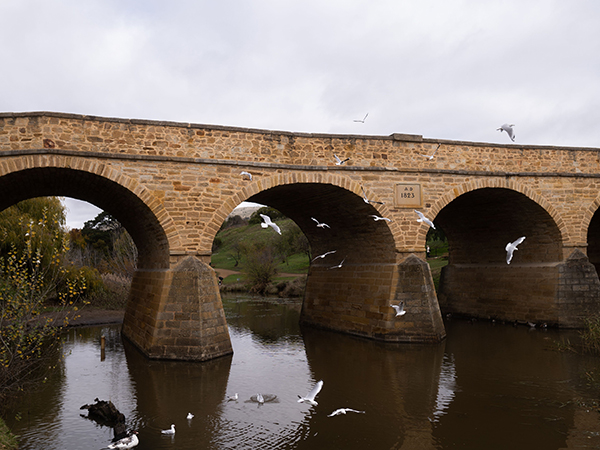
    Then, follow the Coal River as it flows past grassy, duckling-dotted knolls and under the iconic Richmond Bridge, the oldest bridge in Australia. From the crest of the bridge, see the oldest Catholic Church in Australia. The river crawls past many cellar doors, perfect for a day of wine tasting.

    Richmond is a picture-perfect town in the Coal River Valley wine region, offering a glimpse into early colonial life, one of the best day trips from Hobart.
    Trace the river through history and wine country. (Image: Fin Matson)

    Plan your trip to Hobart and beyond with ALL Accor at All.com.

    5 Interesting Australian Myths and Legends