Aimee Frodsham on how a tight-knit industry is helping keep a rare art form alive

hero media
For a snapshot in time, we asked eight people around the country to reflect on Australia Now. Here, Aimee Frodsham, Artistic Director of Canberra Glassworks in the ACT, shares her thoughts on what the global pandemic has taught her.

Keep reading our Australia Now series here.


What do three-metre-long eel traps and a pair of cowboy boots have in common? They’re both currently on display at major Melbourne exhibitions: Maree Clarke: Ancestral Memories at the NGV and Patricia Piccinini’s A Miracle Constantly Repeated at Flinders Street Station. And they were both created in glass at Canberra Glassworks.


Working with some of Australia’s biggest names in art on commissions like these is one of many strands that Canberra Glassworks – Australia’s leading centre for contemporary glass art, craft and design – deals in. Housed in the historic Kingston Power House, which powered the early development of the city, it’s a place that simultaneously innovates and celebrates the centuries-old glassmaking tradition in all its multifarious forms.

Canberra Glassworks Shop
The new shop at Canberra Glassworks, Australia’s leading centre for contemporary glass art, is winning plaudits for its interior design. (Image: Pew Pew Studio/Skeehan Studio)

A day in the life of an artistic director

In her role as artistic director, Aimee Frodsham looks after the centre’s exhibition program and helps facilitate making in the studios (whether that’s the fabrication of work for exhibitions and commissions or glassmakers operating their own business from the centre).


A glassblower herself who trained at ANU School of Art & Design (then Canberra School of Art) during a febrile time in the 1990s, Aimee often finds herself on the floor working with the makers across the various areas, including the hot shop and kiln, helping to facilitate fabrication of works that take many forms and specialisms. (“I’d never ask a goblet maker to make a bead for me," she explains, to highlight the sheer diversity that exists within glassmaking.)


“I love the history, the tradition and the skill, and I love and admire the artists that have dedicated their whole careers to mastering one particular area," Aimee says of her passion for glasswork. “I think that is just so mind-blowing in this contemporary world; nothing that we do is done on the computer." Without these phenomenal makers, she says, these crafts would be lost: consider the neon signs we see everywhere from shopfronts to Sydney’s famous Coca-Cola billboard.

Need tips, more detail or itinerary ideas tailored to you? Ask AT.

AI Prompt

What she loves about glassmaking

The knowledge of this now-rare trade is at the risk of dying out, and the relationship Canberra Glassworks has forged with the industry is helping to fill the skills gap, demystify long-held secrets (that no longer need to be kept from a commercial sense), and turn the trade into an art form; as part of the National Portrait Gallery’s Australian Love Stories exhibition earlier in 2021, artist Harriet Schwarzrock created 120 sublime glass heart sculptures pumped full of neon.


The skill and craft involved in glassmaking necessitates collaboration and breeds a tight-knit artistic community. “We all really love and support each other," says Aimee. “We have to, to be able to make our work." And this sense of community extends outwards, too, embracing the public through education programs and school tours (“For us it’s quite strategic, because it’s really important for the next generation to know that glassmaking is a career") or team-building exercises for, say, the local police force or volunteer firefighters post-Black Summer bushfires. And, of course, workshops, from jewellery-making to glassblowing, which were booked up for months in advance after the Netflix series Blown Away aired. “We really encourage people as hobbyists to come and learn and to make, and to be part of our community."

Colourful glassworks for sale at Canberra Glassworks
The knowledge of this now-rare trade is at the risk of dying out. (Image: Pew Pew Studio/Skeehan Studio)

What the pandemic has taught her

Learning to be a better communicator, especially in terms of safety issues, and to be more agile within the organisation are some of the positive takeaways of the pandemic for Aimee. And missing having people around in the same way forged a different type of connection, by way of weekly Zoom sessions for the Australia-wide glassmaking community: “Every week another group of artists leads a conversation. They’re quite informal and a way for us to see each other and connect. We’ll keep going with those kinds of things because it has made me realise how fragile access can be, and providing access in different ways is really important. Zoom has given us the ability to reach out to people in our community who maybe felt isolated without us realising it."


Aimee says she feels lucky to live in Canberra, which she found transformed upon her return in 2015 after living and working in London for 12 years. “It had grown into a really wonderful, exciting city that had lost quite a bit of that stigma around it being a public service town." The past 18 months have left her feeling in some ways more connected and rooted to Australia in general and optimistic that we’re leaders in the world for art: “I feel really connected to the arts community and the amazing things we’re doing here."

Want to see more stories from Australian Traveller in your Google search results?

  1. Click here to set Australian Traveller as a preferred source.
  2. Tick the box next to "Australian Traveller". That's it.
Australian Traveller

Australian Traveller

View profile and articles
hero media

6 reasons the best way to experience the Kimberley is by cruise

    Kate Bettes Kate Bettes
    This remote corner of Australia is one of the world’s last frontiers. This is how to see it properly.

    Vast, rugged and deeply spiritual, the Kimberley coast in Australia’s North West feels a world away from everyday Australia – and there are countless ways to explore it. But if you want to reach ancient rock art, hidden gorges and lonely waterfalls, it has to be by boat. Whether you’re aboard a nimble expedition vessel or a luxury yacht with all the trimmings, exploring by the water brings exclusive experiences, shows unique views and makes travel easier than any other mode. And that’s just the beginning of Australia’s North West cruises.

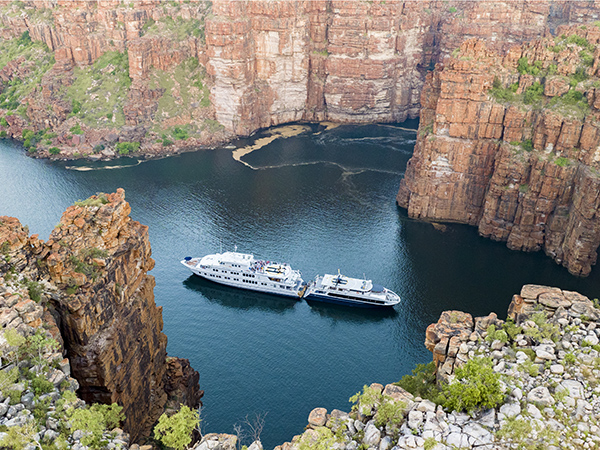
    The True North Adventure Cruise in between sandstone cliffs.
    Adventure starts where the road ends.

    1. Discover Broome, and beyond

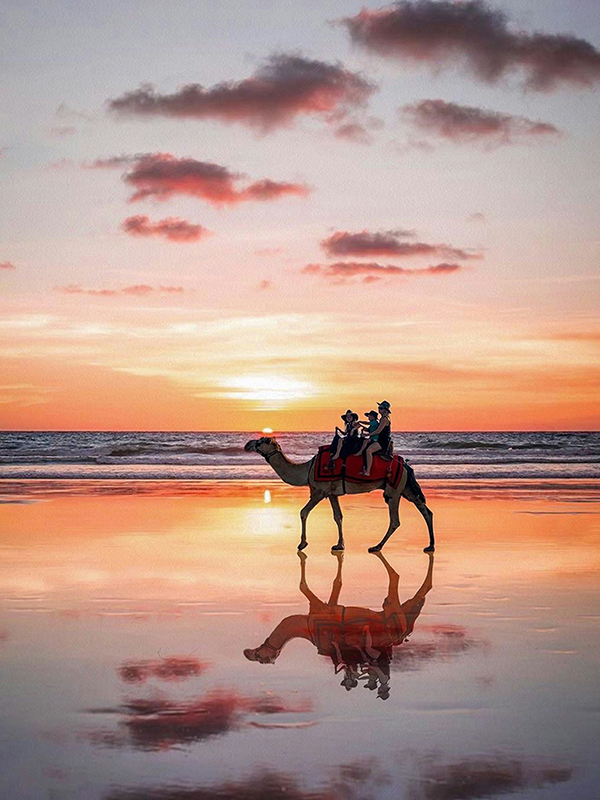
    Explore your launchpad before you set sail: Broome. Here camels and their riders stride along the 22 kilometres of powdery Cable Beach at sunset. That’s just the start.

    At Gantheaume Point, red pindan cliffs plunge into the turquoise sea, whose low tide uncovers fossilised dinosaur footprints. Broome’s pearling history runs deep. Japanese, Chinese, Malay and Aboriginal divers once worked these waters, and their legacy lives on in boutiques where South Sea pearls still shine.

    If the moon’s right, you may catch the Staircase to the Moon over Roebuck Bay. Or simply kick back with a cold beverage and a film under the stars at Sun Pictures, screening since 1916.

    Ride a camel along Cable Beach as the sun sinks into the Indian Ocean, casting golden light across the sand and sea.
    Ride a camel along Cable Beach. (Image: Nick Dunn)

    2. Unmatched access to The Kimberley

    Once you’re onboard, expect a backstage pass to some of the most isolated places on Earth. No roads. No ports. No phone reception.

    At Horizontal Falls/ Garaanngaddim, 10-metre tides surge through twin gorges like a natural waterpark ride that’ll make your palms sweat. Then there’s Montgomery Reef/ Yowjab: a giant living platform of coral and seagrass, where the sea pulls back to reveal waterfalls, sea turtles and ospreys.

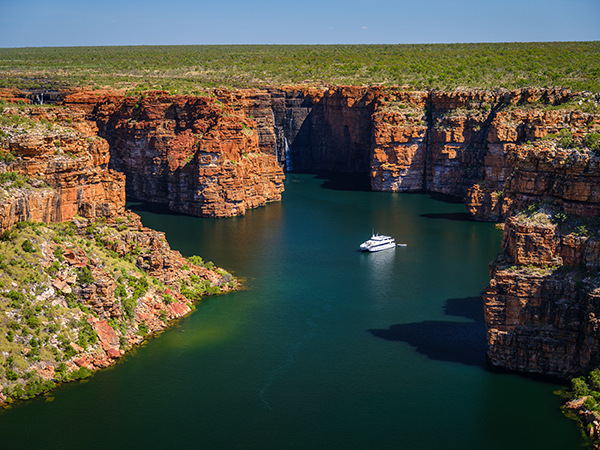
    Up north, King George Falls/ Oomari rage 80 metres down red cliffs. Zodiac boats often nudge in closer so you can feel the spray on your sun-warmed cheeks. You might even fly in to reach Mitchell Falls/ Punamii-unpuu, a four-tiered cascade where you can swim in freshwater pools above the drop.

    Come spring, some itineraries veer west to Rowley Shoals: an atoll chain of white sand and reef walls. Then it’s up the winding Prince Regent River to King Cascade/ Maamboolbadda, tumbling over rock terraces, and into a Zodiac to view the Gwion Gwion rock art, whose slender, ochre-painted figures are older than the pyramids.

    A cruise drifts beneath King George Falls, where sheer sandstone cliffs frame the thunderous plunge into turquoise waters.
    Get closer to the Kimberley than ever before.

    3. Taste the Kimberley with onboard hospitality

    You might spend your days clambering over slippery rocks or charging past waterfalls. But when you’re back on the water, it’s a different story. Meals are chef-prepared and regionally inspired: grilled barramundi, pearl meat sashimi, mango tarts, and bush tomato chutney. One night it’s barefoot beach barbecues with your shipmates; the next, alfresco dining on the ship.

    Small expedition ships each have their own personality, but many carry just 12 to 36 guests, making being out on the water a whole other experience. You might sink into a spa on the foredeck or sip coffee in a lounge while watching crocodiles cruise by. It’s choose-your-own-relaxation, Kimberley style.

    4. Expert-led excursions through the Kimberley

    These voyages are led by people who know the Kimberley like the back of their sunburnt hand. Attenborough-esque naturalists might gently tap your shoulder to point out rare birds or tell the story beneath a slab of rock. Historians can explain exactly how that rusted World War II relic came to rest here.

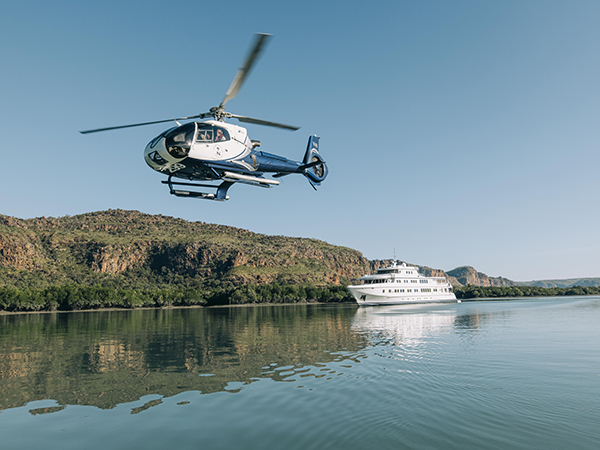
    If your ship has a helipad, you might chopper straight to a waterfall-fed swimming hole. If not, you’ll still be hopping ashore for that wet landing at a secret creek.

    Then come the evenings: songlines shared by Traditional Owners under the stars, or astronomy sessions that link what’s overhead with what’s underfoot and what’s within.

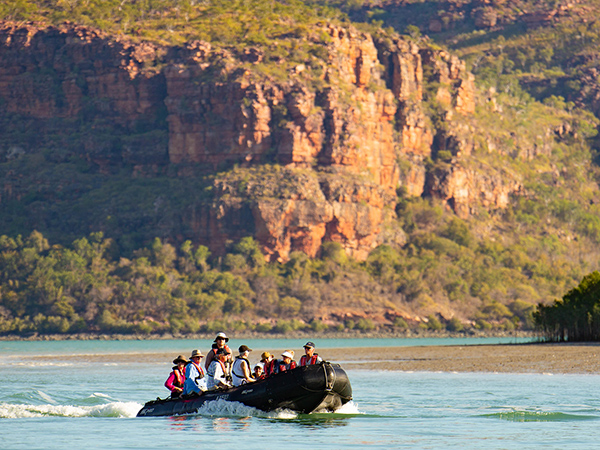
    A small group glides through Kimberley’s rugged coastline by boat, passing ancient cliffs.
    Explore with naturalists and historians by your side.

    5. Relax in luxurious lodgings

    Just because you’re off-grid doesn’t mean you have to rough it. These Kimberley vessels are small in size, but mighty in luxury. True North’s ships come with their own helicopters and a no-sea-days policy, so you’re always in the thick of it. Try the luxurious offerings from Ocean Dream Charters for exploration in style. Kimberley Quest offers a fast boat for easy, off-ship adventures. On the larger end of the scale, Coral Expeditions has open-deck bars and curated wine cellars. And then there’s Ponant’s luxury yachts – sleek and incredibly stylish French sailing yachts.

    A helicopter soars above the sea, with a sleek cruise ship gliding in the distance.
    See the Kimberley from sky to shore.

    6. The adventure continues with pre- and post-cruise experiences

    You’ve already come this far – so, why not go further? Broome makes it easy to ease in before you board, or wind down when your voyage ends, and there is no reason to stop there.

    Head an hour and a half south to Eco Beach to stay off-grid and off the clock. Join a Yawuru guide for a mangrove walk or ocean forage. Dive even deeper into Broome’s pearling past at Willie Creek or Cygnet Bay, where divers and craftspeople still pull the seawater-slicked gems from the deep.

    If you’re still craving adventure, it’s time to go further. Soar over the Buccaneer Archipelago, or detour inland with a 4WD trip along the Gibb River Road. Book a scenic flight over the Bungle Bungles. Or – because you never know when you’ll be back – do all three.

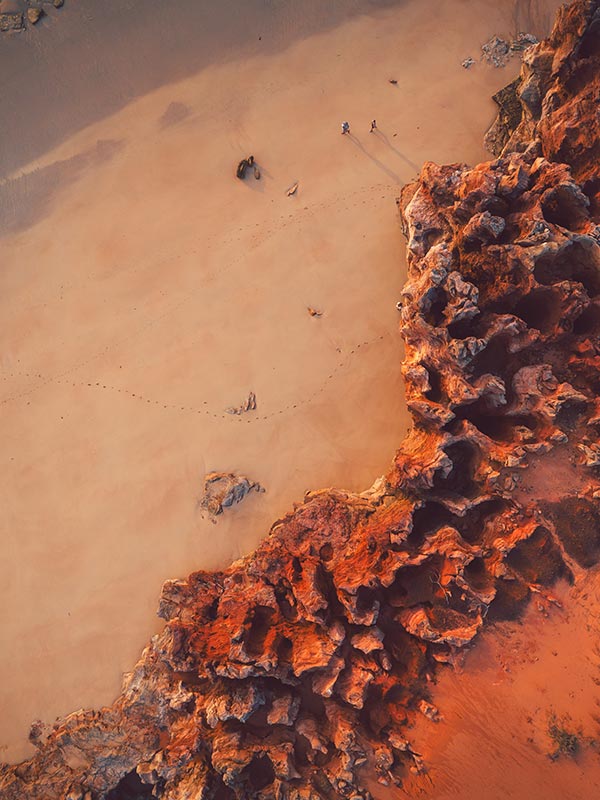
    aerial of people walking on eco beach in the kimberley western australia
    Stay off grid at Eco Beach. (Image: Tourism WA)

    Find out more about your trip to Australia’s North West at australiasnorthwest.com.